


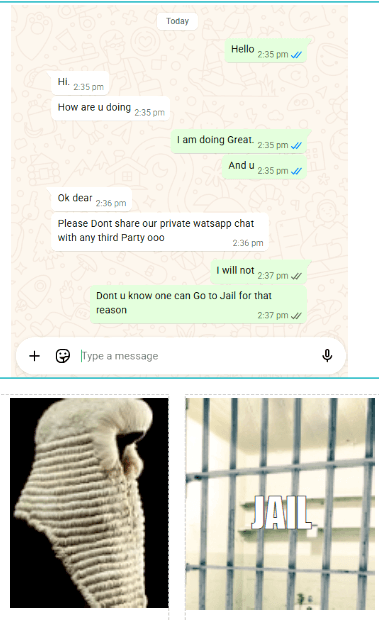
A Nigerian lawyer has issued a public warning to citizens about the legal risks of sharing private WhatsApp conversations, following a court case in which a man was sentenced to jail for forwarding personal messages without consent. The warning, delivered in a video that has since gone viral on social media, has reignited debate about digital privacy, personal responsibility online, and how Nigerian courts are applying existing laws to everyday communication on messaging platforms.
According to the lawyer, the conviction occurred during a court session he personally attended. The defendant was found guilty of forwarding a private WhatsApp conversation to other individuals without obtaining the permission of the person he had originally been communicating with. The court ruled that this action amounted to a violation of the other party’s right to privacy, leading to a custodial sentence.
The lawyer, whose comments have been widely shared across WhatsApp, Instagram, and X, described the case as a stark reminder that digital communication is not exempt from legal scrutiny. In his words, he said it was striking that the first person he saw sent to prison in 2026 was convicted simply for pressing the forward button on a WhatsApp conversation that took place in 2025.
Privacy laws extend beyond courtrooms
In the video, the lawyer stressed that many Nigerians wrongly assume that the law only applies in formal settings such as courtrooms or legal textbooks. He argued that the reality is very different.
According to him, the law operates in daily life and now reaches deeply into how people communicate on their phones. He explained that private conversations conducted through digital platforms are protected by law, regardless of whether they take place on WhatsApp, email, TikTok, Snapchat, Instagram, or similar services.
He further noted that conversations with friends and family are not exempt from these protections. Simply having a message on one’s personal device does not grant exclusive rights over its use or distribution, he said.
The lawyer emphasized that forwarding a private conversation to a third party without the consent of the other participant is unlawful. In his view, the court’s decision sends a clear message that ownership of a device does not translate into ownership of shared communication.
What the law protects and why it matters now
Legal analysts say the case highlights the growing relevance of privacy rights in Nigeria as digital communication becomes central to social, business, and political life. While Nigeria does not have a single law written specifically to address WhatsApp forwarding, experts note that existing constitutional provisions and data protection frameworks already cover private communication.
Related News
Nigeria’s Constitution guarantees the right to privacy of citizens, including their correspondence. In addition, the Nigeria Data Protection Act and related regulations place obligations on individuals and organizations to respect personal data and private information.
According to legal observers, courts are increasingly willing to interpret these laws in ways that reflect modern communication habits. The WhatsApp case demonstrates how judges are applying long standing privacy principles to new technologies, rather than waiting for platform specific legislation.
This development matters now because the casual sharing of screenshots, forwarded chats, and leaked messages has become routine on social media. In many cases, private conversations are circulated to shame, discredit, or pressure individuals, often without any consideration of legal consequences.
A warning for everyday phone users
The lawyer’s remarks suggest that ordinary Nigerians, not just public figures or corporations, could face legal consequences for how they handle private messages. Forwarding a chat to a friend, family member, or group may seem harmless, but the court ruling indicates that consent is a critical factor.
He stated clearly that every private conversation between two people is protected by law. Forwarding such communication without permission, he said, amounts to a violation of the other person’s right to privacy.
Legal practitioners say this interpretation places a higher burden of caution on users of messaging apps. It also challenges the common belief that privacy violations only occur when sensitive information is published in the media or posted publicly online.
Broader implications for digital culture
Beyond the individual case, the ruling raises questions about how Nigerians engage with digital content. Analysts note that WhatsApp, in particular, plays a powerful role in information sharing across the country, from family groups to political networks and professional circles.
The ease with which messages can be forwarded has contributed to the rapid spread of misinformation, rumors, and private content. While the court case focused on privacy rather than misinformation, experts argue that stricter enforcement of consent could indirectly encourage more responsible digital behavior.
A Lagos based legal analyst, speaking generally on the issue, said such rulings could gradually reshape online culture by making people think twice before sharing private material. He noted that the fear of legal consequences may encourage users to seek consent or avoid forwarding personal conversations altogether.
What to watch next
Observers will be watching to see whether more cases of this nature emerge and how consistently courts apply privacy protections to digital communication. There is also interest in whether law enforcement agencies will pursue similar cases more aggressively as awareness of the ruling spreads.
Another key issue is public education. Legal experts argue that many Nigerians remain unaware of how privacy laws apply to everyday phone use. Without broader awareness campaigns, similar violations may continue, leading to more prosecutions.
Technology policy advocates also say the case could prompt discussions about clearer guidelines from regulators on personal data, private messages, and consent in digital spaces. While existing laws provide a foundation, clearer public guidance could help reduce confusion and unintentional violations.
The lawyer’s warning, backed by a real court conviction, underscores a shifting legal landscape in Nigeria where digital actions carry tangible consequences. The jailing of a man for forwarding a private WhatsApp conversation serves as a reminder that privacy rights extend into everyday online interactions.
As messaging platforms continue to shape how Nigerians communicate, the case highlights the need for greater caution, consent, and awareness. For now, the message from the courts appears clear. Private conversations are protected by law, and sharing them without permission can come at a serious cost.
Add a Comment