


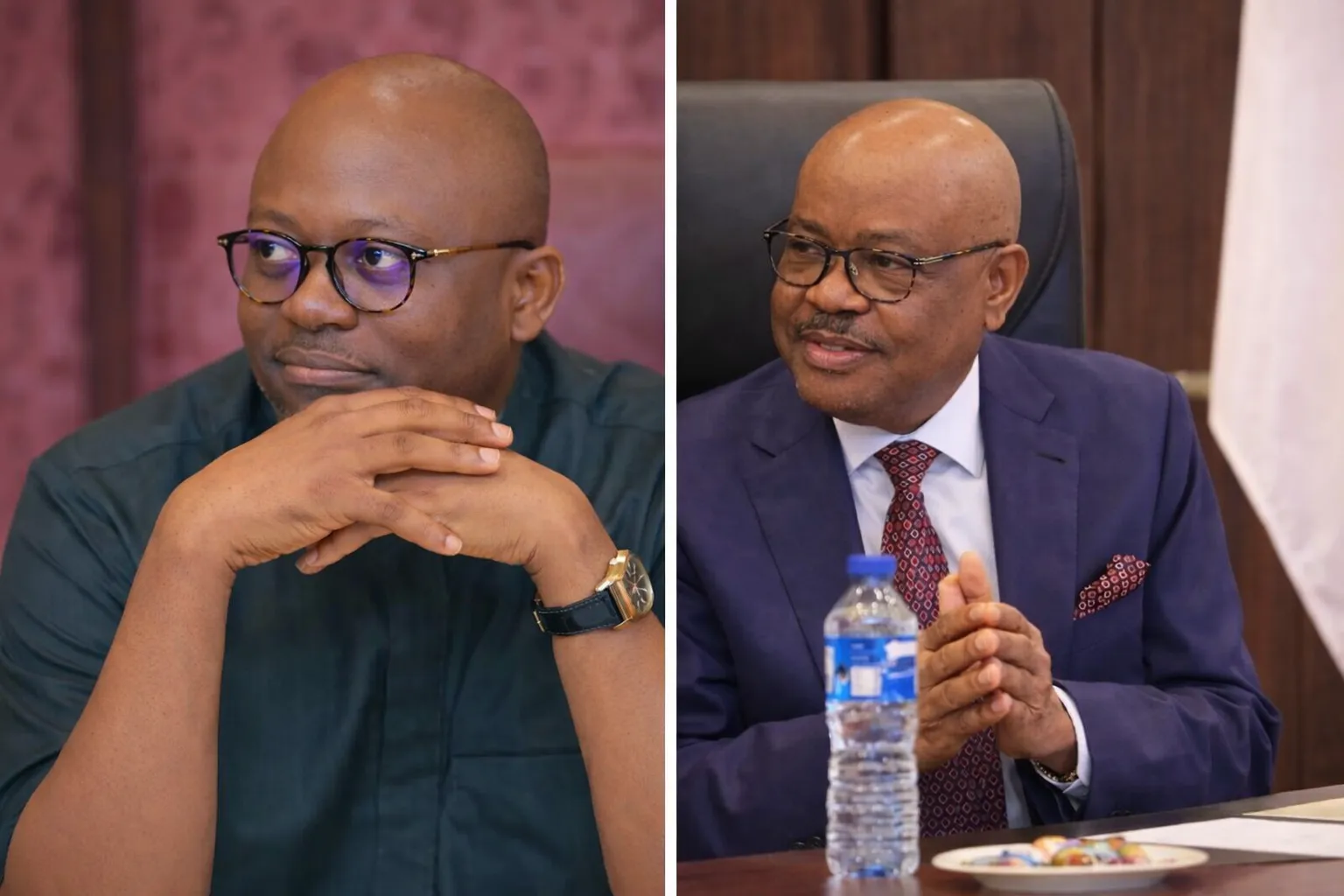
The suspension of impeachment proceedings against Rivers State Governor Siminalayi Fubara and Deputy Governor Ngozi Odu has temporarily eased weeks of political tension in Nigeria’s oil-rich state. President Bola Tinubu’s direct intervention, reportedly his fourth attempt at mediation, proved decisive in persuading lawmakers to step back from what many observers described as an impending constitutional crisis.
While the immediate threat has subsided, the underlying rivalry that triggered the confrontation remains unresolved. Political analysts say the development offers short-term stability but leaves deeper questions about democratic institutions and federal influence unanswered.
How the Rivers Crisis Escalated
The political turmoil in Rivers State traces back to the deteriorating relationship between Governor Fubara and his predecessor, Nyesom Wike, now serving as Minister of the Federal Capital Territory. The two were once aligned politically, with Wike playing a key role in Fubara’s emergence as governor in the 2023 general elections.
However, tensions emerged shortly after Fubara assumed office. According to multiple reports by The Punch and Channels Television, lawmakers perceived to be loyal to Wike initiated impeachment moves against the governor, citing alleged constitutional breaches. Fubara’s supporters countered that the impeachment push was politically motivated and designed to weaken his authority.
The Rivers State House of Assembly became sharply divided. Court cases multiplied as both factions sought judicial backing, while legislative activities slowed. At one point, governance appeared stalled, with policy decisions delayed amid uncertainty over the executive’s survival.
Political observers note that impeachment is a constitutionally provided mechanism. However, its frequent deployment in Nigeria’s political disputes has raised concerns. Between 1999 and 2023, at least 20 governors nationwide faced impeachment attempts, though only a handful were successfully removed. The pattern suggests impeachment has often functioned as a political weapon rather than a strictly legal process.
Why Rivers State Holds National Significance
Rivers State occupies a strategic position in Nigeria’s economic architecture. According to data from the Nigerian Upstream Petroleum Regulatory Commission, Rivers contributes a substantial portion of Nigeria’s crude oil output, which averaged around 1.4 million barrels per day in early 2026.
Oil revenue remains central to Nigeria’s federal budget. In the 2025 fiscal year, petroleum earnings accounted for more than 50 percent of government revenue projections. Instability in Rivers, therefore, carries implications beyond state borders.
Related News
Investors closely monitor political developments in the Niger Delta. A 2024 report by the Nigerian Economic Summit Group found that political risk significantly affects foreign direct investment flows into energy-producing states. Prolonged uncertainty could slow project approvals, delay infrastructure development, and impact employment in the oil and gas sector.
Security concerns also loom large. The Niger Delta has a history of militancy tied to political and economic grievances. Though the region has been relatively stable in recent years compared to the late 2000s, renewed elite conflict risks reopening old fault lines.
It is against this backdrop that President Tinubu’s intervention gained urgency. The federal government has a vested interest in preventing disruptions in a state so central to national revenue and stability.
Tinubu’s Intervention and the Assembly’s Reversal
President Bola Tinubu reportedly held consultations with key stakeholders before lawmakers announced the suspension of impeachment proceedings and the withdrawal of related court actions. According to reports in The Punch, the president urged restraint and emphasized the need for political stability.
This marked the fourth time Tinubu had intervened in the Rivers dispute. Previous mediation efforts had failed to produce lasting calm.
The Assembly’s sudden reversal raised eyebrows. Lawmakers who had appeared resolute in pursuing impeachment shifted course within days of federal engagement. While the official explanation framed the move as a commitment to peace, analysts argue the timing reflects the weight of presidential influence.
Dr. Aisha Abdullahi, a political scientist at the University of Abuja, told Channels Television that the intervention demonstrates the enduring centrality of the presidency in Nigeria’s political structure. “State institutions remain heavily influenced by federal dynamics,” she said. “When Abuja signals strongly, the ripple effect is immediate.”
The suspension has created breathing space. However, there is no formal reconciliation framework publicly announced between Fubara and Wike. Without a structured political settlement, the truce could prove fragile.
Governance Under Strain
Beyond the headline drama, the crisis has had tangible governance consequences. Civil society groups in Port Harcourt report delays in budget implementation and project approvals during the standoff. According to the Rivers State 2026 budget outline, capital expenditure was projected to exceed 40 percent of total spending, with a focus on infrastructure and public services.
Extended political uncertainty risks slowing those projects.
Residents in Port Harcourt and surrounding communities have expressed mixed reactions. Some welcome the suspension of impeachment as a necessary step toward stability. Others worry that recurring elite conflicts distract from pressing issues such as unemployment and urban development.
In real terms, governance effectiveness may hinge on whether Governor Fubara can consolidate authority without provoking renewed resistance from lawmakers.
Democracy and Federal Influence
The Rivers episode has reignited debate about the balance between federal authority and state autonomy. Nigeria operates a federal system in theory, but critics argue that practical power remains highly centralized.
The Assembly’s swift compliance following presidential mediation highlights a broader pattern. Political disputes at the state level often require federal arbitration before resolution.
This dynamic raises questions about institutional independence. If state legislatures recalibrate their actions primarily in response to presidential signals, the separation of powers becomes blurred.
However, supporters of Tinubu’s intervention argue that preventing escalation justifies federal involvement. In a country where political crises can quickly spill into security challenges, proactive mediation may avert wider instability.
The tension between democratic autonomy and pragmatic stability lies at the heart of this debate.
Several variables will shape Rivers State’s political trajectory in the coming months.
First, Governor Fubara’s ability to build broader legislative alliances will be critical. Without majority support in the Assembly, his administration could remain vulnerable.
Second, Nyesom Wike’s continued political influence remains significant. As Minister of the Federal Capital Territory, he retains national visibility and a loyal support base in Rivers politics.
Third, federal posture will matter. If Abuja reduces active engagement, underlying rivalries may resurface.
Political analysts suggest that sustainable peace requires structured dialogue, not just top-down intervention. Mechanisms such as bipartisan committees or mediated agreements could offer more durable solutions.
Stability Secured, Questions Unanswered
President Bola Tinubu’s intervention has succeeded in halting impeachment proceedings against Governor Siminalayi Fubara and Deputy Governor Ngozi Odu. For now, Rivers State avoids a constitutional showdown that could have destabilized Nigeria’s economic heartland.
Yet the episode underscores the fragility of political institutions and the outsized role of federal influence in state affairs. The suspension of impeachment represents a pause rather than a definitive settlement.
Whether this moment becomes a turning point or merely an interlude will depend on what follows. For residents of Rivers State and observers nationwide, the focus now shifts from crisis management to long-term political stability.
Add a Comment