


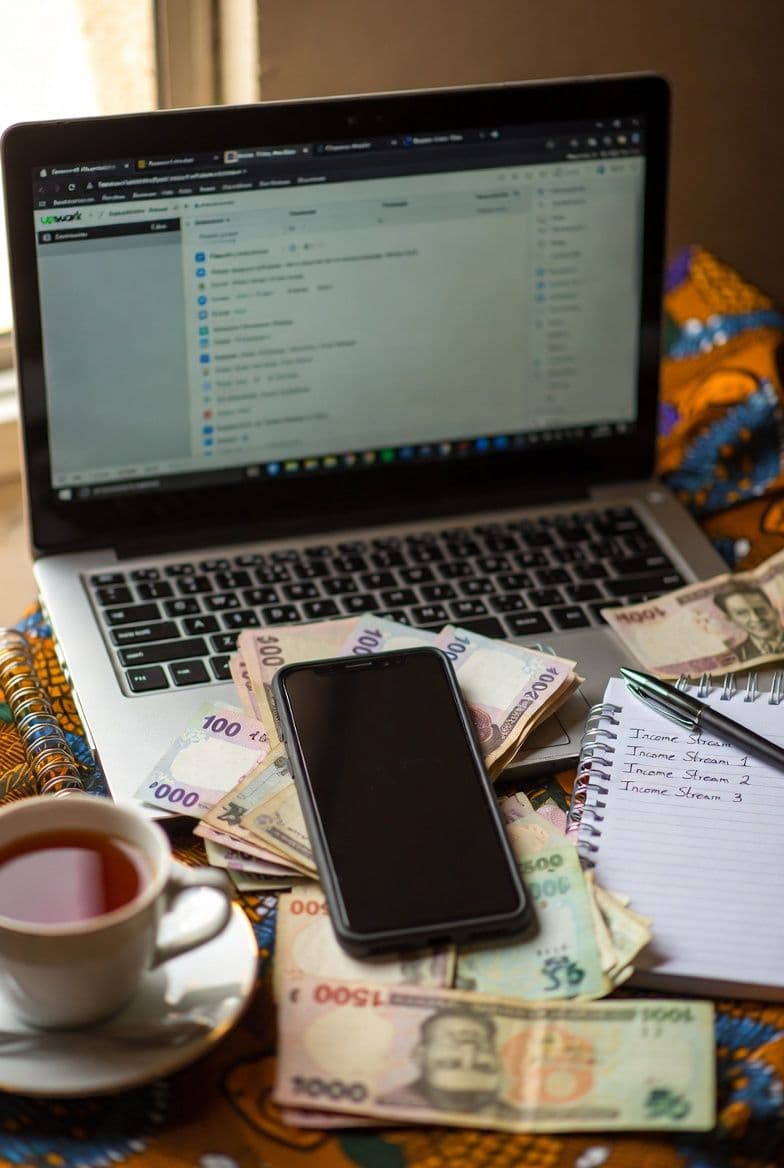
If you're a Nigerian relying on just one income source in 2026, you already know how fragile that feels. One delayed salary, one unexpected expense, or one business slowdown, and everything becomes tight. The good news? Building multiple income streams is no longer reserved for the wealthy or the exceptionally skilled. With the right approach, ordinary Nigerians, salary earners, students, traders, artisans, and young professionals are creating additional revenue channels that provide real financial breathing room. This guide shows you exactly how to do it, step by step.
Step 1: Understand What "Multiple Income Streams" Actually Means
Before diving into tactics, let's clarify what we're talking about. Multiple income streams simply means having more than one way money flows into your life. This could be:
- A salary plus freelance work on weekends
- A business plus consulting fees
- A day job plus content creation revenue
- Trading plus digital product sales
- Teaching plus side gigs
The goal isn't to work 80 hours a week. The goal is to diversify your income sources so that if one slows down, you're not immediately in crisis. Young Nigerians in 2026 are increasingly adopting the dual strategy of reducing expenses while simultaneously increasing income streams, rather than cutting lifestyle drastically. This combination is proving more sustainable and psychologically manageable than either approach alone.
Step 2: Identify One Monetizable Skill You Already Have
The people who truly make money online in 2026 focus on one clear income stream and one clear channel that brings them visibility. A monetizable income means having a skill, service, or product people are already paying for.
You don't need to be world-class. You just need to be good enough to solve a real problem for someone who will pay you. Here are some skills that are currently in high demand in Nigeria:
Social Media Management: Businesses need help managing their online presence, posting regularly, engaging followers, creating content calendars, running ads. If you're already active on Instagram, TikTok, or Facebook, you have a foundation.
Related News
- NDIC begins paying depositors of 46 failed microfinance banks, promises to beat 30-day legal deadline
- Nigerian equities added N3.156 trillion in value this week, closing Friday's session at a market capitalisation of N147.102 trillion
- Malaysia Courts Nigeria’s Halal Industry as Trade Hits $664 Million
Content Writing: Companies, bloggers, and news sites need articles, blog posts, product descriptions, and email newsletters. If you can write clearly and meet deadlines, there's work.
Graphic Design: Flyers, social media graphics, logos, and branding materials are needed constantly. Tools like Canva make basic design accessible even without formal training.
Virtual Assistance: Business owners need help with scheduling, email management, customer service, and administrative tasks. This requires organization and reliability more than technical skills.
Tutoring: If you're strong in any academic subject, JAMB prep, WAEC coaching, or even teaching a language, parents and students will pay for quality tutoring — online or in person.
The trick is to focus on skills that are in demand right now, especially in digital, AI, content, and freelance services. Ask yourself: What do people or businesses need right now? What problems are they willing to pay to solve?
Step 3: Choose One Distribution Channel and Show Up Consistently
Having a skill is one thing. But if no one sees it, it won't earn you anything. That's where your distribution channel comes in. Choosing the right platform makes the difference between being stuck and making money online in 2026.
Pick ONE platform where your potential clients already spend time:
- Instagram or TikTok for creative services, beauty, fashion, lifestyle coaching
- LinkedIn for professional services, consulting, B2B offerings
- Facebook Groups for local services, tutoring, trading
- Twitter (X) for writing, commentary, thought leadership
- WhatsApp Status for local, community-based services
Pick one platform you're comfortable with, show up consistently, and communicate your value clearly. Build your profile or portfolio to highlight your skill, share examples of your work regularly, engage with your audience and respond quickly to inquiries.
The mistake most people make is trying to be everywhere at once. That dilutes your effort and makes you invisible everywhere. Focus on one channel, post regularly, and let people see what you can do.
Step 4: Start Small and Charge Real Money From Day One
Many Nigerians make the mistake of offering their services for free for months, hoping to "build a portfolio" before charging. This rarely works. It trains clients to expect free work and trains you to undervalue yourself.
Instead, start small but charge something:
- Offer a discounted rate for your first 3–5 clients
- Set clear terms (what's included, timeline, payment structure)
- Deliver excellent work and ask for testimonials
Even if your first project earns you ₦5,000, that ₦5,000 is proof that someone found your work valuable enough to pay for. That psychological shift — from "I'm practicing" to "I'm a professional people pay" is critical.
Step 5: Automate and Systematize So It Doesn't Consume Your Life
One of the biggest fears around building multiple income streams is the time commitment. "I already work full-time where will I find the hours?" The answer is systems.
Here's how successful Nigerians are managing this:
Set Clear Boundaries: Dedicate specific hours to your side work. For example, evenings 7–9pm, or Saturday mornings. Protect that time.
Batch Your Work: If you're creating content, write or design multiple pieces in one sitting instead of starting fresh each time.
Use Templates: Whether you're designing graphics, writing proposals, or responding to client inquiries, templates save massive amounts of time.
Automate Where Possible: Use scheduling tools for social media posts. Set up automatic invoices. Use payment platforms that send reminders so you're not chasing people manually.
The goal is efficiency, not exhaustion. If your second income stream is draining your health or destroying your primary job performance, you've built it wrong.
Step 6: Reinvest Your Side Income Strategically
The biggest mistake people make with side income is treating it like extra spending money. It disappears into lifestyle inflation, a nicer meal here, a new gadget there and six months later, nothing has changed financially.
The smarter approach:
- First ₦50,000–₦100,000: Build or top up your emergency fund
- Next chunk: Pay down high-interest debt (especially loan apps)
- After that: Invest in tools or training that improve your income-generating skill
- Long-term: Start investing in stocks, mutual funds, or other wealth-building assets
Savings and investing should come before discretionary spending, not after. Experts strongly advise building an emergency fund that covers at least three to six months of essential expenses before taking on higher-risk investments.
Your side income should be working to change your financial position, not just subsidizing your current lifestyle.
Step 7: Scale the One That Works, Drop the Rest
Not every side hustle will succeed. Some will earn steadily, others will fizzle out after a few weeks. That's normal. The key is to track results honestly.
After 2–3 months, ask yourself:
- Which income stream is earning the most for the time invested?
- Which one do clients keep coming back for?
- Which one do you actually enjoy enough to sustain long-term?
Double down on that one. If social media management is working but graphic design isn't getting traction, lean into the one that's paying. You can always circle back to the other later.
If you're serious about finding sustainable ways to make money online in Nigeria, this is where it starts. In 2026, earning online is no longer about juggling multiple jobs or chasing every new side hustle. The people who truly make money online focus on one clear income stream and one clear channel that brings them visibility.
Real-Life Example: How Chioma Built Three Income Streams
Chioma works as an administrative assistant in Lagos, earning ₦150,000 monthly. By mid-2025, inflation had eroded her purchasing power significantly. Here's what she did:
Income Stream 1 (Primary): Kept her day job for stability and benefits
Income Stream 2 (Side Hustle): Started offering social media management to small businesses in her network. Charges ₦30,000–₦50,000 per client, manages three clients, works evenings and weekends. Adds ₦120,000 monthly.
Income Stream 3 (Passive-ish): Created a digital guide on "How to Write Professional Emails" and sells it for ₦2,500 on WhatsApp and Instagram. Earns ₦15,000–₦25,000 monthly with almost no ongoing effort.
Total monthly income: ₦285,000–₦320,000 (nearly doubled her original salary)
She didn't quit her job. She didn't work 100-hour weeks. She identified a skill, chose one platform, started small, and scaled what worked.
Start This Week, Not "Someday"
The difference between Nigerians who successfully build multiple income streams and those who don't rarely comes down to talent or luck. It comes down to starting.
Most people spend weeks researching, planning, and overthinking. The ones who succeed pick one skill, post about it once, reach out to one potential client, and begin. Imperfectly. Awkwardly. But they begin.
If you finish this article and do nothing, nothing will change. But if you finish this article and send one message offering your service to one person today, you've already started building something real.
The question isn't whether you can do this. The question is whether you're willing to start before you feel fully ready.
Add a Comment