


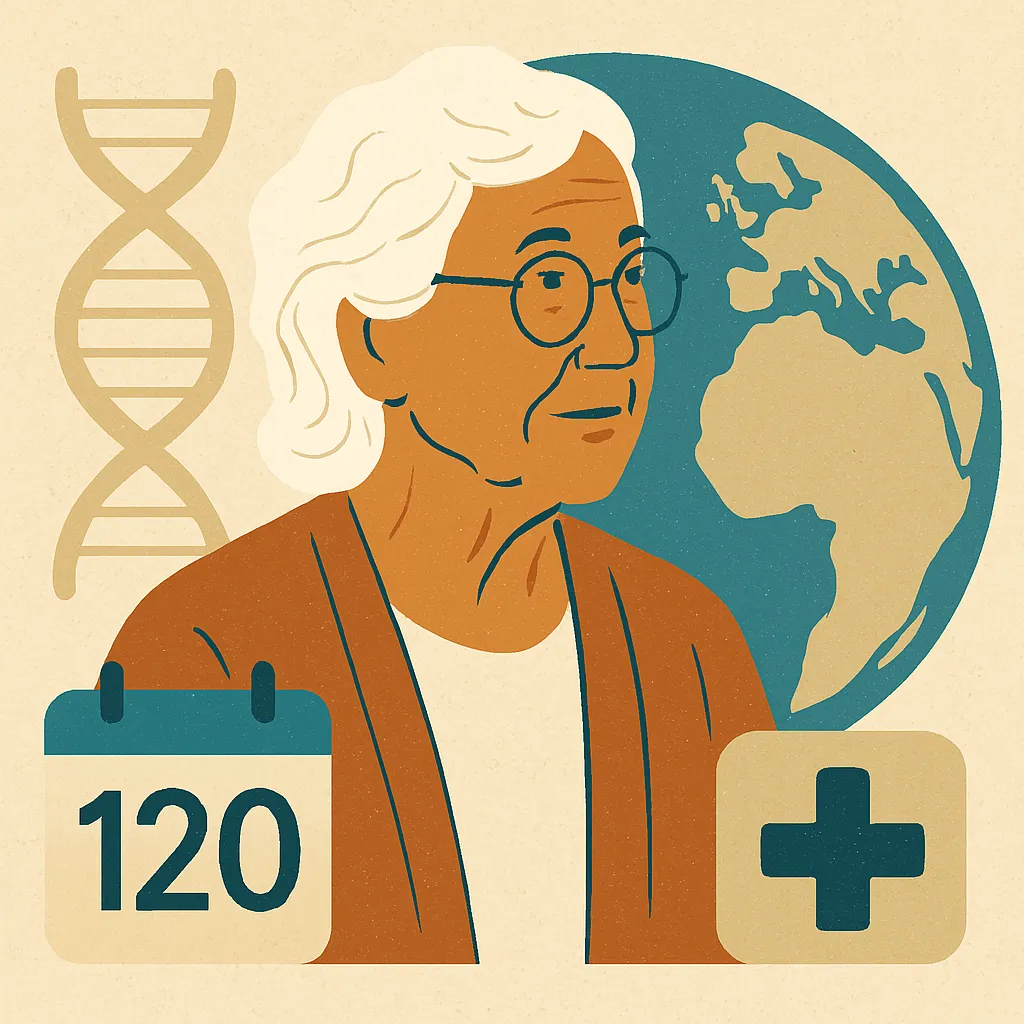
Scientific efforts to slow or modify the aging process are accelerating, prompting renewed debate over whether living to 120 years could one day become less exceptional. Researchers in genetics, regenerative medicine and artificial intelligence say the field has moved beyond theory and into measurable experimentation. While no therapy today can guarantee extreme longevity, experts argue that the pace of innovation now requires governments and financial systems to prepare for longer average lifespans.
The central question is no longer simply whether humans can live longer. It is how societies would cope if they do.
Rising Life Expectancy Sets the Stage
The foundation for today’s longevity debate is already visible in global data. According to the World Health Organization, global life expectancy increased by more than six years between 2000 and 2019, reaching an average of 73 years before the COVID 19 pandemic temporarily disrupted progress in several countries.
That gain was driven largely by improved vaccination coverage, expanded access to primary care and better treatment of infectious and chronic diseases. Meanwhile, the United Nations reports that the number of people aged 65 and older worldwide reached more than 760 million in 2021, a figure projected to double by 2050.
Researchers now contend that targeting aging itself could produce another leap forward. Dr. David Sinclair, a geneticist at Harvard Medical School known for his research on cellular aging, has argued that aging should be approached as a biological process that can be influenced, rather than accepted as an irreversible decline. Similar research programs are active across the United States, Japan and Europe.
Investor interest has followed. Industry tracking reports show that venture capital funding for longevity focused startups surpassed $5 billion globally in 2022. That level of financing reflects growing commercial expectations that aging science could translate into viable therapies.
The Shift From Lifespan to Healthspan
Scientists caution that living longer is not inherently beneficial unless those extra years are healthy. The concept guiding current research is healthspan, defined as the years lived without major chronic illness.
According to the Global Burden of Disease Study, non communicable diseases including heart disease, cancer and diabetes account for roughly 74 percent of deaths worldwide. These conditions increase significantly after age 65, underscoring the challenge of adding healthy decades rather than extended frailty.
Related News
Emerging technologies aim to intervene at earlier biological stages. Regenerative medicine seeks to repair damaged tissues. Gene editing tools are being used to study cellular pathways linked to aging. Artificial intelligence systems analyze imaging and blood biomarkers to identify disease risks before symptoms appear.
Clinical trials are also examining whether drugs initially developed for diabetes or immune disorders may slow biological aging indicators. However, no treatment has been approved specifically to extend human lifespan. Regulators will require large scale human studies to validate safety and effectiveness before any such claim is recognized.
One underreported dynamic is the potential strain on healthcare budgets if longevity gains outpace preventive reforms. According to the World Health Organization, global health spending already exceeds $8 trillion annually. Even modest increases in late life chronic care costs could significantly affect national budgets.
Retirement Systems Face Structural Pressure
Longer life expectancy carries immediate economic implications. Most public pension systems were designed when life expectancy was far lower than today. In many industrialized nations, retirement ages were set when average lifespan hovered near 70.
Research from the National Bureau of Economic Research suggests that extending working years could help offset fiscal pressure in aging economies. In countries facing shrinking workforces, longer employment participation may help stabilize tax revenues and pension funds.
Japan offers a preview of these adjustments. Nearly 29 percent of its population is over age 65, according to government data, and policies now encourage older adults to remain active in the labor market. Across Europe, similar discussions are underway as governments weigh gradual retirement age increases.
Meanwhile, economists are reconsidering traditional career models. A 100 year or 120 year lifespan could involve multiple professional reinventions. Workers may alternate between education, employment and retraining over several decades. Continuous learning would shift from optional to essential.
However, this transition could deepen inequality. Higher income individuals are more likely to access advanced healthcare and midlife education opportunities. Without policy intervention, longevity gains could disproportionately benefit those already advantaged.
Families and Social Structures in a Longer Life Era
Extended lifespans would reshape households as well as economies. Four or even five living generations within one family could become more common. The United Nations projects that the number of people aged 80 and older will triple by 2050, intensifying the need for long term caregiving systems.
Sociologists contributing to the Journal of Aging Studies have noted that prolonged longevity may slow generational turnover in political and cultural leadership. Older adults remaining active for longer could preserve institutional memory. At the same time, delayed leadership transitions may influence how quickly social reforms occur.
Caregiving burdens are also likely to expand. Middle aged adults may support elderly parents for decades rather than years. Housing markets would need to adapt to accommodate older residents seeking independent living arrangements well into their 80s and 90s.
Urban planners are beginning to consider age friendly infrastructure, including accessible transportation and healthcare facilities designed for longevity rather than acute intervention.
Equity, Ethics and Global Gaps
The promise of extended lifespan raises complex ethical questions. Advanced therapies often debut at high cost, limiting early access. If anti aging treatments remain expensive, wealthier individuals and nations could benefit first.
Life expectancy disparities are already stark. In several high income countries, average life expectancy exceeds 82 years. In parts of sub Saharan Africa, it remains below 65. Public health analysts warn that longevity breakthroughs could widen this gap unless distribution frameworks are established early.
Environmental sustainability also enters the discussion. Longer living populations would consume resources for extended periods, placing additional pressure on food supply chains, housing demand and energy systems. According to United Nations climate projections, global resource consumption is already outpacing sustainable thresholds in many regions.
Experts argue that policy planning must evolve alongside scientific discovery. Ethical guidelines, equitable pricing structures and public funding models could determine whether longevity science becomes broadly accessible or narrowly concentrated.
Researchers emphasize that living to 120 is still a possibility rather than a near term certainty. Jeanne Calment of France, who died in 1997 at age 122, remains the longest confirmed human lifespan on record. Replicating such longevity at scale would require validated interventions that slow biological aging safely across populations.
In the near term, observers are watching clinical trials focused on aging related biomarkers, regulatory decisions around gene therapies and government pension reforms in rapidly aging economies.
The broader transformation, if it comes, will extend beyond laboratories. Work patterns, intergenerational relationships and public finance structures would all be affected. Longevity science is gradually moving into mainstream economic and political debate.
Whether humans regularly reach 120 may depend as much on governance and access as on biology. The coming decades will test not only scientific progress but the capacity of societies to adapt responsibly.
Add a Comment