


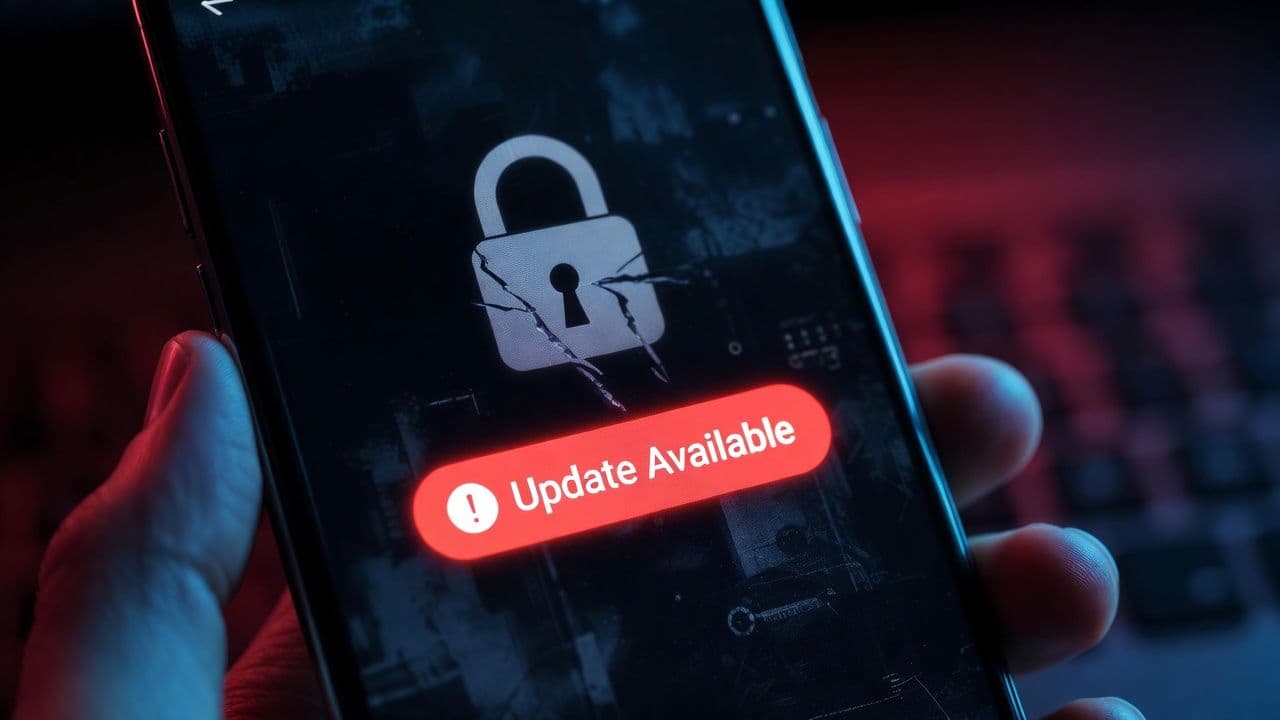
We've all been there. That little notification pops up at the corner of your screen , "Update available" and you tap "Remind me later" without a second thought. Maybe you're in the middle of something important. Maybe you simply don't want to deal with your phone restarting. Whatever the reason, skipping app updates feels harmless in the moment. It almost always does. But here's the uncomfortable truth that most people never hear until something goes wrong: that small decision repeated dozens of times across dozens of apps could be quietly leaving the door wide open for hackers, data thieves, and identity criminals.
This isn't fearmongering. The numbers back it up, and the real-world consequences are happening right now.
What's Actually Inside an App Update?
Most people assume app updates are about new features, a refreshed interface, a new emoji pack, a slightly different button layout. And sometimes, yes, that's part of it. But the more critical contents of most updates are invisible to the average user: security patches.
Every app you use whether it's your banking app, your social media platform, your email client, or that food delivery service you open three times a week is built on layers of code. And code, by its nature, contains flaws. Developers call them vulnerabilities. Cybercriminals call them opportunities.
When a vulnerability is discovered, the app's development team races to fix it and push out a patch through an update. The moment that update is released publicly, the vulnerability it addresses often becomes common knowledge in hacker communities. That means if you haven't updated your app, you're essentially running software with a known, publicly documented weakness and criminals know exactly how to exploit it.
Think of it like a bank that announces it has a broken lock on its back door, fixes it overnight, but can't force every branch to install the new lock. The branches that haven't updated are now the easiest targets in the city.
The Real Cost of Outdated Apps
The scale of damage caused by unpatched software vulnerabilities is staggering. In June 2025, security researchers uncovered what is believed to be the largest data exposure in history: approximately 16 billion login credentials compiled from malware logs, phishing kits, and prior breaches, all targeting users who had failed to update apps, reset passwords, or patch known vulnerabilities. Platforms tied to Google, Apple, and Meta were all implicated.
That same year, Verizon's Data Breach Investigations Report confirmed that exploitation of unpatched vulnerabilities had increased sharply as an entry point for attackers, with ransomware present in nearly half of all system-intrusion breaches studied. The average cost of recovering from a ransomware attack has now climbed to $2.73 million, nearly a million dollars more than the year before.
Related News
These are not abstract statistics. Behind every one of those numbers is a real person, someone whose bank account was drained, whose private photos were exposed, whose identity was stolen and sold on the dark web, whose years of saved passwords were suddenly in the hands of a stranger in another country.
Your Phone Is a Target — More Than You Think
Smartphones are now the primary target for cybercriminals, and it's easy to understand why. Your phone holds more sensitive personal data than almost any other object in your life. Your banking credentials. Your email. Your location history. Your health records. Your private conversations. Your photos. Often, access to one app on your phone can cascade into access to everything else.
Android and iOS both release regular security bulletins patching critical vulnerabilities, some classified as severe enough to allow remote code execution, meaning a hacker could potentially control your device without you tapping a single thing. In September 2025, Google's Android Security Bulletin patched exactly such a vulnerability: a critical flaw in the System component that required zero user interaction to exploit. If your phone had auto-updates turned off and you hadn't manually updated, your device was vulnerable, probably without you ever knowing.
Apple issues similar patches regularly. The problem isn't that these companies aren't working hard to protect you. The problem is that protection only reaches you when you accept the update.
"But Nothing Bad Has Happened to Me Yet..."
This is the most common and most dangerous form of false security. Cyberattacks are often silent and slow. Criminals don't always announce themselves the moment they access your data. In many cases, compromised credentials sit on dark web marketplaces for months, sometimes years before being actively used. The Illinois state government recently discovered that sensitive personal data had been publicly exposed and visible for four years before anyone noticed. Nearly one million people were affected.
By the time most victims discover their data has been compromised, the damage is long done. The breach, the sale, the identity fraud, it all happens quietly, in the background, while the person affected goes about their daily life, tapping "remind me later" on every update notification.
Simple Habits That Can Protect You Starting Today
The good news is that protecting yourself doesn't require a cybersecurity degree. A few straightforward habits can dramatically reduce your risk.
The first and most impactful step is turning on automatic updates for all your apps. Both Android and iOS allow you to do this in your phone's settings. Once enabled, your apps update in the background, usually overnight, on Wi-Fi — without interrupting your day. You get the security patches without lifting a finger.
For apps that require manual updates, make it a weekly habit. Set a reminder if you need to. Five minutes on a Sunday reviewing your app store update list is a genuinely small price to pay for peace of mind.
Beyond updates, use unique passwords for every app and service you use, especially banking and email. A password manager makes this effortless. Enable two-factor authentication wherever it's offered. And pay attention when an app asks for permissions that seem unnecessary, like a calculator app requesting access to your contacts or location. That's often a red flag worth acting on.
An app update notification is easy to dismiss. It always will be. But behind that small banner is a team of engineers who found a crack in the wall and fixed it, specifically to keep your data safe. Every time you skip it, that crack remains. And in a world where cybercriminals are faster, better-equipped, and more determined than ever before, leaving any crack open is a gamble that simply isn't worth taking.
Update your apps. Do it today. Your data is worth thirty seconds of your time.
Add a Comment