


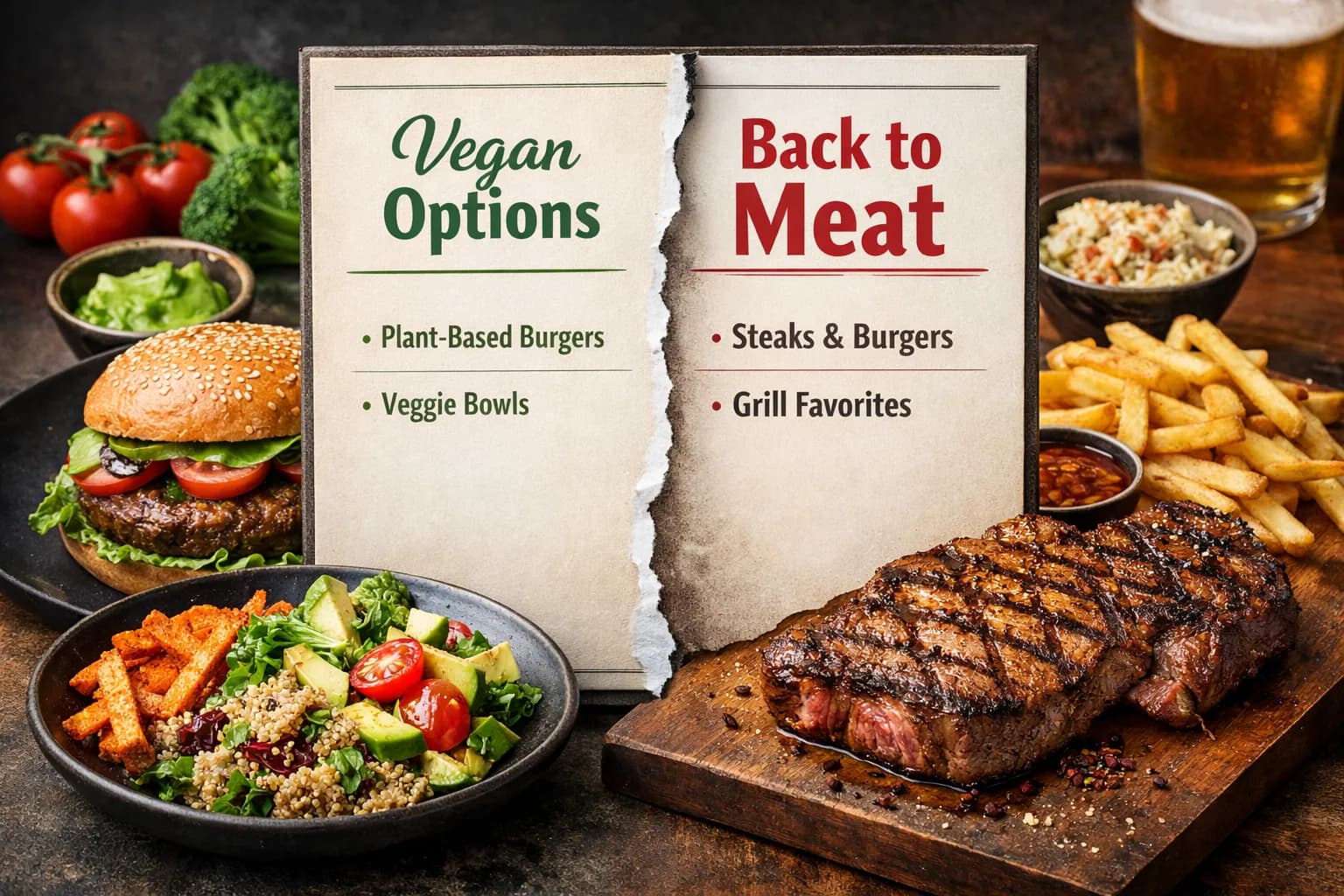
London, United Kingdom — A notable change is gathering pace in Britain’s hospitality sector as several major restaurant groups are trimming vegan and vegetarian choices in favour of traditional meat offerings. After years of rapid expansion in plant-based dining, the industry appears to be recalibrating its menu strategies in response to evolving customer behaviour and financial pressures.
Over the past several months, well-known chains such as McDonald’s, Wagamama, and casual dining pubs have cut back the number of plant-based items they offer, according to reporting from The Guardian and industry food sources. McDonald’s UK, for example, recently removed more than 80 percent of its vegetarian menu items, leaving just one plant-based burger as its sole meat-free option.
The shift comes at a time when participation in plant-based lifestyle campaigns remains high. The nonprofit behind the annual Veganuary challenge reported that around 30 million people took part globally in 2026, underscoring sustained interest in vegan eating.
Market Forces and Consumer Spending
Industry analysts point to a blend of economic and cultural factors behind the shift. Inflation and rising ingredient costs have squeezed restaurant margins, prompting operators to focus on higher-margin and better-selling items. In casual dining, meat dishes often generate stronger sales and appeal more consistently to broad customer bases than laser-targeted plant-based options.
In the UK quick-service sector, plant-based orders actually rose by an estimated 56 percent in 2024, a sign of potent demand, yet operators still rationalised menus once novelty faded and repeat purchases declined. This suggests that while consumers still order vegan options, they may do so alongside, rather than in place of, meat-based meals.
Chefs and restaurateurs tell a more nuanced story. “Customers often try the plant-based alternative once or twice, but repeat orders are less common if the taste or value doesn’t match expectations,” said a London chef who asked not to be named. This perspective aligns with broader studies showing that taste and quality are the most important factors for diners choosing plant-based items, regardless of ethical motivations.
Not a Retreat From Sustainability
Despite the headlines about plant-based menus disappearing, experts caution that this is not necessarily a wholesale rejection of sustainability in eating. The plant-based sector is undergoing what market observers describe as a phase of maturation and consolidation rather than collapse.
Retail sales data from major UK supermarkets tell a more layered story. Tesco, the nation’s largest grocer, reported renewed growth in some plant-based categories in early 2026, with vegan mince sales up nearly 25 percent year-on-year and increased interest in whole-food plant proteins such as tofu and tempeh. These trends point to a rise in “veg-led” diets centred on plant-forward meals rather than processed meat alternatives.
Related News
Professor Sarah Fletcher, a food market researcher at the University of Reading, said the current shift in restaurants reflects customers becoming more discerning. “Early plant-based growth was driven by novelty and ethical conversation,” she told this outlet. “Now we’re seeing preferences refine: consumers want better-tasting, healthful dishes that fit their budget. That doesn’t mean people have given up on plant food. They just don’t want underwhelming substitutes.”
Cultural Dynamics and Social Trends
This recalibration also intersects with changing cultural attitudes. Social media trends such as #realfood and #backtobasics have emerged as popular hashtags, often highlighting consumer nostalgia for comfort foods and more traditional cooking. These trends reflect broader shifts in food culture, where flexitarian eating reducing, not eliminating, meat consumption has become the dominant pattern among diners.
For younger diners in particular, sustainability remains an important consideration, but it is balanced against practical influences like price, taste, and convenience. A 2025 industry report projected that nearly half of UK diners would choose where to eat based on environmental considerations, but that taste and value remained the top purchase drivers.
Business Implications and Next Steps
Restaurant operators face a complex strategic question: how to balance ethical dining trends with commercial realities. Many chains are now exploring flexitarian menus, which offer both meat and high-quality plant-based options, rather than treating them as separate categories.
Tom Wu, food service strategist at market research firm Food Futures UK, says operators that innovate thoughtfully are likely to thrive. “Customers aren’t abandoning plant-based foods,” he explained in a recent interview. “They’re asking for dishes that taste great, offer good nutrition, and reflect broader lifestyle goals. Menus that integrate choices without marginalising one group will outperform polarised approaches.”
Chef partnerships and rising “plant-forward” concepts in fine dining also reflect this transition. London’s vibrant restaurant scene continues to feature acclaimed vegan subtleties alongside meat-centric tasting menus, showing that culinary evolution is happening, even if mass-market casual dining lags behind.
Analysts point to several indicators that will be key to understanding the long-term direction of plant-based dining in the UK:
- Consumer purchase data in 2026 and beyond, especially repeat orders for plant-based dishes in casual restaurants.
- Food service innovation in developing appetising, high-value plant-forward dishes.
- Retail vs restaurant trends, as supermarkets show renewed plant-based growth while eating-out patterns shift.
- Environmental policy and sustainability goals, particularly as governments consider food emissions and dietary guidelines.
A related academic study found that meat-free eating interventions can reduce greenhouse gas emissions by more than 50 percent, but behavioural retention is critical to realising those environmental gains.
The recent contraction of plant-based menus across some UK restaurants reflects a market in transition rather than a rejection of ethical eating. Economic pressures, shifting consumer priorities, and refined culinary expectations have prompted operators to rethink how they present plant-based food. As the hospitality industry adjusts, the future of sustainable dining in the UK will likely emerge from a blend of innovation, flexibility, and consumer engagement rather than a simple return to old habits.
Add a Comment