


How Optional Digital Transmission Could Shape Election Disputes and Court Battles
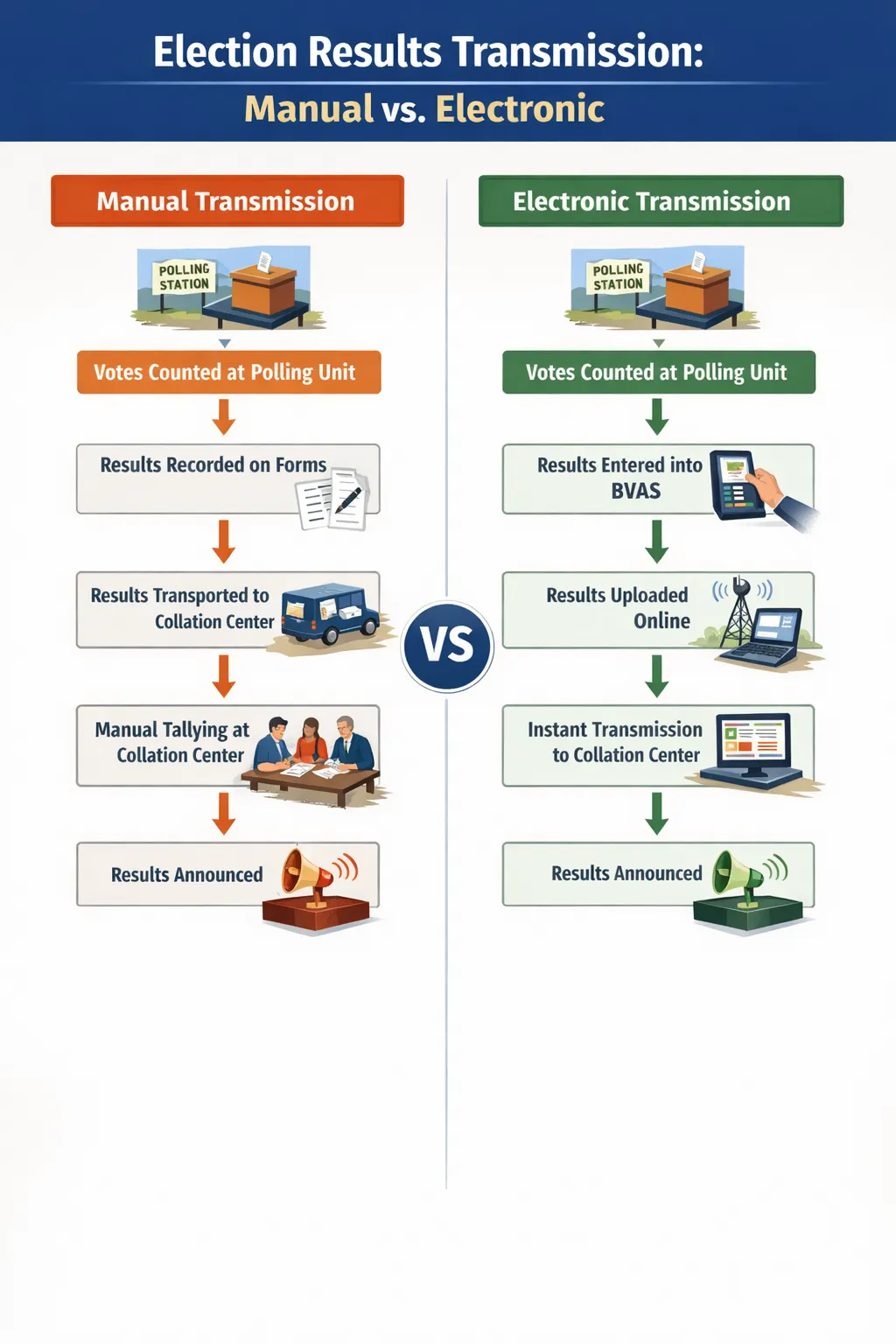
The decision to make real time electronic transmission of election results optional rather than mandatory has stirred fresh debate about the credibility of elections in Nigeria. Legal experts, civil society groups, and political stakeholders say the provision creates room for uncertainty during vote collation and may fuel prolonged court battles after elections. While supporters argue that flexibility is necessary due to infrastructure gaps, critics warn that the optional clause could weaken public trust at a time when confidence in electoral processes remains fragile.
According to reports by Punch and other local media, the law allows the electoral body to determine when and how electronic transmission is used, instead of making it compulsory across all polling units. This discretion, analysts say, introduces ambiguity that could be exploited during tightly contested races.
Background to Electronic Transmission Debate
Electronic transmission of results gained prominence after disputes over manual collation in previous elections. Allegations of tampering during physical movement of results sheets have historically triggered violence, protests, and litigation. The push for digital transmission was seen as a reform aimed at reducing human interference.
The Independent National Electoral Commission had tested electronic systems in off cycle governorship elections, reporting improvements in speed and transparency. However, logistical challenges such as poor network coverage in rural communities and technical failures were cited as reasons for caution.
Electoral reform advocates note that the optional provision reflects a compromise between technological ambition and operational reality. Meanwhile, civil society organizations argue that partial adoption undermines the very purpose of reform.
Where the Loopholes May Appear
Experts identify several possible loopholes during election conduct if electronic transmission is not mandatory.
First is selective application. If electronic transmission is used in some polling units but not others, losing parties may allege manipulation in areas where manual collation occurred. This uneven approach could complicate verification of results.
Second is delayed transmission. Even where digital tools are deployed, the absence of a strict legal requirement may allow officials to postpone uploading results, creating opportunities for interference during the waiting period.
Related News
Third is reliance on human discretion. Election officials on the ground may decide whether network conditions justify electronic transmission, a judgment that can be contested later in court.
A senior election observer interviewed by Channels Television noted that ambiguity in procedure often becomes a focal point for post election disputes. According to the observer, the credibility of an election is determined not only by the voting process but also by how results are handled afterward.
Judicial Implications and Post Election Litigation
The optional clause is expected to feature prominently in election petitions. Lawyers say candidates may argue that failure to transmit results electronically in certain areas amounts to non compliance with electoral guidelines.
Courts could face complex questions. Judges may need to determine whether optional provisions carry the same legal weight as mandatory ones, and whether failure to use electronic transmission materially affected the outcome of an election.
A constitutional law scholar at the University of Lagos told The Guardian that ambiguous legal language often shifts the burden of interpretation to the judiciary. According to the scholar, this increases the likelihood of conflicting judgments and appeals that could drag on for months.
Past election cycles offer context. Disputes over manual collation procedures have reached the Supreme Court of Nigeria, sometimes overturning results long after winners were sworn in. Observers fear that unclear rules on electronic transmission may produce similar outcomes.
The issue comes at a time when voters are increasingly demanding transparency. Youth participation has surged in recent elections, driven partly by expectations of technological reforms.
Meanwhile, political parties are investing heavily in legal teams even before polls are conducted. Analysts say this reflects a growing belief that elections are won not only at the ballot box but also in courtrooms.
A unique concern raised by election technology specialists is the risk of hybrid confusion. When both manual and electronic systems operate simultaneously without a clear hierarchy, discrepancies may arise between digital records and physical result sheets. Resolving such conflicts could prove difficult for tribunals.
Stakeholder Reactions
Civil society groups including election monitoring coalitions have called for clearer guidelines. They recommend publishing detailed criteria for when electronic transmission must be used and establishing penalties for unjustified deviations.
Some lawmakers defend the optional approach, citing infrastructure limitations. According to a member of the National Assembly interviewed by Premium Times, making electronic transmission compulsory without reliable connectivity nationwide could disenfranchise voters in remote areas.
Political parties remain divided along strategic lines. Parties with strong rural support tend to favor flexibility, while those relying on urban votes often push for mandatory digital transmission.
Attention will likely focus on operational guidelines issued by the electoral commission. These rules will determine how the optional provision is implemented in practice.
Observers also expect pre election court cases seeking interpretation of the law before voting begins. Such legal clarification could reduce uncertainty during the polls.
International partners and election observers are monitoring developments closely. Transparent procedures are seen as essential for maintaining Nigeria’s democratic credibility within West Africa.
Making real time electronic transmission optional reflects a cautious approach to electoral reform, balancing technological promise with practical constraints. However, the ambiguity introduces potential loopholes that could affect election credibility and prolong judicial battles.
Ultimately, the success of the policy will depend on transparent guidelines, consistent implementation, and swift legal interpretation where disputes arise. As Nigeria prepares for future elections, the debate underscores a broader question facing many democracies. How to integrate technology into voting systems without creating new forms of uncertainty.
Add a Comment