


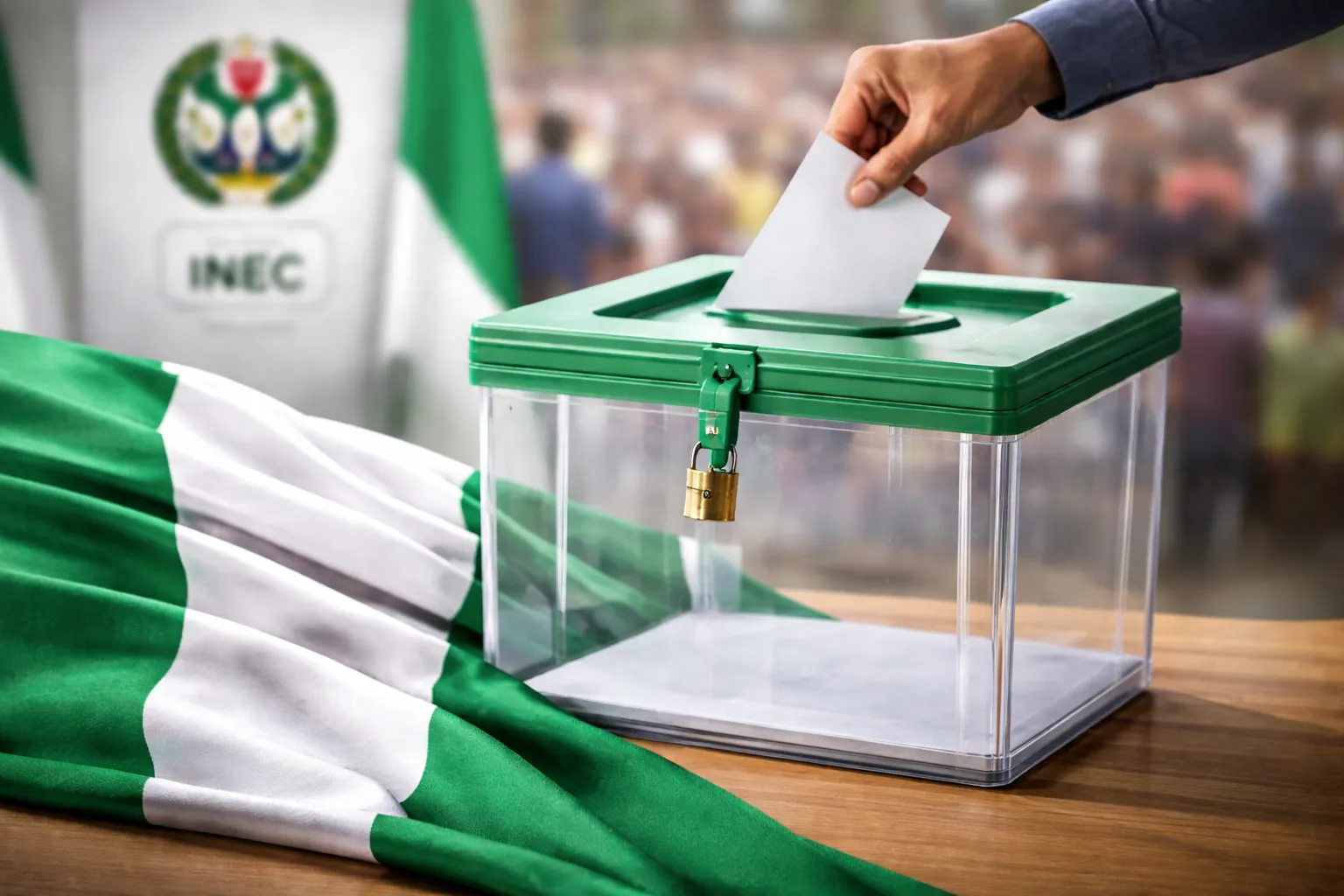
Nigeria’s Independent National Electoral Commission has fixed February 20, 2027 as the date for the next Presidential and National Assembly elections, formally setting the stage for what will be the country’s seventh general election since the return to civilian rule in 1999. Governorship and State House of Assembly elections will follow on March 6, 2027.
The announcement provides early clarity for political parties, candidates and more than 93 million registered voters recorded in the 2023 cycle. INEC Chairman, Prof. Joash Amupitan, said the timetable fulfills constitutional requirements and gives stakeholders sufficient time to prepare for a process that will span nearly a year before the first ballot is cast.
With party primaries beginning in May 2026, the political clock has effectively started ticking.
2027 General Election Timetable at a Glance
INEC released the following key dates:
- Presidential and National Assembly Elections: February 20, 2027
- Governorship and State House of Assembly Elections: March 6, 2027
- Party Primaries: May 22 to June 20, 2026
- Publication of Presidential Candidates: August 4, 2026
- Presidential and National Assembly Campaign Period: November 18, 2026 to February 19, 2027
- Governorship and State Assembly Campaign Period: December 15, 2026 to March 5, 2027
The 30 day primary window gives Nigeria’s 18 registered political parties a defined period to conduct internal contests and submit candidate names.
By separating federal and state elections by two weeks, INEC retains a structure used in recent cycles, including 2019 and 2023, to manage logistics across 36 states and the Federal Capital Territory.
Constitutional Backing and Early Notice
Under the 1999 Constitution, general elections must be held not earlier than 150 days and not later than 30 days before the expiration of the current administration’s tenure. INEC’s February 20 date falls within that legal window.
Prof. Amupitan emphasized that early publication of the timetable is intended to reduce uncertainty and allow compliance with electoral laws. In previous cycles, disputes over party primaries and candidate substitutions generated dozens of pre election court cases. Legal analysts say a clearly defined calendar may help limit procedural litigation ahead of 2027.
Related News
Nigeria operates more than 176,000 polling units nationwide, making long term logistical planning essential. Printing ballot materials, recruiting and training ad hoc staff and deploying technology such as the Bimodal Voter Accreditation System require months of coordination.
Ramadan Overlap Raises Inclusivity Questions
The February 20, 2027 presidential election date falls within the Islamic holy month of Ramadan, projected to run from February 7 to March 8, 2027.
Former Vice President Atiku Abubakar publicly urged INEC to reconsider the timing, arguing that fasting could affect turnout and voter participation, particularly in northern states with large Muslim populations.
Nigeria is home to roughly 100 million Muslims, according to demographic estimates by the Pew Research Center. The overlap has therefore sparked discussion about balancing civic obligations with religious observance.
However, some constitutional experts argue that elections have previously coincided with religious periods without systemic disruption. They suggest that voter education, early accreditation and efficient polling procedures may mitigate potential turnout concerns. As of now, INEC has not indicated any plan to alter the schedule.
The release of the timetable is more than an administrative step. It marks the informal start of political positioning across the country.
In 2023, voter turnout stood at approximately 27 percent, the lowest since Nigeria’s return to democracy in 1999. Analysts say improving participation will be a major test in 2027. Youth engagement may be decisive, with Nigerians under 35 accounting for more than 60 percent of the population, according to data from the National Bureau of Statistics.
For political parties, the schedule provides a framework for coalition talks and internal consultations. Aspirants are expected to intensify outreach long before formal campaigns begin in November 2026.
For civil society groups and election observers, the early timetable allows expanded planning for voter education, election monitoring and conflict prevention initiatives.
Security and Technology in Focus
Security considerations are likely to shape preparations. During the 2023 elections, security agencies deployed tens of thousands of personnel nationwide. While voting proceeded in most areas, isolated disruptions were reported in parts of the South East and North West.
INEC’s use of the Bimodal Voter Accreditation System in 2023 represented a significant technological shift, aimed at improving transparency in voter verification and result management. Observers will be watching whether further upgrades or refinements are introduced before 2027.
Election logistics also involve recruiting more than 1 million ad hoc workers, transporting sensitive materials and coordinating with security agencies across 774 local government areas. Any breakdown in these systems can affect public confidence.
Since 1999, Nigeria has conducted six consecutive general elections. While improvements have been recorded in voter registration and accreditation technology, challenges such as delayed polling unit openings, vote buying allegations and post election litigation have persisted.
The separation of federal and state elections is intended to ease administrative strain. It also allows electoral officers to focus resources in phases rather than conducting all contests simultaneously.
International observers often cite Nigeria as one of Africa’s most complex electoral environments because of its size and diversity. Managing a nationwide vote involving more than 93 million registered voters places enormous pressure on institutions.
What to Watch Ahead of 2027
Several developments will likely shape the months ahead:
- The conduct and transparency of party primaries in mid 2026
- Possible legal challenges arising from candidate selection
- Voter registration updates and PVC collection rates
- Security assessments in sensitive regions
- Strategies to address potential Ramadan related turnout concerns
Political rhetoric is expected to intensify well before the official campaign window opens in November 2026.
By setting February 20, 2027 as the date for the presidential and National Assembly elections, INEC has formally launched Nigeria’s next democratic cycle. The structured timetable provides clarity and aligns with constitutional provisions, while also sparking debate over inclusivity and voter participation during Ramadan.
Add a Comment