


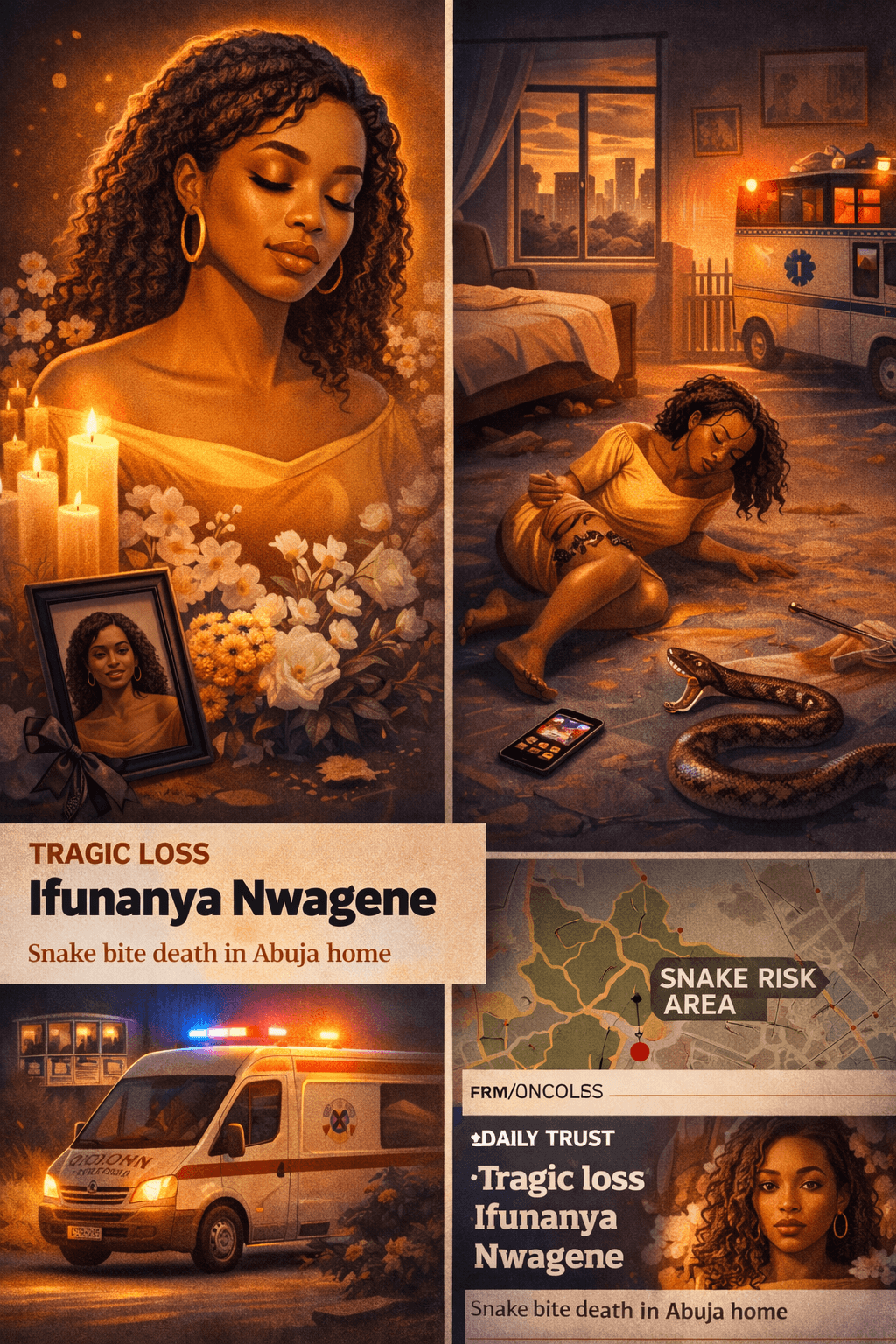
The Nigerian music industry is mourning the death of emerging singer Ifunanya Nwagene, whose passing after a reported snake bite in her Abuja residence has shocked fans and raised broader concerns about residential safety in the Federal Capital Territory. According to Punch, the artist was bitten inside her home and later died, a rare but devastating incident that has prompted renewed discussions around environmental risks, emergency response, and urban planning in fast-growing cities.
Tributes from fellow musicians and fans have continued to pour in, celebrating Nwagene’s talent and lamenting a life and career cut short. Beyond the grief, however, the circumstances surrounding her death have pushed an uncomfortable question into public view: how prepared are residents for unexpected hazards within their own homes.
Who Was Ifunanya Nwagene
Ifunanya Nwagene was gaining recognition as a rising voice in Nigeria’s independent music scene. Known among peers for her soulful sound and experimental style, she had been working steadily to build her audience, particularly through digital platforms.
While she had not yet broken into the mainstream, music analysts say her work reflected the growing diversity of Nigeria’s creative industry, where independent artists are increasingly shaping trends outside traditional record label structures.
“She represented a generation of young musicians who were finding their voice on their own terms,” said Tunde Balogun, a Lagos based music critic, in comments to The Nation. “Her death is a loss not just to her family, but to a scene that thrives on emerging talent.”
What Is Known About the Incident
According to reports by Punch and Channels Television, Nwagene was bitten by a snake inside her Abuja home. Details surrounding how the incident occurred remain limited, and authorities have not released a full account as of the time of reporting.
Emergency responders were reportedly contacted, but the singer later died. Officials have urged the public to avoid speculation while investigations continue.
The incident stands out because snake bites are more commonly associated with rural or agricultural areas. However, experts note that urban encounters, while rare, are not unprecedented.
Related News
Abuja and the Growing Risk of Urban Wildlife Encounters
Environmental experts say Abuja’s rapid expansion has increased contact between humans and wildlife. As residential developments push into previously undeveloped land, animals displaced from their natural habitats may find their way into homes.
According to the Abuja Environmental Protection Board, reports of snakes entering residential areas tend to rise during the rainy season, when reptiles seek dry shelter or prey. Similar warnings have been issued in past years, particularly for neighborhoods near green belts, drainage systems, and undeveloped plots.
Dr. Ibrahim Musa, an environmental health specialist, explained that urban wildlife incidents are often underreported. “People assume cities are insulated from these risks, but ecology does not follow zoning plans,” he said in an interview with Daily Trust.
Why the Death Matters Now
Nwagene’s death has resonated beyond the entertainment industry because it challenges assumptions about safety in urban homes. In a city often perceived as orderly and well planned, the incident underscores vulnerabilities that are easy to overlook.
Public safety analysts say the timing is significant. Climate variability, including heavier rainfall and longer wet seasons, may be altering animal movement patterns. Meanwhile, urban residents increasingly rely on gated compounds and private security, sometimes overlooking environmental hazards.
According to the Nigerian Centre for Disease Control, snake bites remain a public health concern nationwide, though most reported cases occur outside major cities. The agency has previously emphasized the importance of rapid medical response and public awareness.
Expert Reactions and Safety Perspectives
Medical experts stress that snake bites are medical emergencies requiring immediate attention. According to the World Health Organization, delayed treatment significantly increases the risk of severe complications or death.
Dr. Aisha Bello, an emergency medicine physician in Abuja, noted that preparedness is key. “Many households do not have basic emergency plans. Knowing who to call and how to respond can make a difference,” she said, speaking to Premium Times.
A less discussed angle, according to safety researchers, is the role of household awareness and routine checks. Simple practices such as sealing wall gaps, clearing overgrown surroundings, and inspecting rooms, especially in areas close to undeveloped land, can reduce risk.
Broader Implications for Residents and Authorities
The tragedy has renewed calls for stronger collaboration between residents, estate managers, and environmental agencies. Community leaders in parts of Abuja have urged authorities to intensify public education on wildlife risks and response measures.
Urban planners say the incident also highlights the need for environmental impact considerations to be enforced more strictly as cities expand. Proper drainage, waste management, and land use planning can reduce conditions that attract wildlife into residential spaces.
Meanwhile, artists and cultural figures have called for better welfare structures within the creative industry, noting that independent musicians often lack access to organized support systems during emergencies.
As investigations continue, residents are watching for official guidance from environmental and health authorities. Experts expect renewed advisories on snake prevention, particularly as the rainy season progresses.
There may also be increased scrutiny of emergency response systems in residential neighborhoods, including access to antivenom and response times.
For the music community, attention is likely to shift toward honoring Nwagene’s work and supporting her family, while also reflecting on the precarious realities faced by many emerging artists.
The death of Ifunanya Nwagene is a deeply personal tragedy that has rippled into a wider public conversation about safety, preparedness, and urban living. While snake bites in city homes remain uncommon, the incident serves as a reminder that no environment is entirely risk free.
As Abuja continues to grow, balancing development with environmental awareness will be essential. For now, the focus remains on mourning a promising artist, supporting her loved ones, and drawing practical lessons that may help prevent similar losses in the future.
Add a Comment