


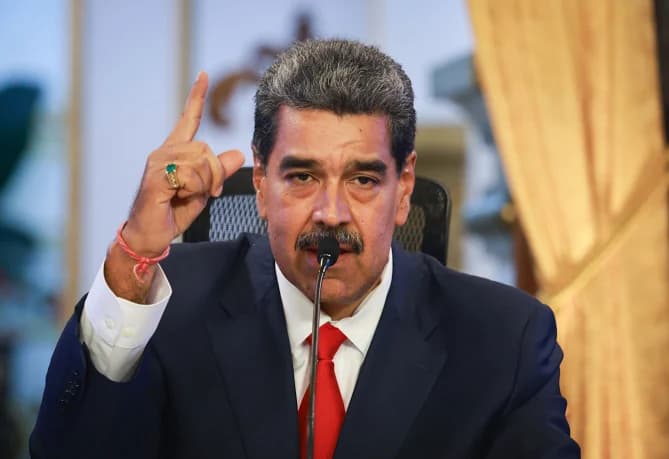
Nicolás Maduro, the ousted president of Venezuela, appeared in a New York federal courtroom on Monday, entering a not guilty plea to multiple charges including narco-terrorism and cocaine importation conspiracy. His arraignment follows his capture, along with his wife Cilia Flores, by United States authorities on January 3, intensifying an already tense standoff over Venezuela’s political future.
The hearing unfolded against a backdrop of public demonstration outside the courthouse, where supporters and opponents of Maduro voiced sharply divergent views. One group waved flags and held placards backing former US President Donald Trump, while another called for Maduro’s release, denouncing what they described as foreign interference in Venezuelan affairs. Police erected barricades to keep the opposing sides apart, and among the crowd were Venezuelan expatriates expressing personal and political stakes in the case.
Charges and Court Proceedings
Maduro, 63, faces four federal counts: narco-terrorism, conspiracy to import cocaine, and possession of machine guns and destructive devices. During the arraignment, he maintained his innocence, stating through an interpreter: “I am innocent. I am not guilty. I am a decent man. I am still president of my country.” Flores also pleaded not guilty during the couple’s initial court appearance.
U.S. prosecutors allege that Maduro ran a cocaine trafficking network tied to violent groups, including Mexico’s Sinaloa and Zetas cartels, Colombian FARC rebels, and Venezuela’s Tren de Aragua gang. According to the indictment, these activities extended from Maduro’s early political career in Venezuela’s National Assembly in 2000, through his tenure as foreign minister, and into his presidency, which began in 2013 following Hugo Chávez’s death.
The judge, Alvin Hellerstein, opened the hearing at 12:02 p.m. (1702 GMT), outlining the charges. Maduro, dressed in orange and beige prison garb, listened through headphones as the proceedings were interpreted into Spanish. Both defendants were informed of their right to notify the Venezuelan consulate, and the case has been adjourned until March 17.
Legal Representation and Health Concerns
Maduro’s attorney, Barry Pollack, described the proceedings as potentially “voluminous and complex,” emphasizing what he called his client’s “military abduction.” Pollack confirmed that Maduro is not seeking bail at present, but could request release later in the process. Flores’s lawyer, Mark Donnelly, reported that his client sustained serious injuries during the capture, including bruising to her ribs, and requested that she receive X-rays and a full medical evaluation.
The couple’s arraignment stems from a long-running U.S. investigation into narcotics trafficking by Venezuelan officials and Colombian guerrilla groups. Federal prosecutors first indicted Maduro in 2020, and a recently unsealed update added Flores as a co-defendant, alongside new allegations and associated defendants.
International Implications
The capture and arraignment have sparked debate over the legality and diplomatic consequences of U.S. actions. Since Maduro’s disputed re-election in 2018, the United States has labeled him an illegitimate ruler, citing widespread irregularities during the vote. Some international law experts have criticized the U.S. operation, arguing it undermines established norms and could be perceived as a precedent for extraterritorial enforcement actions.
Related News
- The UN's migration agency says trafficking networks have forced people from more than 80 countries into online scam compounds across Asia.
- More than 12,000 people have been arrested by US immigration authorities after tips from the Office of Refugee Resettlement.
- China's trade with Africa hit 1.41 trillion yuan in the first half of 2026.
“This is not just a case about drugs,” said Ana Velázquez, a Latin American political analyst at the Council on Hemispheric Affairs. “It represents a potential turning point in U.S.-Venezuela relations and in how Washington may intervene in other countries considered hostile or corrupt.”
Public Reaction and Political Context
The split reaction among demonstrators highlights deep divisions both within the Venezuelan diaspora and in global perceptions of U.S. foreign policy. Those advocating for Maduro’s release framed the arrest as an infringement on national sovereignty, while his opponents expressed hope for a new chapter in Venezuela without his leadership.
Maduro has consistently denied all charges, framing them as a cover for U.S. ambitions to control Venezuela’s vast oil resources. Analysts suggest that the arraignment, even as a legal proceeding, carries symbolic weight for Maduro’s political legitimacy.
“The optics are as important as the legal facts,” said José Rivas, a Venezuelan political commentator based in Miami. “Even if this case takes years to reach trial, the narrative it creates about accountability and international pressure is significant.”
Maduro and Flores’s arraignment in New York federal court marks a rare instance of a former head of state facing U.S. criminal charges on foreign soil. The case blends complex legal, political, and diplomatic dimensions, raising questions about international law, Venezuelan sovereignty, and U.S. enforcement powers abroad. As the March 17 proceedings approach, analysts and observers alike will be watching closely for both legal maneuvers and geopolitical reverberations.
Add a Comment