


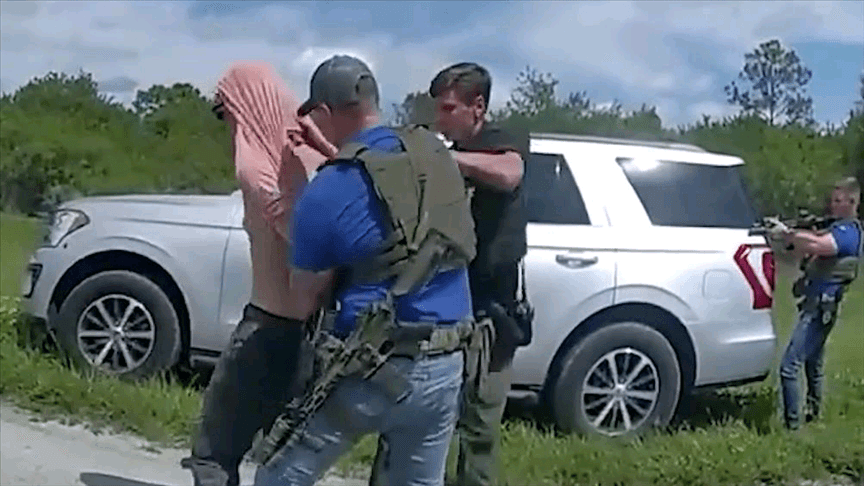
US federal prosecutors have asked a court to impose a life sentence on Ryan Routh, the man convicted of attempting to assassinate President Donald Trump during a 2024 incident at the former president’s Florida golf course, arguing that the attack was the result of months of deliberate planning and ideological fixation.
In a sentencing memorandum filed on Friday ahead of Routh’s February sentencing hearing, prosecutors described the 59 year old as a persistent and unrepentant threat whose actions, they said, were intended to complete a violent mission that another attacker had failed to carry out earlier that year.
According to the filing, Routh’s attempt at Trump’s West Palm Beach golf course was not a spontaneous act. Instead, prosecutors said it was carefully prepared over an extended period and motivated in part by the July 2024 assassination attempt by Thomas Crooks in Butler, Pennsylvania.
“Routh plotted painstakingly for months,” prosecutors wrote, adding that he sought to “accomplish what Crooks failed to complete.”
A foiled attack before shots were fired
Routh was convicted in September after a jury found that he had positioned himself in a concealed sniper’s hide near the sixth hole of Trump’s golf course, armed with a loaded SKS rifle. According to court records, the plot was disrupted when a US Secret Service agent noticed the weapon protruding from the concealed position and intervened before Routh could fire.
The prosecution emphasized that the absence of gunfire did not diminish the seriousness of the crime. In their view, the only reason the attempt failed was the vigilance of federal agents, not any hesitation on Routh’s part.
“This case is defined by intent, preparation, and resolve,” the sentencing memo said, noting that Routh had taken concrete steps to position himself for a clear line of sight on the president.
Prosecutors cite lack of remorse
In pressing for a life sentence, prosecutors argued that Routh has shown no remorse since his arrest or conviction. They told the court that his post arrest conduct and statements offered no indication that he recognizes the gravity of his actions or the danger they posed to public safety.
“Nothing about Routh mitigates the need for a sentence of life in prison,” the filing stated.
Legal analysts say such language signals the government’s intent to portray the defendant as a continuing risk rather than a one time offender. By emphasizing his alleged ideological commitment and lack of regret, prosecutors appear to be countering any defense arguments for leniency based on age or the fact that no shots were fired.
Link to earlier 2024 assassination attempt
A key element of the prosecution’s argument is the connection they draw between Routh’s actions and the earlier assassination attempt on Trump in July 2024. In that incident, Thomas Crooks opened fire at a campaign rally in Butler, Pennsylvania, injuring Trump and killing one attendee before being shot dead by law enforcement.
According to the sentencing memo, Routh closely followed that attack and renewed his determination afterward. Prosecutors say this demonstrates not only premeditation but also a copycat dynamic that has become an increasing concern for security agencies.
While Crooks acted in a public rally setting, Routh allegedly chose a more controlled environment, selecting a golf course where Trump’s movements could be more predictable. Security experts say this contrast underscores how attackers adapt tactics in response to past failures.
Why the case matters now
The push for a life sentence comes as the United States continues to grapple with heightened threats against political figures. Trump, who returned to the presidency after the 2024 election, remains one of the most polarizing individuals in American politics, and his security has been under intense scrutiny since the events of that year.
Former federal prosecutor Alan Michaels, speaking to US media outlets, said cases like Routh’s are likely to shape how courts and law enforcement approach attempted political violence, even when attacks are disrupted early.
“The government is sending a message that attempted assassinations will be treated with the utmost severity, regardless of whether a trigger is pulled,” Michaels said.
Broader implications for political security
The Routh case also highlights the challenges facing the US Secret Service and other protective agencies. According to court documents, the detection of Routh relied on close range observation rather than electronic surveillance or intelligence tips.
Security analysts say this reinforces the importance of layered protection strategies that combine physical presence with intelligence gathering. It also raises questions about how lone actors radicalize and plan attacks without detection over extended periods.
According to reports, investigators are continuing to study Routh’s communications and online activity to better understand how his plans developed and whether there were missed warning signs.
What happens next
Routh is scheduled to be sentenced in February, when a federal judge will weigh the prosecution’s request against any arguments presented by the defense. While life sentences are uncommon in cases where no shots are fired, legal experts note that the combination of intent, preparation, and the high profile nature of the target could carry significant weight.
The judge may also consider broader deterrence concerns, particularly given the pattern of political violence seen during and after the 2024 election cycle.
For now, prosecutors are urging the court to focus on what they describe as the narrow margin between prevention and catastrophe.
“The outcome was not luck,” the sentencing memo said. “It was law enforcement intervention.”
As the sentencing hearing approaches, the Routh case stands as a stark reminder of the persistent threats faced by US political leaders and the evolving nature of assassination plots. Whether the court ultimately agrees to impose a life sentence will be closely watched, not only for its impact on one defendant, but for the precedent it may set in future cases involving attempted political violence.
Add a Comment