


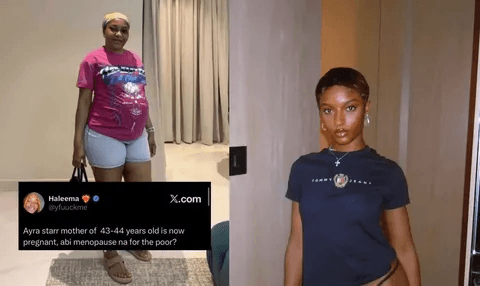
A digitally altered image of self-styled “Gen Z mummy” Nene Aderibigbe recently went viral, fueling online speculation about her personal life and prompting widespread discussion on social media about age, pregnancy, and wealth. The image appeared to show Aderibigbe wearing a purple top and her signature denim shorts with a visible baby bump, suggesting that the influencer was expecting a child.
However, further analysis revealed that the photo had been artificially manipulated using AI, highlighting once again how digital tools can quickly blur the line between reality and fiction online.
Social Media Reacts
Despite the image being fabricated, it generated a wave of humorous and incredulous responses across platforms such as Twitter and Instagram. One widely shared post joked: “Ayra Starr, mother aged 42–43, is now pregnant. Abi menopause na for poor people?” The remark quickly became a meme, reflecting the online community’s fascination with age and financial status in discussions about pregnancy.
Rather than expressing irritation at the false claims, Aderibigbe embraced the humor. Responding to the viral post, she wrote “Hallelujah” accompanied by laughing emojis, demonstrating her lighthearted approach to the speculation.
Social media analysts note that celebrities and influencers who cultivate a playful online persona, like Aderibigbe, often turn such viral moments into opportunities to engage with their audiences while diffusing potential criticism. According to digital culture commentator Chike Okafor, “Responding with humor allows public figures to reclaim the narrative. It transforms what could be negative press into a moment of connection with followers.”
The Role of AI in Misinformation
This incident underscores the growing prevalence of AI-generated imagery in online discourse. Experts warn that while AI can be used creatively, it also presents challenges in distinguishing real events from fabrications. Dr. Funke Adebayo, a media studies lecturer at the University of Lagos, explained, “AI manipulation makes it increasingly difficult for audiences to trust images. Users must critically evaluate visual content before accepting it as fact, especially when it involves public figures.”
The viral Nene Aderibigbe image is not an isolated case. In recent months, AI-generated images have been responsible for numerous hoaxes involving celebrities, ranging from false pregnancy announcements to fake product endorsements. These incidents highlight the need for media literacy and cautious sharing practices, particularly on platforms where content spreads rapidly.
Public Figures and Online Perception
For influencers like Aderibigbe, online speculation—even when inaccurate—can affect brand perception and engagement. By responding playfully to the rumors, she not only defuses potential backlash but also maintains audience interaction, a tactic often recommended by social media marketing experts.
However, analysts caution that the proliferation of such images could have longer-term implications. “Repeated exposure to manipulated content can subtly alter public perception of a celebrity’s life,” noted Okafor. “Even if the subject responds with humor, false narratives can persist in the digital space, creating a lasting impact on personal reputation.”
Why This Matters
The viral spread of the image demonstrates how quickly AI-manipulated content can spark conversations and influence online culture. It also reflects broader societal commentary, with the humor centered on age, fertility, and financial status, themes that continue to dominate public discourse in Nigeria and beyond.
While Aderibigbe’s lighthearted response helped control the narrative, the incident serves as a reminder for both audiences and influencers to approach online content with critical thinking. As AI technology continues to advance, distinguishing reality from digital fabrication will be an increasingly important skill for social media users.
Although the AI-generated image of Nene Aderibigbe was entirely fictional, it sparked a viral conversation blending humor, celebrity culture, and commentary on age and social norms. Her response exemplifies how public figures can navigate misinformation with wit, while the incident also highlights the growing influence of AI in shaping public perception online.
Add a Comment