


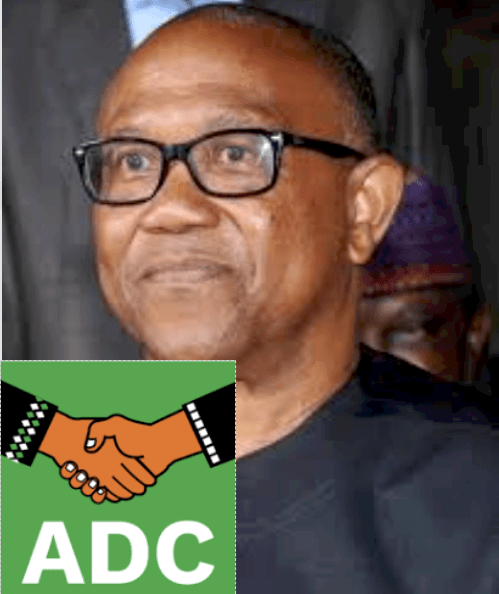
As Nigeria gradually shifts its political focus toward the 2027 general elections, conversations around potential presidential contenders have intensified across political circles. Among the names frequently mentioned is former Anambra State governor and 2023 Labour Party presidential candidate, Peter Obi. While Obi remains one of the most recognisable opposition figures in the country, mounting a successful presidential bid on the platform of the African Democratic Congress, or ADC, presents significant political and structural challenges.
Although Obi commands a dedicated following, particularly among young Nigerians and sections of the urban middle class, several factors suggest that translating that popularity into nationwide electoral victory may prove difficult under the ADC banner.
A Party Structure That Lacks Nationwide Reach
In Nigerian politics, elections are rarely won on public sentiment alone. Electoral success often depends on the strength of party structures across the 36 states and the Federal Capital Territory. This includes functional ward offices, loyal grassroots mobilisers, experienced polling agents, and the backing of influential political officeholders.
The ADC, by most political assessments, remains weak in this regard. The party lacks deep-rooted structures in many states, especially in the North, where voter turnout historically plays a decisive role in determining national outcomes. Unlike the All Progressives Congress and the Peoples Democratic Party, which have built extensive political machinery over decades, the ADC has struggled to gain comparable visibility or grassroots penetration.
According to political analysts, this structural gap could become a major liability during nationwide campaigns that demand extensive coordination, funding, and voter mobilisation. Without governors, senators, or a significant bloc of lawmakers to anchor its campaign, the party may find it difficult to compete effectively at scale.
Northern Voting Patterns and Religious Considerations
Another major factor shaping electoral outcomes in Nigeria is regional and religious alignment. Northern Nigeria accounts for a large portion of registered voters, and electoral trends in the region are often influenced by shared religious identity and long-standing political networks.
Peter Obi, a Christian from the Southeast, faces an uphill task in securing overwhelming support across core northern states. While Nigeria’s constitution guarantees freedom of choice, voting behaviour in the region has historically reflected religious and regional affinities. Analysts note that this reality has continued to influence presidential elections since the return to democracy in 1999.
Although Obi performed relatively well in some northern urban centres during the 2023 election, his overall acceptance across the region remained limited. Without a strong northern political partner or an established party presence, expanding that support base could prove difficult in 2027.
Related News
- A Nigerian skate brand just became adidas' first official Nigerian collaborator.
- A senior ISWAP finance operative surrendered to Nigerian troops at 6:45 a.m. on July 25 along the Gamboru-Wulgo Main Supply Route in Borno State.
- Nigeria's reported digital payment fraud losses fell 52 percent last year, dropping to N25.85 billion from N52.26 billion in 2024.
Lingering Controversies Around Alcohol Importation
Another challenge often raised by political observers is the persistence of controversies surrounding Obi’s past business interests, particularly his involvement in alcohol-related enterprises. While no legal wrongdoing has been established, opponents have repeatedly cited these links in political campaigns, especially in conservative and predominantly Muslim communities.
In Nigerian politics, perception frequently carries as much weight as fact. Even unsubstantiated narratives, once widely circulated, can shape public opinion. For a candidate seeking broader national appeal, overcoming such perceptions requires a robust communication strategy and trusted local allies capable of countering misinformation at the grassroots level.
The Question of Momentum After 2023
Obi’s 2023 presidential run was powered largely by the Labour Party platform and the energy of the “Obidient” movement, a youth-driven political wave that disrupted traditional voting patterns in several states. That campaign benefited from widespread dissatisfaction with the political establishment and a strong social media presence.
However, political momentum is difficult to sustain outside an election cycle. Since 2023, that energy has shown signs of fragmentation, with supporters divided across different political interests and platforms. Analysts note that replicating the scale and enthusiasm of that movement under a different party like the ADC may be challenging, particularly if voter fatigue and disillusionment set in.
Without a clearly defined grassroots structure to absorb and mobilise supporters, enthusiasm alone may not translate into votes on election day.
The Power of Incumbency
Another significant obstacle is the advantage enjoyed by an incumbent president. Bola Ahmed Tinubu, if he seeks re-election in 2027, will likely benefit from the influence of federal power, established party machinery, and access to state-level alliances.
Historically, unseating a sitting Nigerian president has proven extremely difficult. Incumbents often leverage achievements, federal appointments, and political negotiations to consolidate support across regions. In such a context, a fragmented opposition stands little chance of mounting a successful challenge.
Political analysts widely agree that divided opposition parties only strengthen the ruling party’s position, particularly in a system where victory depends on both national vote totals and geographical spread.
Why a Coalition Could Change the Equation
Many observers argue that Obi’s most realistic path to the presidency lies in a broad opposition coalition rather than a solo run under the ADC. A strategic alliance with a northern heavyweight, such as former Vice President Atiku Abubakar, could help bridge regional and religious divides.
Such a coalition would offer a balanced ticket combining North and South, Muslim and Christian representation, and established political networks with grassroots enthusiasm. It would also improve fundraising capacity and strengthen campaign logistics nationwide.
While coalition politics come with their own challenges, including negotiations over power sharing and party identity, they remain one of the few viable ways to counter the dominance of a well-organised ruling party.
The 2027 election is widely expected to be a defining moment for Nigeria, particularly as the country grapples with economic reforms, security concerns, and rising public expectations. Voters will likely assess candidates not only on credibility but also on their ability to build alliances, manage institutions, and deliver stability.
For Obi, the challenge will be proving that he can move beyond personal popularity and operate effectively within Nigeria’s complex political ecosystem. Without that shift, even widespread public goodwill may fall short at the ballot box.
Peter Obi remains a prominent figure in Nigerian politics with a loyal base and a reputation for fiscal discipline. However, the realities of electoral politics suggest that winning the presidency on the ADC platform in 2027 would be an uphill task. Weak party structures, limited northern penetration, lingering perception challenges, and the advantage of incumbency all weigh heavily against such a bid.
Ultimately, Nigerian elections are determined by numbers, alliances, and strategic coordination. Without a broad-based coalition and a well-entrenched political machine, personal popularity alone may not be enough to secure victory. As the race toward 2027 gathers pace, how Obi positions himself politically may prove just as important as the ideas he represents.
Add a Comment