


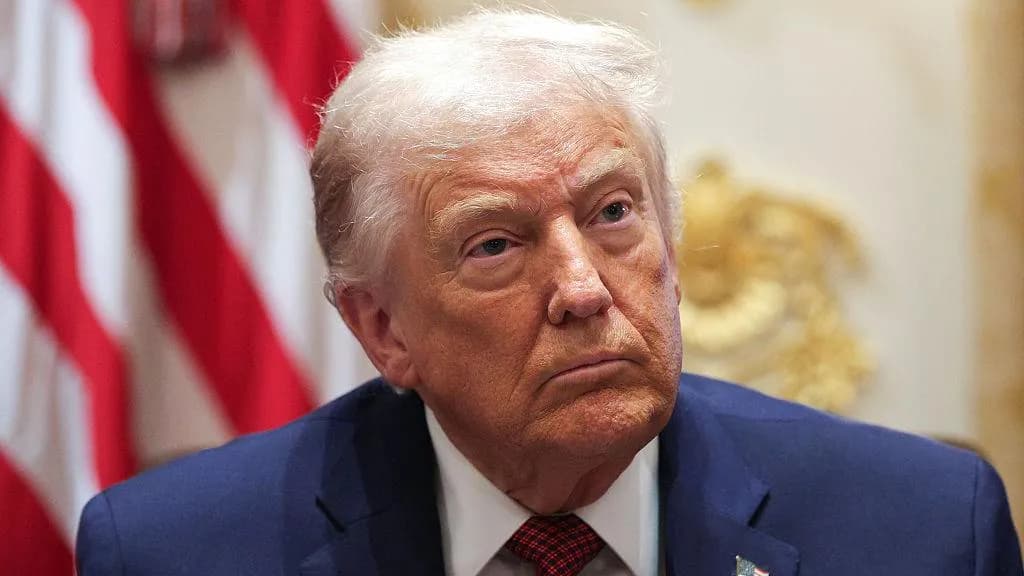
President Donald Trump’s announcement that the United States will temporarily “run” Venezuela following the capture of President Nicolás Maduro has introduced a new and uncertain chapter in U.S. involvement in the South American nation. While the White House confirmed that Maduro and his wife, Cilia Flores, are now in U.S. custody facing criminal charges, the administration has offered few specifics about how Washington intends to govern or stabilize Venezuela during what Trump described as a transitional period.
The lack of detail has fueled questions from lawmakers, foreign governments, and analysts about the legal basis, duration, and practical consequences of what could become the most direct U.S. intervention in Venezuela’s political affairs in decades.
Overnight Operation and Arrest
Speaking from his Mar-a-Lago residence in South Florida on Saturday, Trump said Maduro and Flores were captured during an overnight operation and flown out of Venezuela. The president had earlier announced the arrests on social media.
U.S. officials told CBS News that the mission was conducted by the U.S. Army’s Delta Force, an elite special operations unit typically reserved for high-risk operations involving national security threats.
Maduro and Flores arrived Saturday afternoon at Stewart Airport, located north of New York City, hours after their capture. According to prosecutors, the couple faces criminal charges tied to what authorities describe as a conspiracy involving narco-terrorism and the shipment of “thousands of tons” of cocaine into the United States.
The arrests mark the most dramatic escalation yet in years of U.S. efforts to isolate and prosecute Venezuela’s longtime leader.
Power Vacuum in Caracas
With Maduro removed from the country, questions immediately arose over who is currently exercising authority in Caracas. Trump acknowledged the uncertainty, saying it would be “very tough” for opposition leader María Corina Machado to assume power.
According to Trump, Machado lacks sufficient internal backing and respect to lead a transition. His remarks appeared to signal reluctance by Washington to immediately hand control to opposition figures, despite years of U.S. support for Venezuela’s anti-Maduro movement.
Related News
- A Nigerian skate brand just became adidas' first official Nigerian collaborator.
- A senior ISWAP finance operative surrendered to Nigerian troops at 6:45 a.m. on July 25 along the Gamboru-Wulgo Main Supply Route in Borno State.
- Nigeria's reported digital payment fraud losses fell 52 percent last year, dropping to N25.85 billion from N52.26 billion in 2024.
Trump also said Secretary of State Marco Rubio had spoken with Venezuelan Vice President Delcy Rodríguez, whom he described as having been “sworn in” and willing to cooperate with U.S. objectives for Venezuela.
However, Rodríguez offered a sharply different account in remarks broadcast on Venezuelan state television, where she insisted that Maduro remains the country’s only legitimate president and demanded his immediate release.
Disputed Elections and Background Context
Venezuela’s last presidential election was held in July 2024, but the vote was widely contested. Election authorities did not release detailed results, and the United States, along with several European governments, rejected Maduro’s declaration of victory.
Under the Biden administration, Washington recognized opposition candidate Edmundo González as president-elect. González fled to Spain in September 2024 after Venezuelan authorities issued a warrant for his arrest, effectively leaving the opposition without a leader inside the country.
That unresolved electoral dispute now looms large as the Trump administration signals an unprecedented governing role.
Trump Signals U.S. Oversight Without a Roadmap
Trump said the United States would oversee Venezuela until a “safe, proper and judicious transition” could be arranged. He emphasized that Washington would not risk allowing another leader to take power who might act against the interests of Venezuelan citizens.
“We’re there now, and we’re going to stay until such time as the proper transition can take place,” Trump said.
However, he did not clarify the legal authority under which the U.S. would operate, whether Congress had been consulted, or what mechanisms would be used to manage Venezuelan institutions during this interim period.
He did say that senior officials, including Rubio and Defense Secretary Pete Hegseth, would work with a team coordinating with Venezuelans, though he did not identify who would be included.
Defense Secretary Outlines Broad Goals
In an interview with CBS Evening News anchor Tony Dokoupil, Hegseth offered a general outline of what U.S. oversight could involve.
“It means we set the terms,” Hegseth said, adding that Trump would determine the structure and phases of U.S. involvement. He pointed to three immediate priorities: stopping drug trafficking, recovering oil revenues the administration believes were misappropriated, and preventing criminals from being sent to the United States.
While the remarks provided some insight into Washington’s objectives, they stopped short of explaining how those goals would be enforced on the ground.
Oil Industry Central to U.S. Plans
Trump placed particular emphasis on Venezuela’s oil sector, which holds some of the world’s largest proven petroleum reserves but has suffered years of underinvestment and sanctions.
He argued that without sustained U.S. involvement, Venezuela’s infrastructure would collapse entirely. Trump said the United States plans to bring in major international oil companies to invest billions of dollars, with profits reinvested inside Venezuela.
According to Trump, oil facilities currently operate at roughly 20 percent capacity. Hegseth confirmed that sanctioned Venezuelan oil exports remain blocked and said U.S. military assets continue to operate in the Caribbean.
“We are going to get American companies in there,” Hegseth said, adding that oil production would increase significantly under U.S. oversight.
Energy analysts note that while oil investment could revive Venezuela’s economy, it also raises questions about sovereignty, profit-sharing, and long-term governance.
Maduro Loyalists Still Hold Key Positions
Despite Maduro’s removal, several senior figures from his government remain in office. These include Vice President Delcy Rodríguez, Defense Minister Vladimir Padrino, and Interior Minister Diosdado Cabello.
Cabello is named alongside Maduro and Flores in a superseding indictment returned by a federal grand jury in New York, which alleges involvement in the same narco-terrorism conspiracy.
The continued presence of these officials underscores the complexity of governing Venezuela without dismantling existing power structures, particularly within the military and security services.
Warning of Further Military Action
Trump closed his remarks with a stark warning. He said the United States is prepared to launch a second and “much larger” military operation if necessary and stated that his administration is not opposed to deploying ground forces.
Security experts say such language may be intended to deter resistance from remaining Maduro loyalists, though it also risks escalating tensions domestically and regionally.
The U.S. decision to directly oversee Venezuela represents a dramatic shift from years of diplomatic pressure and sanctions toward overt intervention. Analysts say the move could reshape U.S. relations across Latin America, where memories of past interventions remain politically sensitive.
The coming weeks will test whether Washington can stabilize Venezuela without triggering prolonged conflict or international backlash.
Key questions include whether the U.S. will formalize an interim governing framework, how long troops and officials will remain involved, and whether international partners will support or oppose the arrangement.
Observers will also be watching for reactions from Venezuela’s military leadership, whose cooperation or resistance could determine the success of any transition.
Add a Comment