


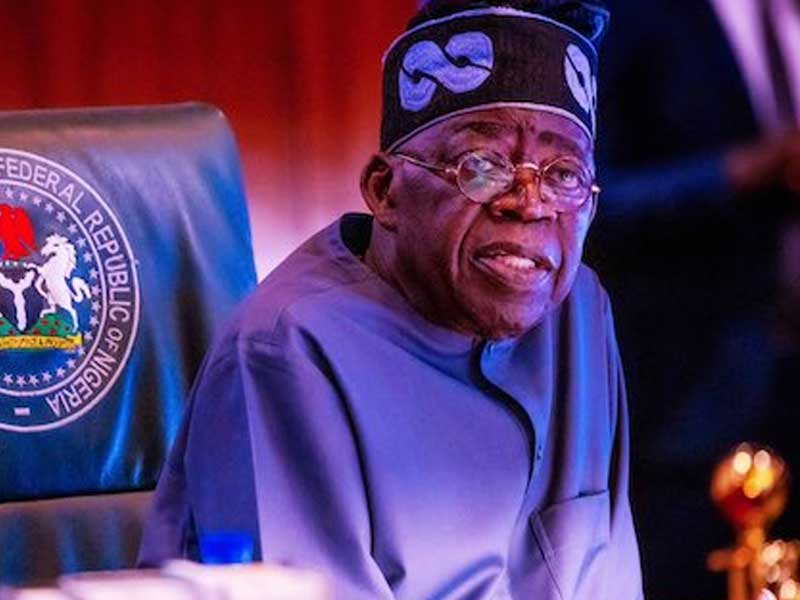
President Bola Tinubu has reaffirmed that Nigeria’s new tax laws will take effect from January 1, 2026, insisting that his administration will not shift the implementation timeline despite growing criticism from opposition parties and civil society groups.
The President’s latest position comes as the Central Bank of Nigeria projects a stronger macroeconomic outlook for the country, with external reserves expected to rise to $51.04 billion in 2026, alongside improved growth and easing inflation.
Government Stands Firm Amid Opposition Pushback
In an eight-paragraph statement titled “New Tax Laws Will Commence on January 1, 2026 as Planned”, Tinubu said the reforms represent a rare opportunity to reset Nigeria’s fiscal architecture and strengthen the social contract between the state and its citizens.
According to the Presidency, the new laws are not intended to raise taxes but to simplify the system, eliminate inefficiencies, and align Nigeria’s fiscal framework with global best practices.
“These reforms are a once-in-a-generation opportunity to build a fair, competitive, and robust fiscal foundation for our country,” the President said. “They are designed to support harmonisation, protect dignity, and strengthen shared responsibility.”
Tinubu also addressed allegations that the tax reform documents signed into law in June were altered after passage by the National Assembly. He maintained that no substantial issue had been established to justify suspending the reform process, while assuring Nigerians that his administration would work with lawmakers to resolve any identified concerns.
PDP Demands Suspension Over Alleged Discrepancies
The Peoples Democratic Party, however, renewed its call for the suspension of the commencement date, citing what it described as discrepancies between the harmonised and gazetted versions of the Tax Reform Act.
In a statement by its National Publicity Secretary, Ini Ememobong, the opposition party accused the Tinubu administration of prioritising revenue generation over the welfare of ordinary Nigerians.
Related News
According to the PDP, the alleged insertion of unapproved provisions into the law raises serious questions about due process and democratic accountability.
“A mere suspicion, let alone confirmation, that unapproved sections have been smuggled into a law with nationwide implications is sufficient reason to suspend its commencement,” the party said, calling for a thorough investigation.
The PDP also linked the tax reform controversy to earlier policy decisions, including the removal of fuel subsidy, arguing that recent reforms have placed disproportionate pressure on citizens already struggling with high living costs.
Tinubu Pledges Collaboration With National Assembly
Despite the political backlash, the President reiterated his commitment to transparency and due process, stating that trust in governance is built through consistent and principled decision-making rather than abrupt reversals.
He assured Nigerians that the Federal Government would act in the overriding public interest and remain open to legislative engagement to resolve outstanding issues before full implementation.
Universities Urged to Drive Reform Understanding
Meanwhile, Chairman of the Presidential Fiscal Policy and Tax Reform Committee, Taiwo Oyedele, has called on Nigerian universities to play a central role in ensuring the success of the Tax Reform Act 2025.
Oyedele made the appeal during a virtual one-day forum titled “Nigerian Tax Law and You”, organised by Babcock Business School in collaboration with the committee.
Presenting a paper on “Nigeria Tax Reforms 2025: Implications for Academia and Small Businesses”, Oyedele described the reforms as a structural reset aimed at addressing decades of complexity, weak compliance, and unfair burdens on low-income earners and small enterprises.
“These weaknesses eroded trust and limited the effectiveness of taxation as a tool for growth,” he said, stressing that the reforms are about fixing the architecture of the system rather than increasing taxes.
According to Oyedele, universities occupy a unique position as employers, research hubs, and centres of thought leadership, and are well placed to deepen public understanding and improve compliance.
CBN Projects Stronger Economic Outlook
Alongside the tax reform debate, the Central Bank of Nigeria has projected a notable improvement in key macroeconomic indicators.
In its latest Macroeconomic Outlook for Nigeria, published on its official website, the apex bank forecast that external reserves will grow to $51.04 billion in 2026, up from $45.01 billion in 2025.
The CBN also projected real GDP growth of 4.49 percent in 2026, compared with an estimated 3.89 percent in 2025, while inflation is expected to moderate to an annual average of 12.94 percent.
According to the bank, the outlook is supported by improved foreign exchange stability, stronger oil earnings, diaspora remittances, and the expansion of domestic refining capacity, including planned upgrades at the Dangote refinery.
Improved External Balance and Investor Confidence
The central bank further disclosed that Nigeria recorded a balance of payments surplus of $4.60 billion in the third quarter of 2025, marking a turnaround from the previous quarter’s deficit.
CBN Acting Director of Corporate Communications, Hakama Sidi Ali, said the improvement was driven by a sustained current account surplus, stronger trade performance, resilient remittance inflows, and increased financial flows.
Commenting on the outlook, CBN Governor Olayemi Cardoso said easing inflation and stronger external buffers would provide the foundation for a more rules-based monetary policy framework over the medium term.
Why It Matters Now
With tax reforms set to reshape Nigeria’s fiscal system and macroeconomic indicators showing tentative signs of recovery, the coming months will be critical in determining public trust and policy credibility.
Analysts note that successful implementation will depend not only on legal clarity but also on effective communication, stakeholder buy-in, and visible improvements in economic conditions.
As January 2026 approaches, attention will remain focused on how the government resolves lingering concerns over the tax laws, manages inflation pressures, and sustains economic momentum in a challenging global environment.
Add a Comment