


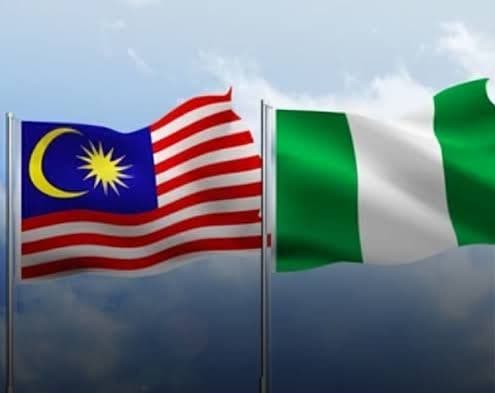
Malaysia’s exports to Nigeria reached $664 million in 2025. The figure, disclosed by Malaysian officials ahead of the 2026 Malaysia International Halal Showcase (MIHAS), represents a 20.7 percent increase from the previous year and signals a deeper commercial push into West Africa’s growing halal market.
The announcement came days after Nigeria launched its National Halal Economy Strategy, a policy framework intended to position the country within the global halal trade, currently estimated at $3.5 trillion. Malaysian diplomats are now openly encouraging Nigerian exporters to use MIHAS 2026 as an entry point into Southeast Asian markets.
At a briefing tied to MIHAS 2026, Malaysia’s High Commissioner to Nigeria, Aiyub Omar, framed the Kuala Lumpur trade event as more than an exhibition. He described it as a commercial gateway for Nigerian firms seeking access to buyers, technology providers, and distributors across the Association of Southeast Asian Nations (ASEAN).
The numbers suggest Malaysia sees commercial potential beyond diplomatic symbolism. Malaysian officials said total trade between both countries grew by 5.9 percent between January and March 2026. They did not publicly disclose the absolute quarterly trade value during the announcement. That omission leaves unanswered questions about whether the growth reflects expanding Nigerian exports or continued dependence on imports from Malaysia.
Nigeria has spent years attempting to diversify export earnings away from crude oil. The halal economy offers one route because it extends beyond food into pharmaceuticals, cosmetics, finance, logistics, tourism, and digital commerce. But participation in halal markets depends heavily on certification systems, traceability standards, and cross-border regulatory trust.
The 22nd edition of MIHAS is scheduled for September 23 to 26, 2026, at the Malaysia International Trade and Exhibition Centre in Kuala Lumpur. Organisers have adopted the theme “Shaping Trust, Driving Resilience,” language tied directly to ongoing disruptions in global supply chains and rising compliance pressures in international trade.
Trade Counsellor Jude Dass disclosed that eight Nigerian buyers participated in MIHAS 2025 under the International Sourcing Programme (INSP). The wider West African delegation included 21 buyers from countries such as Senegal, Mali, and Ghana.
Nigeria has a population exceeding 220 million people and one of Africa’s largest Muslim consumer markets. Yet only eight Nigerian buyers participated in the 2025 programme, according to Malaysian officials. By comparison, Malaysia has spent more than two decades institutionalising halal export systems through state-backed certification and trade promotion agencies.
Related News
- NDIC begins paying depositors of 46 failed microfinance banks, promises to beat 30-day legal deadline
- Nigerian equities added N3.156 trillion in value this week, closing Friday's session at a market capitalisation of N147.102 trillion
- Twenty NGX Firms Added N710 Billion in Revenue as Inflation Slowed and Consumers Paid More
That gap is partly structural. Nigerian exporters frequently face financing constraints, inconsistent certification processes, logistics bottlenecks, and foreign exchange instability. Those conditions complicate entry into tightly regulated international halal markets where documentation failures can block shipments entirely.
Malaysian officials are now positioning MIHAS as a solution to some of those barriers.
Dass said approved buyers attending MIHAS 2026 would receive complimentary hotel accommodation and ground transportation. He also confirmed discussions around establishing a consolidated Nigeria Pavilion, a format designed to group Nigerian exhibitors together for branding and matchmaking purposes.
Under the Hosted Buyer Programme, Nigerian firms would gain direct access to 50 Malaysian importers through scheduled business meetings intended to facilitate distribution agreements within Malaysia and the broader ASEAN market. Malaysian officials did not disclose how many Nigerian companies have formally applied for the programme.
We reviewed the sector list released for MIHAS 2026, and the scope extends well beyond food exports. Categories include pharmaceuticals, Islamic finance, modest fashion, cosmetics, halal ingredients, Muslim-friendly tourism, education services, fintech, media, and packaging technology. That breadth reflects how the halal economy has evolved into a standards-driven commercial ecosystem rather than a narrow religious market.
The federal government’s halal strategy arrives at a moment when several African countries are attempting to position themselves within Islamic finance and halal manufacturing networks. Yet certification remains fragmented in Nigeria. Multiple private and religious bodies issue halal approvals, but exporters still face questions about international recognition and harmonisation with global standards.
That gives Kuala Lumpur leverage in shaping trade relationships with emerging halal economies, including Nigeria. By offering matchmaking platforms, technical partnerships, and market access, Malaysia effectively exports its regulatory ecosystem alongside its goods and services.
The diplomatic language around “partnership” masks a harder commercial reality. Malaysia enters these discussions with mature logistics systems, established halal regulators, and a stronger manufacturing base. Nigeria enters with scale, consumer demand, and agricultural potential, but weaker export infrastructure.
MIHAS 2026 organisers also said the exhibition would deploy “intelligent digital trade tools” to improve business matching and commercial conversion rates. The phrase points to a broader shift in international trade exhibitions, where organisers increasingly use AI-driven platforms to pre-screen buyers, track engagement, and prioritise transactions with higher closing probabilities.
But technology does not remove regulatory risk.
For Nigerian exporters, access to ASEAN markets will still depend on whether domestic production standards can satisfy foreign import requirements consistently. Failed inspections, delayed certification renewals, or fragmented oversight could quickly undermine participation regardless of trade-show visibility.
The National Halal Economy Strategy has generated interest because it intersects with agriculture, manufacturing, banking, and tourism. Yet Nigerian industrial policies often struggle after launch phases because implementation responsibilities become dispersed across ministries and agencies without clear enforcement timelines.
No implementation budget has yet been publicly detailed alongside the strategy announcement.
That omission leaves open questions about how Nigeria intends to finance certification infrastructure, laboratory testing systems, export support mechanisms, and international compliance frameworks required for large-scale halal trade participation.
Malaysia is using MIHAS 2026 to position itself as Nigeria’s gateway into the wider ASEAN halal market.
Nigeria’s halal economy ambitions remain constrained by certification gaps and weak export infrastructure.
Only eight Nigerian buyers participated in MIHAS 2025 despite Nigeria’s large consumer market and export potential.
The unresolved question is whether Nigeria can build internationally trusted halal standards quickly enough to compete commercially.
What exactly is MIHAS?
It is the Malaysia International Halal Showcase, a trade exhibition focused on halal-certified industries. Think of it as a business marketplace, not a religious conference.
Why is Malaysia interested in Nigeria?
Nigeria offers scale. Large population, growing Muslim consumer demand, and agricultural capacity. Malaysia already has the certification systems and wants stronger trade links into West Africa.
Does this mean Nigeria will start exporting more halal products immediately?
No. Trade fairs create opportunities, not guaranteed contracts. Nigerian exporters still need internationally accepted certification, financing, logistics, and stable production capacity.
The next unresolved issue sits inside Nigeria’s implementation process. The federal government has not publicly released a detailed funding structure or regulatory timeline for the National Halal Economy Strategy, including which agency will control certification harmonisation and export compliance. Until those rules are clarified, the commercial value of any future Nigeria Pavilion at MIHAS 2026 remains uncertain.
Add a Comment