


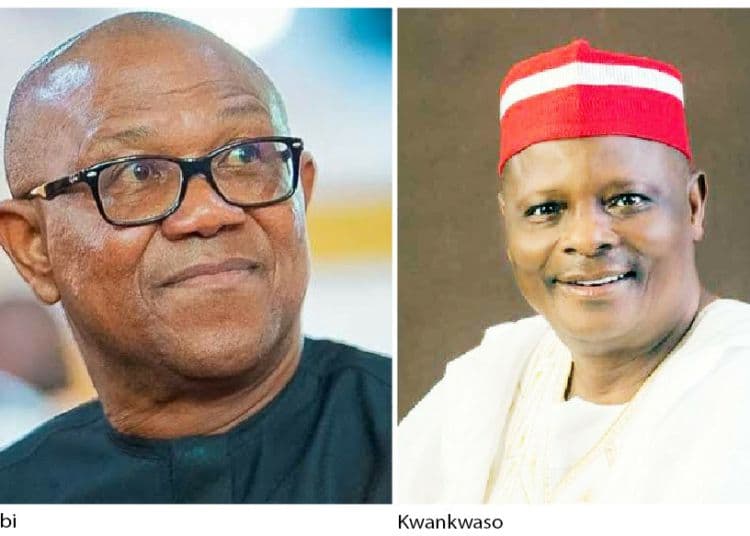
The claim matters because it reshapes the terms of the opposition alliance heading into 2027, a pact between two of Nigeria's most prominent northern and southern politicians that voters have had no way to verify until now.
Kwankwaso made the disclosure during an interview on Channels Television's "Politics Today," according to a transcript of his remarks. He said he and Obi had signed two separate documents: one binding their party, the Nigeria Democratic Congress (NDC), and another binding the two men personally. "We have done one for the party, and we have done another one between the two of us," he said. Neither document has been made public.
Asked directly whether Obi had committed to a single term, Kwankwaso answered without qualification. "Oh yes," he said. "I personally believe him. I don't think, based on what I now know about him, he will change his mind when the time comes." That is Kwankwaso's assessment of Obi's intentions, not a quote from Obi himself. Obi is not quoted anywhere in the reported remarks confirming the arrangement in his own words.
The rotation argument
The stated basis for the pact is regional rotation. Kwankwaso argued that with President Bola Tinubu, a southerner, already in office, the presidency should remain in the South for one more term before returning north. "The circumstance has changed to the extent that together we felt that the presidency should go to the South for four years. Thereafter, it will come back to the North," he said.
That reasoning marks a shift from his own prior position. Kwankwaso had previously ruled out serving as a vice-presidential candidate, a point the interviewer raised directly. His response was that "political realities had changed," without elaborating on what specifically changed between his earlier refusal and the current arrangement. No date was given for when the two documents were signed, so it is not possible to place the reversal on a timeline.
A dating problem in the record
One part of the account does not hold together. Kwankwaso is reported to have said the rotation agreement would take effect "if the NDC wins the 2017 presidential election." Nigeria's next presidential election is scheduled for 2027, not 2017, and the entire preceding discussion concerns Obi's prospective candidacy in that vote. Either the date is a transcription error, a misstatement by Kwankwaso himself, or a factual claim that has gone uncorrected. As reported, the discrepancy stands unresolved.
Related News
This matters because the same report describes the two men signing dated documents. If NDC officials or Obi's campaign can produce the agreements, or even confirm a signing date, the 2017 reference could be checked against reality. Until then, the accuracy of the wider account carries the same uncertainty as its most obvious typo.
What remains unconfirmed
Nothing in the reported interview indicates that Peter Obi has publicly confirmed the one-term pledge in his own voice, in writing, or through a campaign spokesperson. The claim originates entirely with Kwankwaso. Politicians have made and broken power-sharing pledges before in Nigeria; the country's recent history includes rotational agreements within the ruling party that were later disputed by their own signatories. A verbal assurance relayed by one party to an alliance is not the same as a signed instrument reviewed by a third party.
The NDC's national leadership has not been quoted separately confirming that a party-level rotation document exists, despite Kwankwaso's assertion that one was signed. No party spokesperson, legal officer, or convention record is cited to corroborate his account of an internal agreement. If such a document exists, it has not been filed with the Independent National Electoral Commission, nor has any date for such a filing been reported.
Two things would settle the open questions. First, confirmation from Obi himself, or a named representative of his campaign, on whether he agreed to serve only one term. Second, production of the two documents Kwankwaso says exist, including the date they were signed, which would resolve whether "2017" was an error or something else. Neither has surfaced. Until they do, the one-term pledge remains a claim made by one man about another man's private commitment, awaiting confirmation from the second man.
Add a Comment