


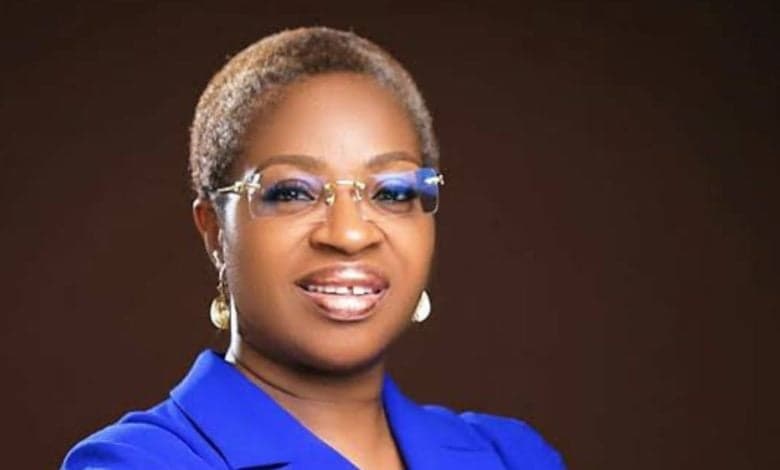
presidential race after a vote plagued by a cyberattack and last-minute litigation.
The outcome puts a woman on the verge of the top job at Africa's largest bar association for the first time in 35 years, and the first time ever through direct election. Her closest rival, Lateef Akangbe, SAN, trailed with 7,934 votes; Aare Olumuyiwa Akinboro, SAN, came third with 5,855. The Electoral Committee of the Nigerian Bar Association had not formally declared a winner as of this writing, even after the count closed.
Voting itself almost didn't happen on schedule. It was set to open at midnight Saturday. It didn't. The ECNBA said its platform came under what it called a "deliberate, coordinated and sustained cyberattack" aimed at disrupting, sabotaging and undermining the process. The statement carried two names: Aham Ejelam, SAN, chairman of ECNBA 2026, and Ibrahim Aliyu Nassarawa, Esq., the committee's secretary.
The committee said its response was immediate. Its cybersecurity team and the Election Voting Service Provider activated emergency protocols to contain the threat and restore the system. Officials insisted the breach caused no damage to the count itself. No votes were accepted during the disruption, the committee said, and voting only resumed once the platform had been secured. Voting eventually extended to 7:35 a.m. Sunday to accommodate the delay.
Not everyone accepted that account quietly. Akangbe wrote to the ECNBA describing the technical breakdown in far starker terms. He called it a "catastrophic structural and technical collapse" of the electoral process, filed less than three hours after voting had begun.
His complaint went beyond the outage. He alleged the ECNBA breached its own revised voting guidelines by sending one-time passwords through email instead of SMS, contrary to assurances given to members less than 24 hours before the election, and argued the change compromised the authentication framework. He also said the digital ballot itself was flawed. He alleged the electronic ballot displayed the photograph of only one of the three cleared presidential candidates, with the images of the other two, including his own, either omitted or failing to render. Akangbe asked the committee to suspend the election and preserve all electronic voting records for an independent review.
The ECNBA did not suspend anything. Voting continued after the platform reopened, and the committee has not, as of this writing, addressed Akangbe's specific allegations in a public statement.
A contest that started in court
Related News
This election reached voters only after months of legal skirmishing. Two separate lawsuits challenged the conduct of the election: one filed by Egbe Amofin O'odua, and another, marked I/221/2026, brought by Ibrahim Lawal, Raymond Oki, Omotan Olusola Ogunmodede and Gabriel Ojo Adekunle Ijalana. Those suits produced interim orders restraining the election and directives involving the Attorney General of the Federation and Minister of Justice, Lateef Fagbemi, SAN. The NBA's leadership pushed back hard against any delay. Its National Executive Council said there was no operational or logistical basis for postponing the poll, and that no external interference or unforeseen circumstance would derail the approved electoral timetable.
Even the vendor running the technology drew scrutiny. The arrest of the managing director of the election service provider had raised fears the poll could be postponed, before the NBA's council confirmed the official had been released and the election would proceed as planned. The council also called the arrest itself disturbing, according to a statement covered by The Nation.
Turnout was real, if partial against the rolls. The ECNBA released a final voters' register listing more than 30,000 lawyers eligible to vote, restricted to members who had paid practising fees and branch dues within the stipulated period. Vanguard reported turnout crossing 21,000 as collation continued into Sunday.
Who is leading
Badejo-Okunsanya, called to the bar in 2002 out of the Lagos Branch, ran on a platform built around cutting the cost of practice and modernizing the association's administration. She is the daughter of the late Professor Olufolabi Olumide, first Vice-Chancellor of Lagos State University, and Clara Folasade Abiodun Olumide, the first female Registrar of the University of Lagos. She earned an English degree from the University of Lagos in 1987 and a law degree from the same institution in 2000, and previously served as General Counsel to the Governor of Lagos State under the Babatunde Fashola administration, where she worked on the Lagos State Home Ownership Mortgage Scheme.
If the result holds, she becomes only the second woman to lead the NBA. Dame Priscilla Kuye led the association in 1991, after succeeding President Clement Akpamgbo, SAN, when he was appointed Attorney-General of the Federation. Kuye ascended by succession, not direct vote. Badejo-Okunsanya would be the first woman to win the presidency through direct election. She would replace Mazi Afam Josiah Osigwe, SAN, who was sworn in as the 32nd president of the association on August 29, 2024. The 2026 presidency was zoned to the NBA's Western axis, a rotational arrangement that shaped which candidates could even stand.
Senior figures in the profession lined up behind her before the vote closed. Senior Advocates of Nigeria Funke Adekoya, Yinka Omorogbe, Ronke Adeyemi and Funke Agbor publicly endorsed her candidacy, with Adekoya arguing the NBA had historically achieved its most significant reforms under presidents who emerged from outside the traditional circle of NBA politics.
None of that settles the outcome. The ECNBA has not issued the formal declaration that would make Badejo-Okunsanya president-elect, and Akangbe's written complaint about OTP delivery and ballot rendering remains unanswered on the public record. Collation, according to the committee's own account, was still underway into Sunday morning. Whether Akangbe pursues his allegations into a formal challenge, and how the ECNBA responds to a cyberattack it says it repelled, will determine whether the next president of the Nigerian Bar Association takes office cleanly or under a cloud.
Add a Comment