


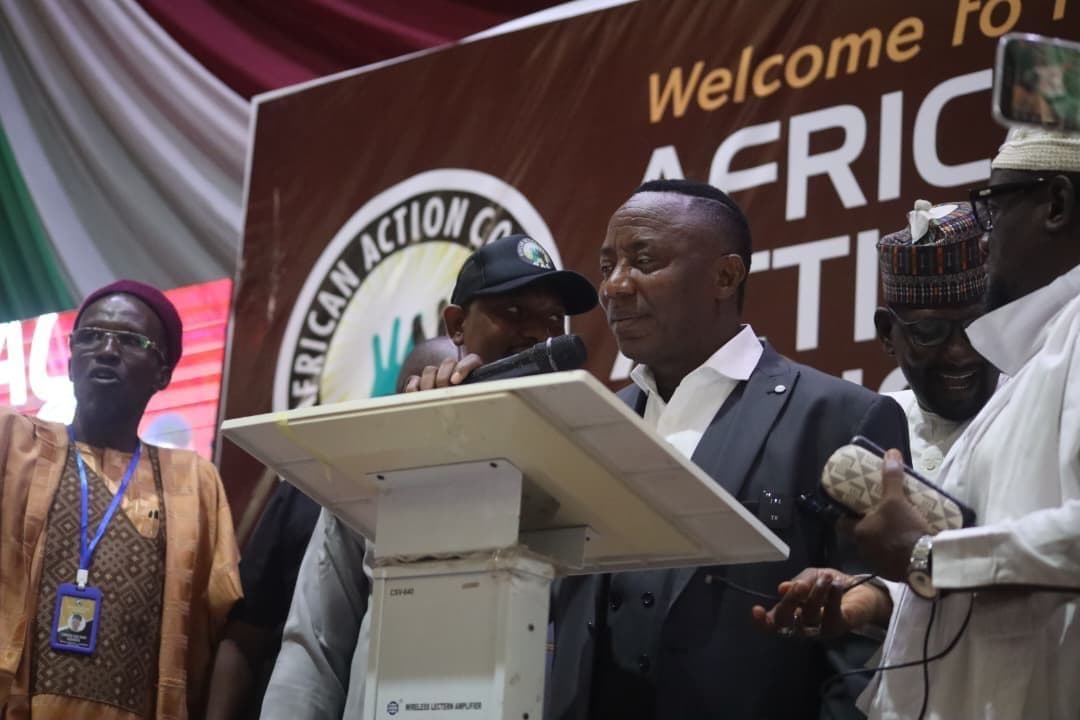
Omoyele Sowore has promised to abolish all public examination fees, including WAEC and NECO, if elected president in 2027. The African Action Congress candidate unveiled the pledge in a 20-point education manifesto posted to his verified X account on Monday.
The promise lands as Nigerian families continue to absorb rising WAEC and NECO registration costs alongside broader increases in the cost of living. A manifesto promising free education "from early childhood through university" is a direct pitch to that pressure point, three years before Nigerians next go to the polls.
The core pledge
Sowore's document states plainly that no government under his administration "will ever ask your child to pay WAEC, NECO, or any other public examination fee." The manifesto frames this as one piece of a wider free-education guarantee spanning what it calls "early childhood through university."
To fund student life at that level, the manifesto proposes semester education grants for students in public tertiary institutions, intended to cover both academic and living expenses. No figure is attached to these grants. The document does not specify an amount, a funding source, or a disbursement mechanism.
That absence matters. A promise to pay every public exam fee and additionally hand out living-expense grants to tertiary students is, structurally, a major recurring budget line. Nigeria's federal education budget has for years drawn criticism for falling short of the 15 to 20 percent of national budget benchmark recommended by UNESCO. The manifesto does not address how a Sowore administration would reconcile that gap with new spending commitments of this scale.
Restructuring the system itself
Beyond fees, the manifesto proposes rebuilding the structure of Nigerian schooling. It calls for five years of primary education, five years of secondary, and a four-year university degree, a configuration that would require altering the current 6-3-3-4 system inherited from the National Policy on Education.
Related News
- INEC Portal Reveals Makinde's Running Mate: Adamu Bala of Bauchi State
- SERAP has filed a lawsuit demanding INEC investigate an alleged N800 billion campaign fund
- Aviation Minister Festus Keyamo has given Peter Obi seven days to apologise to Abuja airport staff or face further action from the Federal Airports Authority of Nigeria.
Every local government area would be required to establish a community college offering two-year associate degree programmes, according to the document. Separately, the manifesto states that "all polytechnics & monotechnics will become universities," a reform that would eliminate Nigeria's polytechnic sector as a distinct tier and fold it into university status.
Both changes would need legislative and regulatory action well beyond the scope of a single executive pledge. The manifesto does not name which agencies, the National Universities Commission or the National Board for Technical Education among them, would oversee the transition, nor does it set a timeline.
Technology as the organizing theme
Digital infrastructure runs through nearly every section of the document. It promises high-speed internet, digital classrooms, virtual labs, online libraries and cloud learning resources in "every school," alongside AI-assisted learning and coding instruction beginning in primary school.
The manifesto also proposes a "National education & innovation cloud," described as a repository of digital libraries, academic journals, AI learning assistants, virtual laboratories, research databases and open educational resources, with access promised for "every student & teacher, everywhere." No department is named to build or administer this platform, and no cost estimate accompanies the proposal.
On school infrastructure, the document goes further still, promising "AI-powered smart hostels on campuses" in addition to standard commitments to clean water, renewable electricity, laboratories and disability access. The phrase appears once, without elaboration on what distinguishes a smart hostel from existing student housing.
Teachers, autonomy and student unions
The manifesto commits to improving teacher pay, housing and research opportunities, and proposes two-year teachers' institutes focused on modern pedagogy and digital learning. It does not specify current average teacher salaries or a target figure for the proposed increases.
On university governance, the document promises institutions will be "free from political interference," with what it calls transparent and democratic governance and full academic, financial and administrative autonomy. It pairs that with an explicit commitment to academic freedom, describing campuses as spaces for free research, expression and peaceful association.
The manifesto also pledges protection for independent student unions, stating there will be "no suppression for legitimate activism." That line carries particular weight given Sowore's own history, he was previously detained multiple times by Nigerian security agencies over protests he organized, including the 2019 #RevolutionNow demonstrations. The manifesto does not draw that connection explicitly, but the pledge reads as a direct response to that history.
What the document does not say
The manifesto is comprehensive in scope and specific in language, but it is a policy statement, not a costed budget. It does not include projected expenditure figures, a funding model, or a phase-in schedule for any of its major commitments, free examination fees, semester grants, the restructured school-year system, or the conversion of polytechnics into universities.
Neither the AAC nor Sowore's campaign has published a supplementary costing document alongside the manifesto as of Monday's release. Nigeria's 2027 general election is still roughly a year and a half away, and Sowore has not yet said when, or whether, a fully costed version of the plan will follow.
Add a Comment