


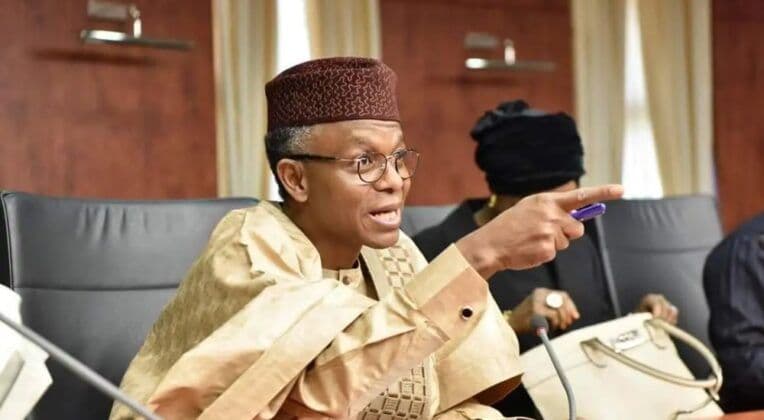
Former Kaduna State Governor Nasir Ahmad El-Rufai rejected claims by Nigeria's Independent Corrupt Practices and Other Related Offences Commission that he violated a court order by skipping a July 6 hearing and visiting a hospital the next day. His media adviser, Muyiwa Adekeye, issued the rebuttal Wednesday, calling the ICPC's July 7 statement "inaccurate in facts and law."
The dispute matters because it turns a corruption case into a fight over medical access for a defendant in custody, an issue governed by both a standing federal court order and international prison standards. It also escalates a standoff between El-Rufai's camp and the anti-graft agency at a moment when the agency has already arrested his personal physician.
At the center of the disagreement is a single question: did El-Rufai's hospital visit breach a court order, or did the ICPC alter the terms of that visit without telling his family. Adekeye's statement says El-Rufai missed the July 6 Kaduna court date because of unresolved health problems, ones he says were "already been brought to the attention of the ICPC" beforehand. His personal physician, Professor Bello Abubakar, had sought to examine him earlier but was denied access, according to the statement, despite what Adekeye described as prior coordination with the commission's own medical staff.
Adekeye said El-Rufai's family then submitted a written request for their client to be taken to the National Hospital in Abuja for a consultation, and that the request went to the ICPC before anyone knew the court date would fall on July 6. "The suggestion that the request to see his physician was designed to evade court proceedings is entirely false," the statement said.
A scheduling change becomes a flashpoint
The sharpest factual dispute concerns timing. According to Adekeye, the ICPC moved the hospital consultation from 5 p.m. to 10 a.m. and did not tell the family until the morning of the appointment. That last-minute shift, the statement says, is what produced a larger crowd at the hospital than would otherwise have gathered. The statement frames the resulting photographs, which the ICPC has cited as evidence of a breach, as a consequence of the commission's own rescheduling, not of any action by El-Rufai.
Adekeye said any conversations El-Rufai had with visitors took place while he waited in a public area of the hospital for a medical report the ICPC required before returning him to custody. That detail, a defendant waiting in a public hospital corridor for paperwork before being taken back into custody, is the kind of granular fact that anchors the rest of the statement's legal argument.
The disputed order
Related News
- Senator Ifeanyi Araraume's media office disowned a statement circulating under his name on Wednesday
- President Bola Ahmed Tinubu called yesterday for deeper partnership between the Federal Government and Rotary International.
- Rep. Riley Moore, a West Virginia Republican, said Saturday the United States will closely track Nigeria's 2027 general election.
El-Rufai's camp argues the only court order still in force is one issued April 1, 2026, by Justice R.M. Aikawa of the Federal High Court. According to Adekeye, that order guarantees El-Rufai access to medical treatment while in custody and places no restriction on who may meet with him during a hospital visit. If that reading holds, the ICPC's claim of a breach would rest on conduct the order never actually prohibited. The statement does not quote the order's text directly, and neither the order itself nor the ICPC's July 7 statement was made available alongside Adekeye's rebuttal.
The statement also pushes back on the ICPC's characterization of medical access as a "professional courtesy." Adekeye argued that framing ignores both the April 1 order and the United Nations Standard Minimum Rules for the Treatment of Prisoners, commonly known as the Nelson Mandela Rules, which address the medical treatment of people in custody.
The doctor's arrest
Beyond the missed hearing, El-Rufai raised the arrest of his physician, Professor Abubakar, which followed the hospital visit. He is demanding the ICPC disclose the specific allegation against Abubakar, identify the statement the commission considers false, say when it was made, and confirm whether standard legal procedure was followed before the arrest. None of those questions have been answered publicly by the commission, based on the statement itself.
El-Rufai warned that any restriction on his access to medical care, legal counsel, or family would amount to contempt of court and could prompt legal action against the ICPC. He said he remains committed to defending his right to a fair trial and to medical care "in accordance with existing court orders and applicable legal standards," and called on the commission to retract its claim that he disobeyed a judicial directive.
The ICPC has not publicly responded to El-Rufai's rebuttal or to the specific questions raised about Professor Abubakar's arrest. Whether Justice Aikawa's April 1 order will be tested again in court, and what the commission plans to do about the doctor now in its custody, remain open questions.
Add a Comment