


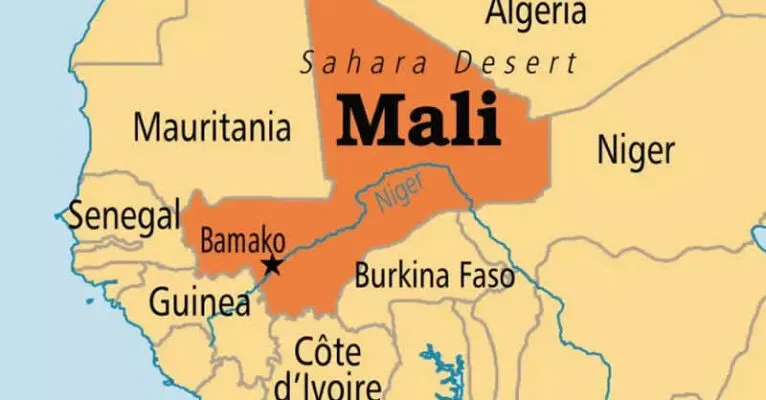
The coordinated strikes matter because they test, in real time, whether the military junta that seized power in back-to-back coups can secure even the towns where it has concentrated Russian-backed forces since April, when a previous attack killed the country's defense minister.
The Malian armed forces said in a statement that soldiers repelled assaults on army positions in Anefis, Aguelhoc and Gao in the north, Sevare in central Mali, and Kenioroba in the south. The military described the overall situation as "totally under control." It reported 20 militants killed in Sevare and six in Gao. One pro-government fighter died in Gao, the statement said, with four others wounded.
A spokesperson for the Azawad Liberation Front, a Tuareg-led rebel group, claimed involvement in Saturday's attacks. Mohamed Elmaouloud Ramadane, the FLA spokesperson, said the group's fighters had entered Anefis, a town in the northeastern Kidal region. Reuters could not independently verify that claim.
Anefis and the Shadow of April
Anefis carries specific weight. Government and Russian troops moved into the town only after the April operation, having previously been forced out of the nearby strategic town of Kidal. That April attack was a joint operation between the FLA and Jama'at Nusrat al-Islam wal Muslimin, the regional al Qaeda affiliate, and it struck the airport in Bamako, the capital, while killing the defense minister. JNIM has issued no claim of responsibility for Saturday's attacks.
The overlap in geography, and in at least one armed group, links Saturday's violence to that earlier operation rather than treating it as an isolated event.
What Residents Heard
In Gao, a local official said gunfire and rocket fire targeting a military camp continued from before dawn, with no immediate indication of who was responsible. One resident described the morning in blunt terms: "No one could go out this morning, the Malian Armed Forces have blocked all the streets. We're in our homes. The noise was so intense it felt like the roof was going to collapse." The resident spoke on condition of anonymity, citing safety concerns.
Related News
- Nigeria's Foreign Affairs Ministry says four South African police officers implicated in the killing of two Nigerian nationals remain unarrested
- Nigeria's Trade with African Neighbours Jumped 21% to $9.02 Billion in 2025, Afreximbank Data Shows
- Two Nigerians were reported killed in Port Elizabeth before Nigeria’s Foreign Affairs Minister, Bianca Odumegwu-Ojukwu, publicly warned that retaliatory measures against South Africa were now being considered by the Tinubu administration over recurring xenophobic violence
In Sevare, a separate resident told Reuters that early gunfire gave way to four large explosions in the west of the city around 8 a.m. Heavier detonations followed around 10 a.m., the resident said. Both accounts came from people asking not to be named for their own safety, a standard precaution in a country where phone lines and movement are already restricted during military operations.
The Prison Town
Kenioroba, the southern town also hit Saturday, holds a prison housing members of Mali's political opposition. A diplomatic source and a security source both said the prison was attacked. One of the two said security forces repelled the assailants. Neither source was named in the reporting, and a government spokesperson did not immediately respond to a request for comment on the prison assault specifically.
Five towns. One statement. Zero named casualties beyond the fighter counts.
A Junta's Broken Promise
Mali's military leaders took power in coups in 2020 and 2021, justifying both seizures partly on a promise to improve security that civilian governments had failed to deliver. Saturday's attacks, spread across the north, center and south of the country in a single day, undercut that justification without needing commentary to make the point.
The pattern is not new. In September 2024, JNIM attacked a paramilitary police training school near the Bamako airport, killing roughly 70 people. More recently, the group has run a fuel blockade that has cut power and supplies to residents and businesses in the capital itself. Saturday's attacks arrive on top of that blockade, not instead of it.
Foreign Backers, Competing Interests
Mali's government has moved recently toward closer ties with Washington, which has sought to rebuild security cooperation with Bamako and explore mining opportunities in the country. At the same time, Russia's Africa Corps forces continue backing the junta militarily, and Moscow vowed to stand by Mali after the April attacks. Both relationships are now being tested by a security picture that neither foreign partner has managed to stabilize.
The instability is not contained to Mali. Jihadist violence has also struck neighboring Burkina Faso and Niger, both of which, like Mali, turned to Russia for security assistance after falling out with Western partners.
What remains unanswered is who, beyond the FLA's own claim, carried out the attacks in Gao and Sevare, and whether JNIM will issue a claim of its own in the days ahead. The Malian government spokesperson has not responded to a request for comment on the Kenioroba prison assault, and no independent casualty count from Saturday's five-location attack has yet been confirmed outside the military's own statement.
Add a Comment