


For decades of forced adoption practices in England, affecting an estimated 185,000 mothers, adopted people, and family members.
The apology comes with a £4 million ($5.3 million) government support package, the first formal national reckoning with a policy that ran largely from 1949 to 1976 and separated thousands of women from their children under state sanction. It places England alongside Scotland and Wales, which have already issued their own apologies, and puts pressure on Northern Ireland, where no equivalent inquiry has yet been established.
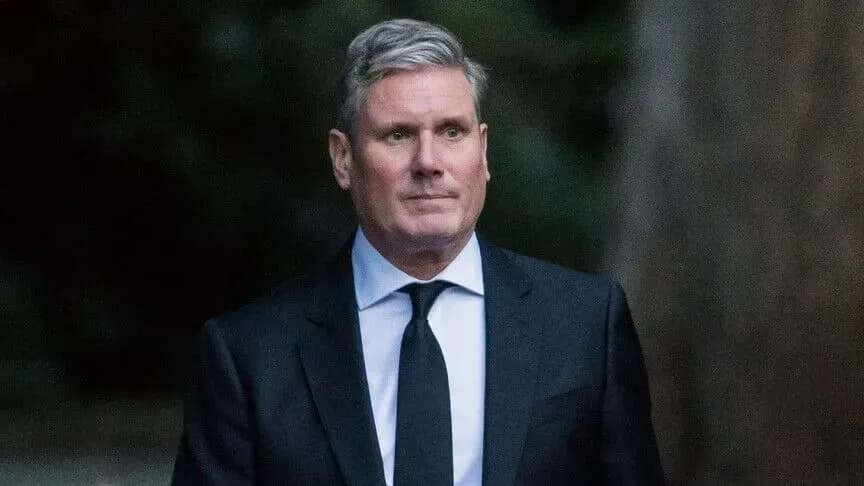
Starmer delivered the apology ahead of a reception for campaigners in Westminster, with survivors watching from the House of Commons gallery. "The shame is not yours. The shame was never yours. The shame is ours," he told them. "And I say that on behalf of the whole country, I say it to every single person impacted, we are deeply and profoundly sorry."
The £4 million package runs over three years. According to the government, the funding is meant to help affected people access adoption records, trace and reconnect with relatives, and document the long-term impact of the practices on their lives. No breakdown of how the £4 million will be allocated across those three functions has been published.
The practices under scrutiny ran primarily from 1949 to 1976, a 27-year span covering roughly three decades of British postwar life. During that period, the government said, women were frequently denied a genuine choice in whether to keep their children. Many were made to feel ashamed or unworthy, according to the government's own characterization of the harm. Children lost contact not just with birth parents but, in the government's words, with their identity and their history.
The government's statement extended the acknowledgment beyond mothers. Fathers and wider family members were also affected, it said, with consequences that in some cases carried across generations. That intergenerational framing matters for the support package's second stated goal, reconnecting relatives, since it implies the affected population includes children and grandchildren of those originally separated, not only the original mothers and adoptees.
A patchwork across the UK's four nations
England's apology follows earlier ones from Scotland and Wales, though the government did not specify the dates of those apologies in Thursday's statement. The UK government said it supports both. What "support" means in practical terms, whether it involves shared funding, coordinated record access, or simply political endorsement, was not detailed.
Related News
Northern Ireland remains the outlier. Work is underway there to establish a statutory public inquiry, led by the Northern Ireland Executive, covering not just forced adoption but Mother and Baby Institutions, Magdalene Laundries, and workhouses. Unlike Thursday's apology, that inquiry has not been completed or formally launched. No timeline for the Northern Ireland Executive's inquiry was included in the government's statement.
The scope of Northern Ireland's planned inquiry is broader than what England's apology addresses. Mother and Baby Institutions and Magdalene Laundries are distinct historical institutions from the adoption practices Starmer apologized for on Thursday, though they share overlapping populations of affected women. The UK government's statement did not clarify whether findings from Northern Ireland's eventual inquiry would feed back into England's support package or remain administratively separate.
The government was explicit that Thursday's apology does not extend geographically beyond England. "The apology relates to historical adoption practices in England," the government said, a distinction that leaves Scotland, Wales, and Northern Ireland under their own separate processes rather than a single UK-wide reckoning.
Current safeguards versus historical practice
The government drew a sharp line between past and present. Today's adoption system, it said, is "fundamentally different," built on strong legal safeguards, clear consent requirements, and independent judicial oversight. That framing positions the apology as addressing closed historical wrongs rather than ongoing ones.
But the government's own statement complicates that framing. It acknowledged that some people's experiences extended beyond the stated 1949 to 1976 period, and said it remained "deeply upsetting" to hear examples where coercive practices continued past that window. The government did not specify how far beyond 1976 those examples extend, nor how many affected individuals fall outside the officially recognized timeframe. That detail, absent from Thursday's statement, determines whether the £4 million package's eligibility criteria will actually reach everyone the government claims to be addressing.
No figures were given for how many of the estimated 185,000 affected people are still alive, a number that bears directly on how urgently the record-access and reunification components of the package need to move. The government has not published an application process, an oversight body, or a spokesperson's office responsible for administering the £4 million fund. Until it does, campaigners in the gallery on Thursday, who heard themselves told the shame was never theirs, have no published mechanism yet for turning that apology into an actual case file.
Add a Comment