


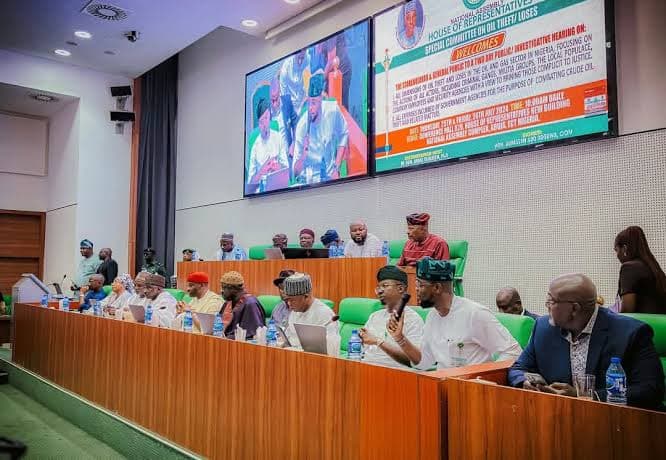
The push matters because Nigeria's daily crude production remains below its budget target, according to committee chairman Hon. Alhassan Ado Doguwa, and officials at Thursday's Abuja meeting said outdated penalties are letting convicted offenders walk away with fines as low as N100,000.
Doguwa, addressing stakeholders at the meeting, said Nigeria's legal framework for prosecuting oil theft has not kept pace with the sophistication of the crime. Some of the laws still in use date to the military era, he said, and courts have no alternative but to apply them. "Unless we provide new measures, new laws and a new legal framework, the courts will continue to rely on this obsolete legislations in handling serious criminality within Nigeria's oil and gas sector," Doguwa said.
The chairman was explicit that the proposal does not touch the Petroleum Industry Act. He said the PIA governs the basic principles of doing business in the oil economy and that none of its provisions would be affected by the legislative changes under discussion. The issue, as he framed it, sits entirely in criminal law and sentencing, not in industry regulation.
Doguwa said the committee has already recommended, in previous bills before the House, the creation of a special court for oil theft cases. His reasoning centered on delay. Routing these cases through the conventional court system means many will sit unresolved for years, he said, while the accused remain free.
That argument found support from security officials in the room. Goodluck Ilajufi, Director of Energy Security in the Office of the National Security Adviser, represented NSA Mallam Nuhu Ribadu at the meeting. Ilajufi said the sentencing pattern he has observed makes prosecution nearly pointless. "A judge may sentence someone to five years imprisonment with an option of a N100,000 fine, or even six months imprisonment," he said, adding that some suspects plead guilty precisely because they know the penalty will be light.
Ilajufi named two specific provisions he wants strengthened: Section 107 of the Miscellaneous Offences Act, covering tampering with petroleum infrastructure, and Section 118, covering adulteration of petroleum products. He said investor confidence depends partly on this. If the National Assembly is asking investors to commit billions of dollars, he said, those investors need assurance that security around the assets is real.
David Idowu, Assistant Commandant General for Operations at the Nigeria Security and Civil Defence Corps, echoed the call for a dedicated court. He recalled an episode from his time as a state commandant, when a lawyer returned from court in tears because a sentence handed down did not match the severity of the offense. Idowu said a special court could also target what he called "shadow actors," the figures behind oil theft operations who are not always the ones caught in the field.
A committee member, Hon. Cyril Hart, raised a separate issue: the pace of asset divestment in the sector. Hart said international oil companies are transferring blocks to Nigerian firms that may lack the capital to operate them, since the sector is dollar-denominated. He said any licence holder who fails to produce within a stipulated timeline should be treated as committing economic sabotage, on the same legal footing as physical theft. Nigeria holds roughly 38 billion barrels in crude reserves, Hart said, and underexploitation of that resource carries its own cost.
Related News
Doguwa used part of his remarks to criticize an absence. He said the Nigerian Upstream Petroleum Regulatory Commission neither attended Thursday's meeting nor sent a representative, despite being what he called a key stakeholder in the fight against oil theft. He described the no-show as unfortunate and counterproductive, and said he has directed the committee clerk to write to NUPRC compelling its appearance before the panel.
The meeting drew a wider security presence than a routine committee session. Senior officers represented the Nigerian Army, Nigerian Air Force, Nigerian Navy, the Nigeria Police Force and the NSCDC, according to Doguwa. Their attendance points to how the committee is positioning the crude theft problem, less as a regulatory matter and more as a coordinated security operation requiring military and paramilitary input alongside legislative reform.
None of the officials at Thursday's meeting gave a timeline for when a special court bill might be introduced or brought to a vote on the House floor. NUPRC has not responded to the committee's absence complaint, and the agency did not issue a public statement addressing the meeting as of Thursday. Whether the commission appears when summoned, and whether Doguwa's committee formally drafts the special court legislation it has been floating for months, remains the open question hanging over this latest round of hearings.
Add a Comment