


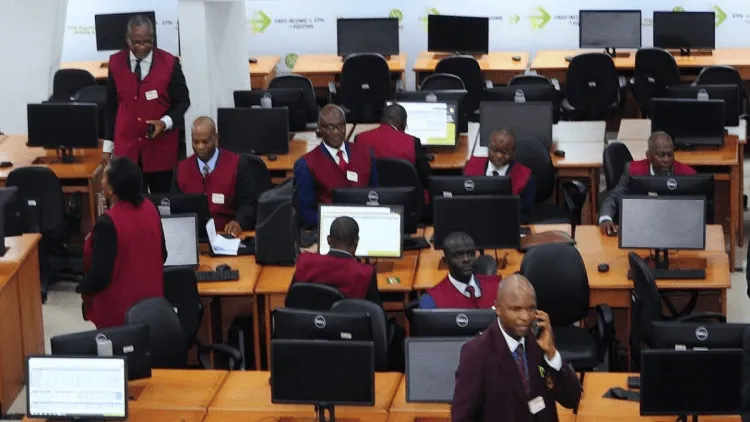
The gain matters because it pushes the market's year-to-date return to 47.31 per cent, a figure that will shape how pension funds and foreign portfolio managers weigh Nigerian equities against fixed income alternatives heading into the third quarter.
The All-Share Index rose 2.19 per cent on Friday, climbing 4,918.37 points to close at 229,240.34, up from 224,321.97 at the open. Market capitalisation moved from N143.946 trillion to N147.102 trillion over the same session, according to data from the Nigerian Exchange. That is a one-day gain matching the index's percentage move almost exactly, a detail that points to broad-based buying rather than a single heavyweight stock skewing the numbers.
Banking, telecommunications, and oil and gas stocks drove the rally. Market breadth confirmed the bullish tone: 39 stocks gained against 14 losers by the close.
Airtel Africa topped the gainers' chart, rising 10 per cent to settle at N5,274 per share. Four other stocks matched that 10 per cent ceiling. The Initiates closed at N25.85. Omatek Ventures ended at N1.76. Daar Communications settled at N1.65, and Universal Insurance closed at 88 kobo. The uniform 10 per cent gain across five names of vastly different share prices suggests each hit the exchange's daily price-movement limit, not that a single sector story explains all five.
The losers' side told a rougher story, concentrated almost entirely in insurance names. International Energy Insurance led the declines, down 9.96 per cent to N4.70. Meyer fell 9.95 per cent to close at N18.55. Fortis Global Insurance dropped 9.80 per cent, ending the day at N3.22 per share.
Two more insurers rounded out the bottom of the table. Sovereign Trust Insurance slid 5.34 per cent to N1.95. Veritas Kapital Assurance shed 5.07 per cent, settling at N1.31 per share. Six of the session's steepest movers, then, sat inside a single sector. That clustering raises a question the topline index number does not answer: whether Friday's rally was as broad as the headline gain suggests, or whether insurance stocks were quietly absorbing losses while banking and telecom names carried the market.
Trading volume tells a more cautious story than the price gains do. Volume fell 46.82 per cent to 454.92 million shares. Total value traded came to N27.61 billion across 48,214 deals. Fewer shares changed hands even as prices rose, a pattern that can mean conviction is thin, that fewer sellers were willing to part with stock at Friday's prices, or both.
Zenith Bank dominated activity. The lender's shares accounted for 49.78 million units traded, or 10.94 per cent of total volume. In naira terms, Zenith Bank's trade value hit N5.16 billion, representing 18.70 per cent of the market's entire turnover for the session. No other single stock came close to that share of value traded, based on the session's reported figures.
Related News
What the numbers don't show is which specific institutional buyers were behind the Zenith Bank volume, or whether the bank's own results, dividend expectations, or a broader rerating of Tier-1 lenders explains the concentration. The Nigerian Exchange's daily bulletin does not break down trades by buyer category, and neither Zenith Bank nor the Exchange had issued a statement addressing Friday's volume by the time this report was filed.
The insurance sector's losses also remain unexplained in the public record. Five underperformers from one sector, several breaching the 5 per cent threshold and two nearing the 10 per cent daily limit, would ordinarily prompt sector-specific coverage from analysts. None had circulated publicly as of Friday's close.
For now, the headline number, a 47.31 per cent year-to-date return, will likely dominate how the week is remembered. Whether that return holds through the next reporting cycle, when Zenith Bank and other Tier-1 lenders release half-year results, is the question the market has not yet answered.
Add a Comment