


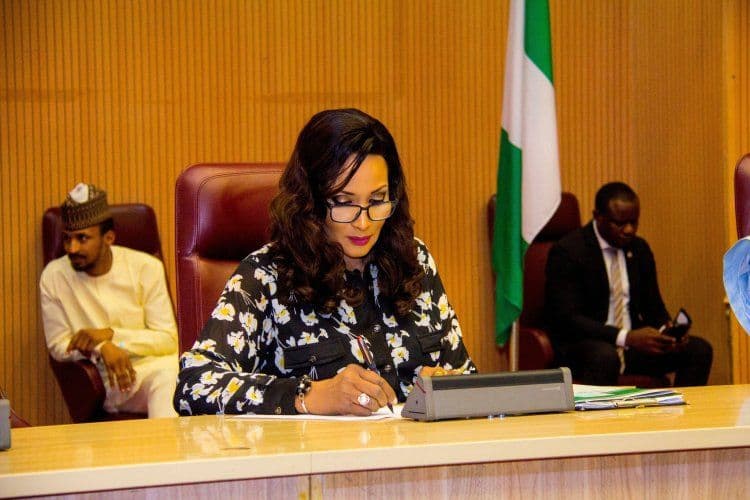
Bianca Odumegwu-Ojukwu said South Africa has failed to adequately confront years of xenophobic attacks targeting Nigerians.
Nigeria is preparing to evacuate about 1,000 citizens from South Africa after extending a verification exercise.
The Foreign Affairs Minister rejected claims that only undocumented migrants are affected by the violence.
Nigerian authorities are balancing evacuation efforts with fears of retaliatory attacks on South African businesses inside Nigeria.
Nigeria Raises Diplomatic Pressure After New Killings
Bianca Odumegwu-Ojukwu said on Monday that the Nigerian government may consider retaliatory measures against South Africa following renewed xenophobic violence that has left Nigerians dead, displaced, and preparing for evacuation flights back home.
Speaking to journalists in Abuja, the minister accused South African authorities of failing to confront a cycle of attacks that has persisted for years across multiple provinces.
“This is a situation that we are considering, but it is up to our legislature,” she said. “It is a decision that has to be taken at the highest level of government, but it’s not off the table.”
Related News
- Mozambique Reports Five Citizens Killed in Mossel Bay Violence as South Africa Faces Renewed Scrutiny Over Anti-Migrant Unrest
- NDLEA Seizes N10.43 Billion Cannabis Shipment After Two-Month Port Surveillance
- Akwa Ibom’s Victor Attah International Airport Begins International Flights Amid Claims of Unique Transit Status
Her comments followed reports from the Nigerian Consulate in Johannesburg that two Nigerians, identified as Amaramiro Emmanuel and Ekpenyong Andrew, died after an alleged assault involving officials of the South African National Defence Force (SANDF) in Port Elizabeth.
The South African authorities had not publicly announced disciplinary findings or criminal charges connected to the reported attack as of press time.
Nigeria’s Anti-Apartheid History Has Returned to the Argument
Odumegwu-Ojukwu framed the violence within the historical relationship between Nigeria and South Africa, particularly Nigeria’s support for the anti-apartheid movement during the 1960s through the early 1990s.
Her remarks reflected longstanding frustration within Nigerian political circles.
“Nigeria sacrificed quite a lot, committed funds, committed resources to aid South Africa,” she said, referring to financial, diplomatic, and humanitarian support provided during apartheid-era isolation of the South African government.
Historical records support that claim.
Nigeria funded scholarship programmes for South African exiles, backed sanctions campaigns against the apartheid regime, and contributed financially to liberation movements recognised by the Organisation of African Unity. Nigerian civil servants and workers also contributed to the Southern African Relief Fund through deductions approved during military administrations.
Successive Nigerian governments have repeatedly invoked those sacrifices whenever xenophobic violence resurfaces in South Africa. Yet the diplomatic language has usually stopped short of openly discussing retaliation.
The Nigerian Government Rejects South Africa’s Explanation
The Foreign Affairs Minister dismissed claims by South African officials that xenophobic attacks largely target undocumented migrants or individuals without valid immigration status.
Odumegwu-Ojukwu argued that Nigerians with valid residency status and business permits have also been attacked, harassed, or dispossessed during previous outbreaks of violence.
She cited reports of looted homes, damaged businesses, and assaults on legally resident Nigerians. The minister did not provide specific incident totals, but Nigerian diplomatic officials have repeatedly documented attacks against shop owners, traders, and workers during previous anti-foreigner unrest.
If Nigerian citizens holding lawful residency permits are being systematically targeted, the issue moves beyond immigration enforcement into questions involving equal protection, diplomatic obligations, and potential human rights violations under both South African and international law.
South African authorities have historically argued that many incidents classified internationally as xenophobic violence are ordinary criminal acts linked to unemployment, poverty, or local disputes. Nigerian officials reject that framing, pointing instead to repeated targeting patterns involving African migrants from Nigeria, Zimbabwe, Somalia, Ethiopia, and Mozambique.
Evacuation Plans Reveal Concern Inside Abuja
The Nigerian government is now preparing to repatriate approximately 1,000 Nigerians from South Africa, according to Foreign Affairs Ministry spokesperson Kimiebi Ebienfa.
Ebienfa said the government plans to deploy aircraft after an ongoing verification process is completed. Nigerian authorities will cover the cost of transportation for evacuees returning home.
The evacuation had initially been scheduled for Monday before officials postponed the operation until Wednesday, citing what the ministry described as “unforeseen logistical considerations.” Authorities also extended screening timelines to include additional Nigerians seeking evacuation.
Odumegwu-Ojukwu confirmed the exercise remained active and said citizens endangered by the violence would be allowed onboard.
Our analysis of previous emergency repatriation operations involving Nigerians abroad shows that state-funded evacuations are usually reserved for wars, political collapse, or sustained threats to civilian safety. Similar operations occurred during the Russia-Ukraine conflict, Sudan’s civil war, and the Libyan migrant crisis.
The Nigerian police have separately warned citizens against attacking South African businesses or nationals inside Nigeria in response to the violence abroad.
Previous outbreaks of xenophobic violence in South Africa have triggered protests, threats, and isolated attacks targeting South African-owned retail outlets and telecommunications interests operating in Nigerian cities. Several companies temporarily shut stores during earlier diplomatic disputes.
The Tinubu administration now faces competing pressures. It must appear responsive to public anger while avoiding a bilateral crisis that could affect trade, investment, and regional diplomacy between Africa’s two largest economies.
Economic ties remain extensive.
South African firms maintain major investments in telecommunications, retail, banking, entertainment, and logistics sectors within Nigeria. Nigerian businesses and professionals also continue operating in South Africa despite repeated security concerns.
Add a Comment