


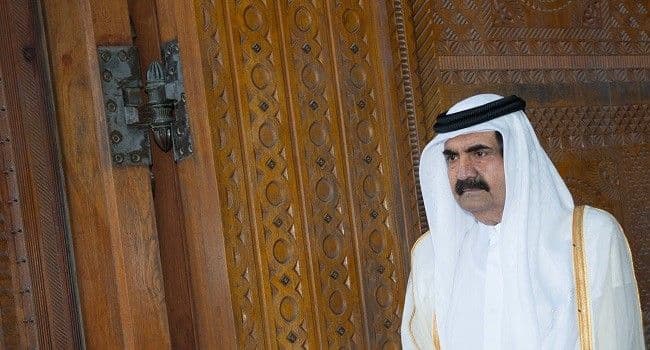
The announcement came from Qatar's Amiri Diwan, the emir's official office, in a statement carried by the state-run Qatar News Agency at 10:43 a.m. local time. The Amiri Diwan said Sheikh Hamad died on Sunday morning, July 12, 2026, at the age of 74. Within hours, condolence statements arrived from Cairo, Islamabad, Abu Dhabi, New Delhi and Abuja, a diplomatic reflex that shows how deeply Sheikh Hamad's three-decade project of turning a small Gulf peninsula into a global player had wired him into foreign capitals far from Doha.
The death matters beyond the funeral rites. Sheikh Hamad's abdication in 2013, handing power to his son Sheikh Tamim bin Hamad Al Thani, was unusual among hereditary Gulf rulers. His death now tests whether the influence he built, in media, in mediation, in sports diplomacy, outlives the man who built it, at a moment when Qatar has recently absorbed strikes tied to regional conflict and is still positioning itself as a Middle East power broker.
Funeral prayers were scheduled for Sunday evening. Services were set to take place after Maghrib prayer at the Imam Muhammad bin Abdul Wahab Mosque, with burial to follow at Lusail Cemetery. Qatar declared a mourning period. The government set a four-day mourning period, with flags flown at half-mast. Government offices closed. Al Jazeera reported that work was suspended at government agencies and public bodies during the mourning period.
Sheikh Hamad took power in 1995 and held it until 2013. He was widely regarded as a key architect of the energy-rich country's development, overseeing economic, social and cultural change that raised Qatar's international standing. The clearest marker of that project: Al Jazeera itself. The network launched under his rule in 1996 and grew within years into one of the world's most influential media outlets. He also rewrote the state's basic law. His tenure saw Qatar's first permanent constitution in 2004 and the start of municipal elections in which women could vote and run for office.
His 2013 exit was itself notable. Handing power to his son, then 33 years old, was a rare abdication among hereditary Gulf Arab rulers. Tamim has since led Qatar through the 2017 Gulf blockade, the 2022 World Cup, and a role brokering talks in Gaza. Qatar University's Abdulla Banndar el Etaibi told Al Jazeera that Sheikh Hamad turned Qatar into an "extraordinary country" whose legacy reaches well beyond its own borders.
Foreign reaction moved fast, and it moved through the same channel: brief statements posted or issued by foreign ministries and heads of state, most stressing personal ties to Tamim rather than policy toward Doha. Egypt's Abdel Fattah el-Sisi wrote on social media offering his condolences to Qatar's leadership. Pakistan's president, Asif Ali Zardari, issued a statement through his office. His office said Zardari paid tribute to Sheikh Hamad's visionary leadership and contributions to Qatar's progress and to regional cooperation. India's Narendra Modi remembered Sheikh Hamad personally. Modi called him a valued friend and recalled meeting him during a February 2024 visit to Qatar. Jordan's King Abdullah II and the UAE's Mohamed bin Zayed Al Nahyan also issued statements, part of a wave that Al Jazeera tracked across a running list of reactions.
Nigeria's statement arrived through its Ministry of Foreign Affairs, signed by spokesperson Kimiebi Imomotimi Ebienfa. Abuja has had an unusually active diplomatic channel with Doha this year. Nigeria condoled with Qatar in early July after industrial explosions at the Ras Laffan complex, and its new ambassador, former INEC chairman Mahmood Yakubu, presented letters of credence to Tamim in Doha on July 2, ten days before Sheikh Hamad's death. That history gives Sunday's condolence message more institutional weight than a form letter; it comes from a government that has been in the room in Doha within the past two weeks.
Nigeria's Minister of Foreign Affairs, Ambassador Bianca Odumegwu-Ojukwu, extended sympathies to Tamim, the Al Thani family and, in the ministry's words, the brotherly people of Qatar. The ministry's statement praised Sheikh Hamad's wisdom and his commitment to international cooperation, language that echoes, almost word for word, the tributes issued by other governments Sunday. That uniformity is itself a data point. When dozens of foreign ministries independently reach for the same handful of phrases, "visionary," "wisdom," "legacy," it says less about Sheikh Hamad specifically and more about how condolence diplomacy gets drafted: fast, low-risk, and interchangeable.
Related News
- At least nine Palestinians were killed by Israeli fire in Gaza on Wednesday, medical sources told Anadolu, in the latest breach of a ceasefire now in its ninth month.
- UK Prime Minister Keir Starmer apologized in Parliament on Thursday
- Israeli Opposition Accuses Netanyahu of Silence Over Rabbi's Curse on Military Chief
What is missing, so far, is any Nigerian statement addressing what Sheikh Hamad's death means for the bilateral relationship itself, beyond condolence. Yakubu's July 2 credentialing ceremony was framed around trade, investment, education, security and humanitarian cooperation. None of Sunday's statements from Abuja mention whether that agenda changes under a Doha now led solely by Tamim, thirteen years into his own reign and no longer sharing authority, formally or informally, with his father.
The unresolved question sits in Doha, not Abuja. Qatar's Amiri Diwan has not indicated how long the four-day mourning period will affect the government's ongoing regional mediation work, including its role in Gaza ceasefire talks, or whether Tamim will make any public remarks beyond Sunday's funeral rites. The Amiri Diwan's office had not issued a follow-up statement on state affairs as of Sunday evening.
Add a Comment