


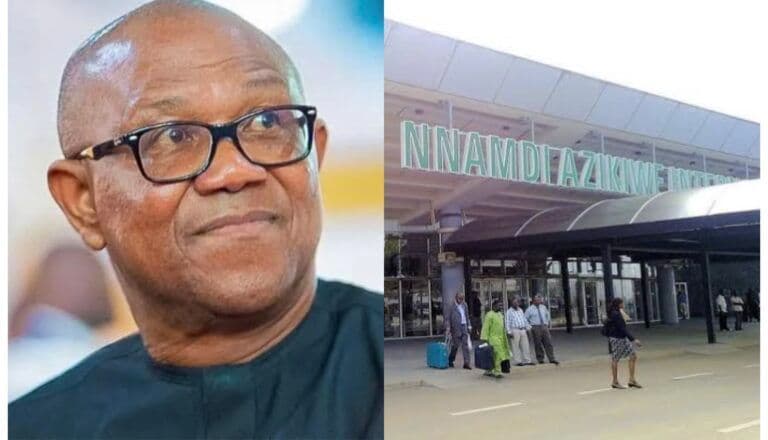
The dispute matters because it turns a routine parking clamp into a test of competing narratives from two men positioned on opposite sides of Nigeria's next presidential contest. Obi, the presidential candidate of the Nigeria Democratic Congress, had framed the incident as evidence of political persecution. Keyamo, citing CCTV footage, says the record shows something else entirely.
Keyamo issued the ultimatum in a statement Friday. He said an internal investigation, backed by footage from the airport's CCTV system, contradicts Obi's account of what happened at the Nnamdi Azikiwe International Airport on July 4.
"As the Minister of Aviation, I felt a moral duty to investigate and authenticate the claim made by opposition candidate, Mr Peter Obi," Keyamo said, adding that "politics aside, every Nigerian is entitled to fair treatment under the law."
The minister's account is specific about timing. He said the incident occurred at approximately 8:28 p.m. on July 4, and that it was captured in full by the airport's 24-hour surveillance system.
What the footage allegedly shows
According to Keyamo, Obi arrived at the domestic terminal in a vehicle driven by a police officer, with two other occupants inside. The officer, he said, parked the car in a manner that nearly blocked the terminal entrance, in violation of the airport's drop-off policy. That policy, Keyamo said, permits a driver to remain behind the wheel at the entrance for only a few minutes.
Keyamo alleged the driver then left the vehicle unattended and entered the terminal building. The officer briefly returned to retrieve an item, Keyamo said, then left the car again. It was at that point, according to the minister, that officials clamped the vehicle's tyres. No one was inside the car when that happened, he said.
The vehicle remained in what Keyamo described as a prohibited drop-off zone for roughly thirty minutes. He called that duration a security risk, citing what he termed global airport best practices, though he did not cite a specific regulation or standard by name.
Related News
- Obi camp warns Federal Government will be held accountable for any harm to opposition leader
- El-Rufai disputes ICPC's account of missed court date, calls agency's statement "inaccurate in facts and law"
- Senator Ifeanyi Araraume's media office disowned a statement circulating under his name on Wednesday
Keyamo's most pointed allegation concerns what happened after the clamping. He said the police officer called Obi once he discovered the vehicle had been immobilized. Obi then spoke directly with the airport manager, Keyamo alleged, and used his influence to have the vehicle released without payment of the required fine.
That claim, if accurate, is the crux of the minister's case. It reframes the episode from a bureaucratic parking dispute into an allegation that Obi bypassed a penalty through personal intervention, then later cast the same incident as targeted harassment.
"What has emerged from this is a clear case of an opposition candidate trying to whip up unnecessary sentiments for a wrong he committed with his driver," Keyamo said. He rejected Obi's defense that other vehicles were also parked improperly that day, calling it "completely false."
"He must live above board," Keyamo said of Obi, adding that the former Anambra State governor would face consequences for his conduct.
The demands
Keyamo's statement lays out two specific conditions. Obi must publicly apologise to airport workers for portraying them as instruments of persecution. He must also pay a fine of N25,000 for what Keyamo describes as wrongful parking, a penalty the minister says was waived through Obi's intervention on the night of the incident.
Keyamo framed the fine as a matter of consistency, not punishment, saying the demand is "consistent with the principle of equality before the law." He gave Obi one week to comply.
"If these demands are not met within one week, I will be giving the necessary directives to the Federal Airport Authority of Nigeria to take the next steps against him," Keyamo said.
The minister did not specify what those next steps would involve. He did not say whether FAAN has independent authority to compel payment of a fine already waived, or what legal mechanism would apply to an apology that cannot, by its nature, be legally mandated.
Keyamo also did not address why an incident from July 4 was investigated and disclosed publicly, days later, in the specific form of a ministerial statement rather than a routine FAAN enforcement notice. Nor did his statement include the CCTV footage itself, the name of the airport manager alleged to have authorized the vehicle's release, or the identity of the police officer who drove Obi's car that night.
Obi's own public account, that his vehicle's tyres were clamped unjustly and that other vehicles committed the same violation without consequence, remains, as described in Keyamo's statement, the position the minister is disputing. The minister called that defense false but did not present the footage or a written log identifying other vehicles present at the terminal that evening to support his denial.
What happens next depends on whether Obi responds within the seven-day window Keyamo has set, a deadline that by the ministry's own statement falls in mid-July. Whether the Federal Airports Authority of Nigeria has a defined enforcement pathway for an unpaid N25,000 fine already forgiven once, and whether the underlying CCTV footage will be made public rather than described secondhand in a ministerial statement, are the two questions the record, as it stands, does not answer.
Add a Comment