


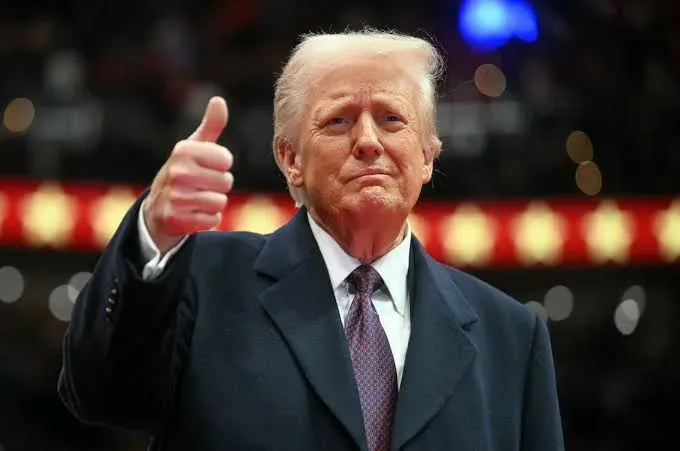
President Donald Trump commended Nigerian President Bola Tinubu's "decisive leadership" against violence targeting Christian communities, according to a letter dated July 6, 2026, and released Wednesday by Nigeria's presidency.
The letter marks a sharp reversal. Nine months earlier, Trump had threatened Nigeria over its treatment of Christians. Now he is thanking Tinubu for fixing the problem. For a bilateral relationship that spent late 2025 teetering toward sanctions, the shift signals which argument won inside the Trump administration, and which did not.
What the letter says
Bayo Onanuga, the president's Special Adviser on Information and Strategy, released the letter Wednesday, under the title "President Trump lauds President Tinubu's decisive leadership against terrorists." In it, Trump wrote: "Thank you for your thoughtful letter. Your kind words mean a great deal to me, and I appreciate your decisive leadership on behalf of the Nigerian people." He continued: "I applaud your resolve to tackle the issues plaguing your nation, especially the violence affecting Christian communities and it is a true honor to stand with you in the fight against terrorists and to make the Federal Republic of Nigeria stronger and more prosperous."
Short. Direct. No hedging.
Trump also wrote that the US-Nigeria relationship has "flourished in recent times," with both sides working closely on security challenges in parts of the country. He pointed to a "historic US-Nigeria 2026 Defence Cooperation Roadmap" as the mechanism binding the two governments together.
Then came a detail that had not surfaced in earlier accounts of the relationship: Trump said he had deployed United States Special Operations Forces, "among the most elite military units anywhere in the world," to equip Nigeria's armed forces with skills, tools and intelligence to protect civilians "particularly those of faith who have been under attack." A separate account of the letter specified that the deployment included Navy SEAL Team 6. Neither the Pentagon nor Nigeria's Ministry of Defence has issued a public statement confirming troop numbers, mission scope, or duration.
The November reversal
Related News
The praise stands in stark contrast to Trump's posture late last year, when he threatened Nigeria over its treatment of Christians, according to Reuters. That earlier pressure campaign included warnings to cut financial and military assistance, and Abuja rejected the accusations at the time, arguing insecurity in the country cuts across religious lines rather than targeting Christians specifically.
The two governments did find one point of agreement during that tense period. In November 2025, Trump and Tinubu agreed to establish a Joint Working Group, co-chaired by the national security advisers of both countries, according to Vanguard's account of the letter. That group set measures including intelligence sharing, military training and joint operations against terrorist groups.
Whatever friction existed at the diplomatic level, the security cooperation apparently continued underneath it. A "coordinated May 16 operation against ISIS hideouts in the Lake Chad region" led to the killing of the group's top leader, identified as Abubakar Al-Minoki, along with several lieutenants, according to Tribune Online's reporting on the letter's release. That single operation appears to be the clearest concrete outcome cited by either government to justify the warmer tone in July.
A visit last week, unremarked at the time
The partnership was reinforced further last week when Frank Garcia, the United States Assistant Secretary of State for Africa, visited Abuja and met senior Nigerian officials, pledging to strengthen ties, according to Tribune Online. The visit drew little attention outside Nigerian outlets at the time. It now reads as the groundwork for Wednesday's letter.
None of the four government statements or the Reuters dispatch address the diplomatic history that made a watchlist designation politically consequential last year, when religious freedom advocates in the US Congress and among evangelical constituencies pressed for tougher action against Abuja over reports of killings in Nigeria's Middle Belt and northern states. Whether that designation has been lifted, or remains formally in place alongside the newly warm rhetoric, is not addressed in any of the released material. Nigeria's Foreign Ministry did not respond to a request for comment on the record before publication
What is missing from the record
The letter is short: three paragraphs, according to allAfrica's transcription of the full text. It contains no casualty figures, no timeline for troop withdrawal, and no reference to the specific incidents that triggered Trump's threats in November. It also does not name the extremist groups involved beyond describing them broadly as "terrorists," a departure from more specific designations Washington has used in the past for Boko Haram and its ISIS-aligned offshoot.
The gap matters. Congress has not received a public accounting of what the Special Operations deployment costs, how long it will last, or under what legal authority it operates in Nigerian territory. The State Department has not confirmed the letter's contents independently of Abuja's release of it. And the underlying question that provoked the November threats, whether Christian communities in Nigeria's Middle Belt are still under sustained attack, remains unanswered by either government's public statements this week.
What comes next is the accounting. The Pentagon has not confirmed the presence, size, or rules of engagement for any Special Operations Forces in Nigeria. Congress has received no briefing on the record. And the State Department, asked directly whether Nigeria remains on its list of countries of particular concern for religious freedom violations, has not yet replied.
Add a Comment