


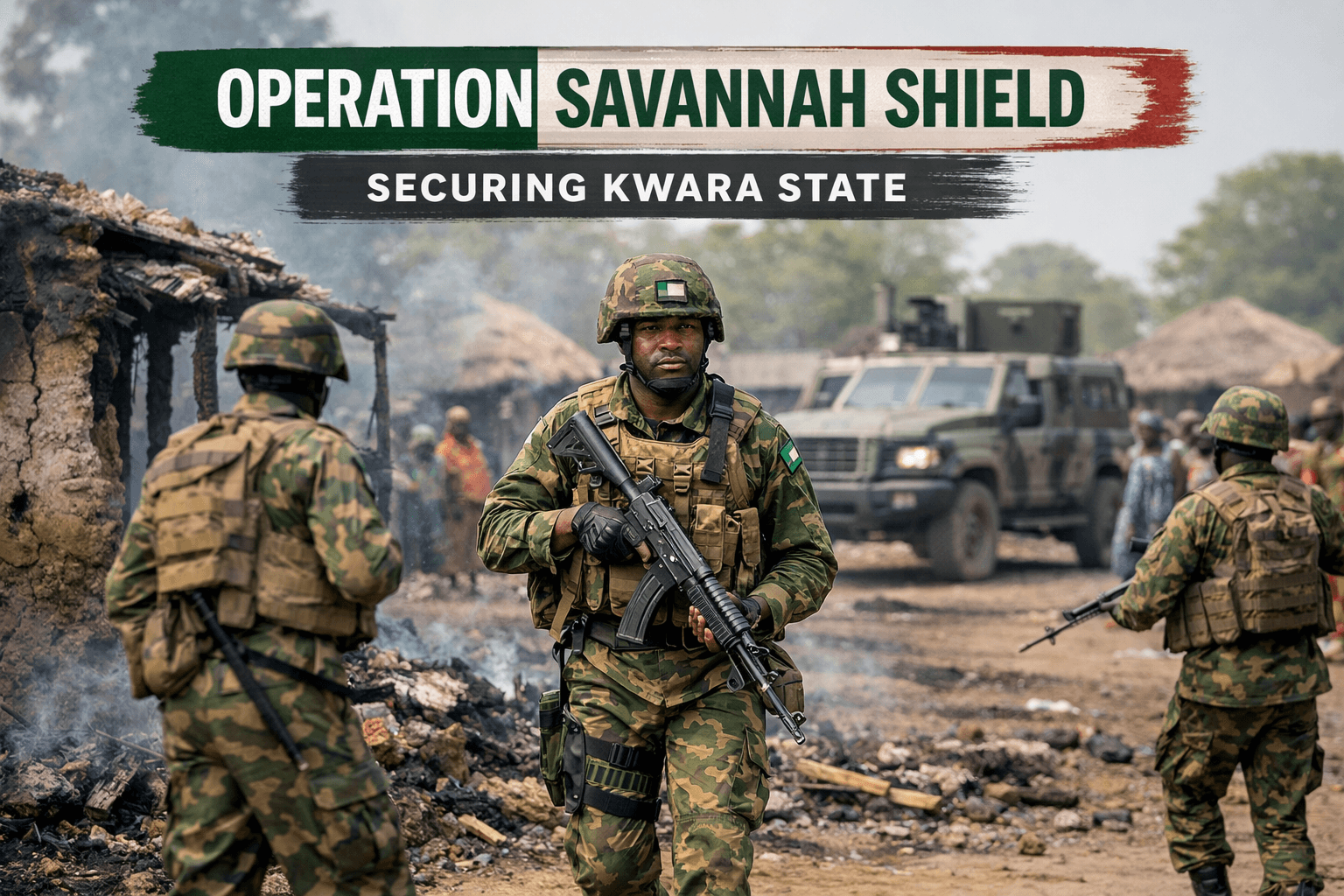
Nigeria was plunged into grief in late January 2026 following a deadly attack on communities in Kaiama Local Government Area of Kwara State. Armed assailants struck the Woro and Nuku communities, killing dozens of residents and leaving widespread destruction in their wake.
Official figures released by the Nigeria Police Force confirmed at least 75 fatalities, while local leaders, humanitarian workers, and international observers reported that the death toll could be significantly higher, with some estimates placing it above 170 victims. The discrepancy has highlighted longstanding challenges around access to affected rural areas and the difficulty of verifying casualties in the immediate aftermath of such attacks.
Survivors recounted how the attackers arrived suddenly and overwhelmed the communities, forcing residents to flee for safety. Homes were destroyed, livelihoods disrupted, and entire families displaced. The incident has since become one of the deadliest security breaches recorded in Kwara State in recent years.
Condemnation of the attack was swift and widespread. The United States Mission in Nigeria described the killings as “horrific” and extended condolences to the families of the victims, while calling for accountability and justice. Civil society groups and religious leaders across Nigeria also denounced the violence, renewing calls for stronger protection of rural communities.
Operation Savannah Shield: the federal response
In response to the killings, President Bola Ahmed Tinubu ordered the immediate deployment of a Nigerian Army battalion to Kwara State under a new military initiative named Operation Savannah Shield. The operation is designed as a coordinated security campaign aimed at stabilizing Kwara and preventing the spread of extremist violence into Nigeria’s North Central region.
According to government briefings, the operation focuses on three core objectives:
- Neutralising armed groups operating within Kwara and neighbouring states
- Protecting vulnerable communities and securing key transport routes
- Restoring public confidence through visible and sustained security presence
Kwara State Governor AbdulRahman AbdulRazaq confirmed that the first military commander assigned to Operation Savannah Shield had already arrived in the state and begun coordinating with existing security agencies. Following a meeting with President Tinubu at the Presidential Villa in Abuja, the governor praised the speed of the federal response and reaffirmed the state’s commitment to supporting the operation.
“The security of our people is non-negotiable,” Governor AbdulRazaq said, adding that the state government would provide intelligence, logistics, and local support to ensure the success of the mission.
Related News
- A Nigerian skate brand just became adidas' first official Nigerian collaborator.
- A senior ISWAP finance operative surrendered to Nigerian troops at 6:45 a.m. on July 25 along the Gamboru-Wulgo Main Supply Route in Borno State.
- Nigeria's reported digital payment fraud losses fell 52 percent last year, dropping to N25.85 billion from N52.26 billion in 2024.
Understanding the roots of the violence
Security analysts believe the Kwara attack reflects a broader and troubling trend: the gradual spread of insurgent and bandit activity from Nigeria’s northern conflict zones into previously less-affected regions of the country.
While no group has officially claimed responsibility for the Kaiama attack, analysts suspect that factions linked to Boko Haram or the Islamic State West Africa Province (ISWAP) may be involved, either directly or through affiliated criminal networks. These groups have increasingly exploited weak border controls between states, limited surveillance capacity, and gaps in local intelligence gathering.
Experts note that rural communities like Kaiama are particularly vulnerable due to their geographic isolation, limited security infrastructure, and dependence on agriculture. Until recently, the area had been considered relatively peaceful, making the scale and coordination of the attack especially alarming.
The incident has also renewed debate over Nigeria’s internal security framework, including the capacity of state-level security structures to respond swiftly to emerging threats.
Community impact and humanitarian response
The human cost of the Kwara killings extends far beyond casualty figures. Families are mourning loved ones, entire villages have been partially emptied, and many survivors remain displaced in neighbouring towns and local government areas.
Humanitarian organisations, working alongside local authorities, have begun providing emergency assistance, including food supplies, temporary shelter, and basic medical care. Psychological support services are also being mobilised to help survivors cope with trauma and loss.
Community leaders have stressed that recovery will require more than immediate relief. Calls have intensified for long-term investment in:
- Community policing and early-warning systems
- Improved surveillance and intelligence sharing
- Youth employment and engagement programmes to reduce vulnerability to radicalisation
Religious and traditional leaders have urged residents to remain calm and united, warning against reprisals or actions that could further destabilise the region.
Broader security implications
Operation Savannah Shield represents a significant test for Nigeria’s security institutions at a time when the country faces multiple challenges, including economic pressure, inflation, and ongoing security threats in other regions.
Security experts caution that while military deployments are necessary to contain immediate threats, lasting peace will depend on a broader strategy. This includes strengthening intelligence networks, improving coordination between federal and state agencies, and addressing the socio-economic conditions that allow violent groups to recruit and operate.
International partners have repeatedly emphasised the importance of combining security operations with development initiatives, particularly in rural areas where government presence is limited.
Looking ahead
As operations continue in Kwara State, attention will remain focused on whether Operation Savannah Shield can deliver tangible improvements in security and prevent further attacks. Success could help restore confidence among residents and send a strong signal to armed groups seeking to expand their reach.
However, analysts warn that setbacks are possible if underlying issues such as poverty, unemployment, and weak governance are not addressed alongside military action. The tragedy in Kaiama serves as a stark reminder of the human cost of insecurity — and the urgent need for sustained, coordinated efforts to protect lives and livelihoods.
For Nigeria, ensuring the safety of its citizens remains not only a security imperative but a foundation for economic stability and national unity.
Add a Comment