


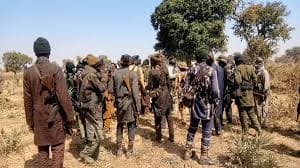
Nigeria’s fragile debate over how to end rural violence has taken a sharper turn after the Katsina State Government confirmed plans to release 70 suspected bandits as part of a renewed peace arrangement, drawing widespread condemnation from socio political groups, security analysts, and local leaders.
The proposal has reignited national concerns about justice, deterrence, and the limits of negotiation with armed groups, especially in a state that has endured years of deadly bandit attacks. Critics argue the move risks deepening insecurity, while the government insists it is a calculated effort to secure peace and free abducted civilians.
Rising anger over proposed release
Prominent organisations including Afenifere, the Arewa Consultative Forum, Ohanaeze Ndigbo, the Middle Belt Forum, and the Coalition of Northern Groups have publicly opposed the planned amnesty. In separate reactions, the groups described the policy as reckless, unconstitutional, and a threat to national security, urging the Federal Government to step in.
Their objections come against the backdrop of sustained violence in Katsina State, where more than 1,500 civilians have been killed between 2021 and 2025 according to security and civil society estimates. Entire communities across the North West have faced repeated attacks, mass kidnappings, and displacement linked to banditry.
Although the state government approved the release of the 70 suspects as part of talks with armed groups, uncertainty still surrounds the status of the detainees. When reporters visited the office of the Katsina State Commissioner for Justice and Attorney General on Monday to verify whether the suspects remained in custody and to authenticate documents linked to the alleged release, officials declined to comment. They neither confirmed nor denied that the bandits had been freed.
That silence has heightened anxiety among residents and observers, reinforcing fears that decisions affecting public safety are being taken without transparency or public accountability.
Government defends peace strategy
Katsina officials have maintained that the release is not an act of leniency but a strategic concession aimed at consolidating community driven peace deals. The Commissioner for Internal Security and Home Affairs, Dr Nasir Mu’azu Danmusa, said at least 15 local government areas had entered into local peace agreements with armed groups.
According to him, so called repentant bandits have released more than 1,000 abducted persons across several councils, including Sabuwa, Bakori, Faskari, Danmusa, and Malumfashi. He likened the decision to prisoner exchanges historically associated with armed conflicts, citing precedents from the Nigerian civil war and negotiations involving Boko Haram.
Related News
- A Nigerian skate brand just became adidas' first official Nigerian collaborator.
- A senior ISWAP finance operative surrendered to Nigerian troops at 6:45 a.m. on July 25 along the Gamboru-Wulgo Main Supply Route in Borno State.
- Nigeria's reported digital payment fraud losses fell 52 percent last year, dropping to N25.85 billion from N52.26 billion in 2024.
Danmusa added that the Ministry of Justice and the High Court acted within the law and that anyone dissatisfied with the process was free to challenge it in court.
In a separate opinion article, the State Commissioner for Information and Culture, Bala Zango, argued that communities devastated by killings, kidnappings, and displacement were more willing to accept unconventional solutions if they promised immediate safety. He suggested that much of the criticism came from outside the conflict zones.
Strong resistance from national groups
For Afenifere, the explanation does little to allay fears. The pan Yoruba group’s Organising Secretary, Abagun Omololu, described the plan as dangerous appeasement. He warned that state governments lack the constitutional authority to negotiate with terrorists without federal leadership, full disarmament, and judicial closure.
Omololu stressed that releasing armed actors without accountability could allow violence to spill across state borders, describing the policy as a redistribution of insecurity rather than peace building.
The Arewa Consultative Forum echoed similar concerns. Speaking in Kaduna, its National Publicity Secretary, Prof Tukur Muhammad Baba, said any decision involving suspected bandits must prioritise justice for victims. He warned that gestures perceived as weakness could embolden criminal groups and inspire copycat demands in other states, especially if the Federal Government was not fully consulted.
The Middle Belt Forum went further, calling the move an encouragement of banditry. Its National President, Dr Bitrus Pogu, urged federal intervention, arguing that negotiating with people accused of killings and displacement undermines the rule of law.
Ohanaeze Ndigbo leaders also cautioned that the implications extend beyond Katsina. Former Ohanaeze vice president Chief Silas Okeke warned that released bandits could migrate to other regions and escalate attacks on farmers and travellers. Similar concerns were raised by Ohanaeze leaders in Abia State and by the Ijaw People’s Development Initiative.
Voices from Katsina communities
Opposition has been just as firm at the local level. Religious and community leaders in Katsina State say residents remain traumatised by years of violence and fear retaliation if known bandits return to society.
Malam Umar Usman, a religious leader in Katsina metropolis, said those responsible for killings and destruction should face the full weight of the law. A ward head in the Modoji area, Aminu Jafaru, warned that released bandits could target security operatives and traditional leaders who previously cooperated with authorities.
In Kankara, a youth leader said residents were considering legal action, insisting that those who paid ransoms and lost family members felt betrayed. An Islamic cleric, also named Mallam Umar, acknowledged the risks but said peace dialogues had included demands from bandit groups for the release of their detained members, highlighting the moral tension between justice and the urgent desire to end bloodshed.
Security experts urge caution
Security analysts argue that the controversy exposes a deeper national dilemma. Retired Nigerian Navy Commodore Omatseye Nesiama said any discussion about releasing suspects must begin with an honest assessment of the psychological, economic, and social damage caused by banditry.
He argued that negotiations are most effective when the state first demonstrates clear dominance through sustained security operations, arrests, and prosecutions. Only then, he said, can limited trade offs be considered to save civilian lives without undermining state authority.
This perspective underscores a broader concern rarely addressed in public debate. Peace deals that prioritise immediate calm over long term accountability may reduce violence temporarily but risk eroding public trust if victims are excluded from the process.
A fragile path forward
As pressure mounts, the Katsina amnesty plan has become a test case for Nigeria’s wider approach to internal security. The state government insists dialogue has already delivered tangible results, including the release of abductees. Critics counter that peace without justice is unlikely to endure.
Whether the Federal Government intervenes or allows the policy to proceed, the outcome will likely shape future negotiations with armed groups across the country. For now, many communities remain caught between the fear of renewed attacks and the uncertainty of a peace built on compromise rather than accountability.
Add a Comment