


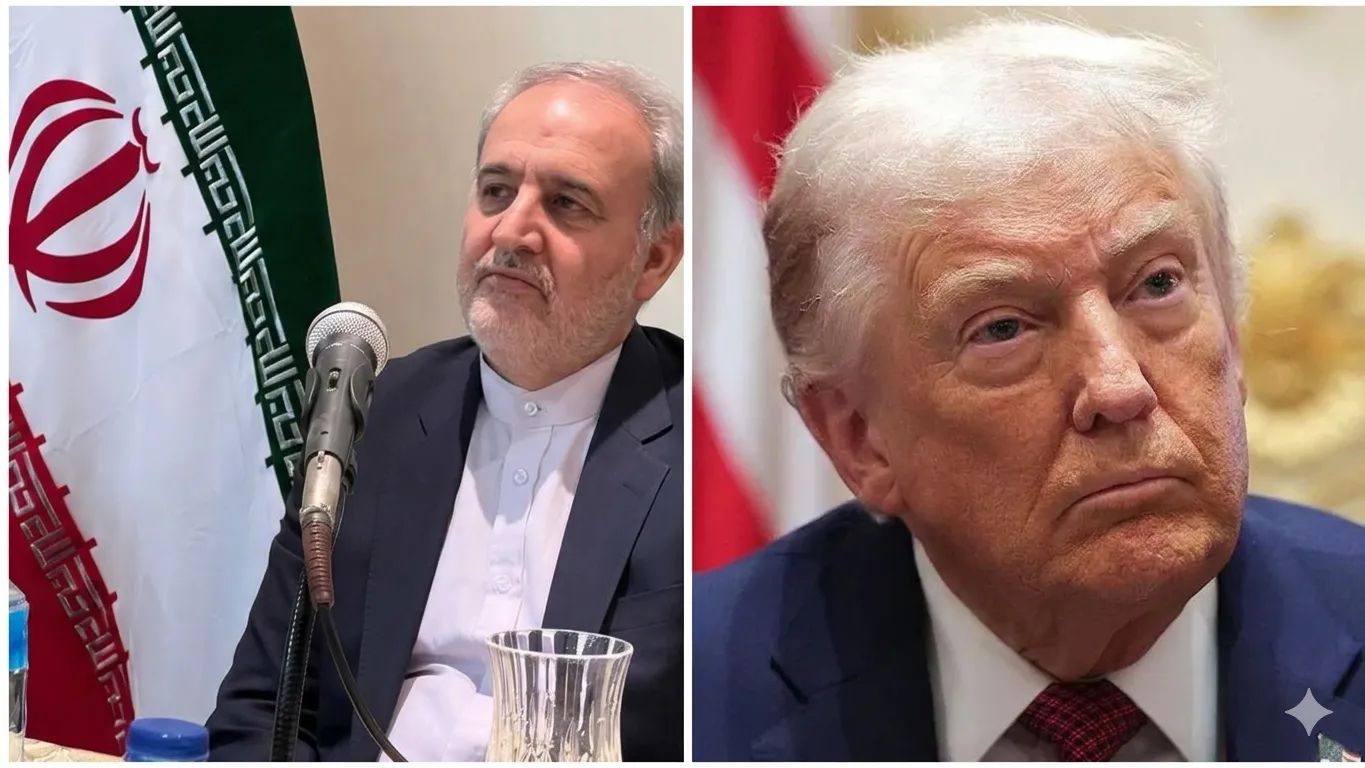
On Monday, March 23, 2026, a single all-caps post on Truth Social moved global markets by hundreds of billions of dollars. The author was Donald Trump. The claim was that the U.S. and Iran were engaged in "in depth, detailed, and constructive conversations" toward ending a war now in its fourth week. By the time markets in New York opened, S&P 500 futures were pointing to a 1.6% gain and Brent crude had fallen 6.2%, its sharpest single-session drop since the conflict began on February 28.
Iran's response landed within hours. Nothing happened.
Iranian state media quoted an official as saying: "There is no negotiation, and with this kind of psychological warfare, neither the Strait of Hormuz will return to its pre-war conditions nor will there be peace in the energy markets." Iran's Foreign Ministry spokesperson Esmail Baghaei gave a separate, equally blunt denial: he said Iran's position regarding the Strait of Hormuz and the conditions for ending the war remained unchanged and that no direct negotiations with American officials had taken place since the U.S. and Israel launched strikes on February 28.
The gap between the two governments' accounts is not a matter of interpretation. It is a named dispute between identifiable individuals.
An Israeli official told Axios that U.S. envoys Steve Witkoff and Jared Kushner had been in contact specifically with Mohammad Bagher Ghalibaf, the speaker of the Iranian parliament. Trump, speaking to reporters in Palm Beach, confirmed that Witkoff and Kushner participated in talks Sunday evening with "a top person" in Iran, but declined to name him, saying he did not want to "get him killed."
Ghalibaf named himself. Writing on social media, Ghalibaf stated: "No negotiations have been held with the US, and fakenews is used to manipulate the financial and oil markets and escape the quagmire in which the US and Israel are trapped."
That is the parliament speaker of the country allegedly being negotiated with, publicly calling the U.S. president's account false. By name.
Trump's response was to tell reporters the Iranian denial was the result of miscommunication within the Iranian leadership. He offered no documentation of what was discussed, with whom, or where. The White House, per CNBC, did not respond to requests for further information about the talks.
Related News
- The UN's migration agency says trafficking networks have forced people from more than 80 countries into online scam compounds across Asia.
- More than 12,000 people have been arrested by US immigration authorities after tips from the Office of Refugee Resettlement.
- China's trade with Africa hit 1.41 trillion yuan in the first half of 2026.
The binary of "talks" versus "no talks" does not fully capture what is verifiably happening at the edges.
NPR confirmed there are backchannel efforts to open dialogue, with intermediaries including Pakistan, Egypt, and Turkey relaying messages between the parties. Iran's Foreign Ministry acknowledged as much, telling state media that multiple "initiatives from regional countries" to reduce tensions were ongoing, while insisting that all such requests must ultimately be directed to Washington because Iran did not start the war.
Pakistan moved from private to public on March 24. Prime Minister Shehbaz Sharif posted on social media that Pakistan "welcomes and fully supports ongoing efforts to pursue dialogue" and that his country "stands ready and honoured to be the host to facilitate" talks, subject to concurrence from both the U.S. and Iran. Neither government had officially responded to the offer at time of publication.
The offer exists. Acceptance does not yet.
The specific pressure point driving this week's events is the Strait of Hormuz. Roughly 20% of global oil and gas typically passes through the narrow waterway connecting the Persian Gulf and the Gulf of Oman. Shipping traffic has virtually ground to a halt since the U.S. and Israel launched airstrikes on Iran on February 28.
Trump's play on Saturday, March 22, was a 48-hour ultimatum: reopen the strait or face destruction of Iran's power plants. Hours before that deadline expired Monday evening, Trump reversed course, citing the alleged productive negotiations and announcing a five-day postponement of any strikes on Iranian energy infrastructure.
Oil markets treated the reversal as real. Brent crude and West Texas Intermediate both fell 6.2% on the news. But the strait remained functionally closed. U.S. Central Command Admiral Brad Cooper said Monday the waterway was "physically open," but attributed the traffic halt to Iran firing on vessels attempting passage.
Iran's communication to the International Maritime Organization offered selective assurances. Ships from countries it deemed friendly or neutral could coordinate transit. Ships linked to the U.S. or Israel could not.
The International Energy Agency has described the disruption as the largest supply disruption in the history of the oil market. WTO Deputy Director-General Jean-Marie Paugam warned that if fertiliser supplies through the strait remained blocked, the effects would carry into future harvests globally.
What the Numbers and the Violence Say on the Ground
Meanwhile, the military conflict continued without pause during the diplomatic noise.
Iran's Revolutionary Guards confirmed fresh missile and drone strikes on Wednesday targeting Israel and U.S. military positions in Kuwait, Jordan, and Bahrain. Air raid sirens were activated across central Israel. In Kuwait, a drone struck a fuel tank at the international airport. In Lebanon, Israeli operations against Hezbollah have killed over 1,000 people, with more than a million displaced, according to Lebanese authorities.
NPR confirmed that the Israeli military wants to keep fighting Iran for several more weeks to achieve what it describes as its war aims. That military posture runs directly against Trump's public claim of imminent peace and any five-day diplomatic window his announcement created.
Trump suggested to reporters that the Strait of Hormuz could be "jointly controlled" by the U.S. and Iran as part of a deal, telling CNN's Kaitlan Collins: "Maybe me and the ayatollah, whoever the ayatollah is." Neither Iran's supreme leader nor any senior Iranian official has commented on that framework.
FAQ
Is there any real diplomatic process happening at all? Yes, but not between the U.S. and Iran directly. Pakistan, Egypt, and Turkey are relaying messages. Whether that constitutes "negotiations" in any meaningful sense is exactly what both governments are fighting over in public. The backchannel exists. The channel does not.
Why would Iran deny talks that might benefit them? Because publicly acknowledging them legitimises Trump's framing of the war, reduces economic pressure on the U.S. from rising oil prices, and gives the Iranian parliament speaker Ghalibaf a domestic political problem. Tehran has calculated that silence plus denial is worth more than acknowledgment.
Is Trump's five-day window still in effect? As of publication, yes. Trump said strikes on Iranian power plants are postponed for five days from Monday, March 23. That window expires on or around March 28. No formal extension or cancellation has been announced. The clock is running.
Pakistan's offer to host formal negotiations remains formally unanswered as of March 25, 2026. The five-day moratorium on strikes against Iranian energy infrastructure expires on or around March 28, leaving unresolved whether Trump will restore his threat to "obliterate" power plants in a country whose parliament speaker publicly called his account of this week's diplomacy fabricated. The Strait of Hormuz, through which 20% of the world's oil and gas normally flows, remains functionally closed. No court or arbitration body has jurisdiction over the waterway's status. The only mechanism for resolving that question is the same one that failed to produce agreement this week: a conversation that at least one side says never happened.
Add a Comment