


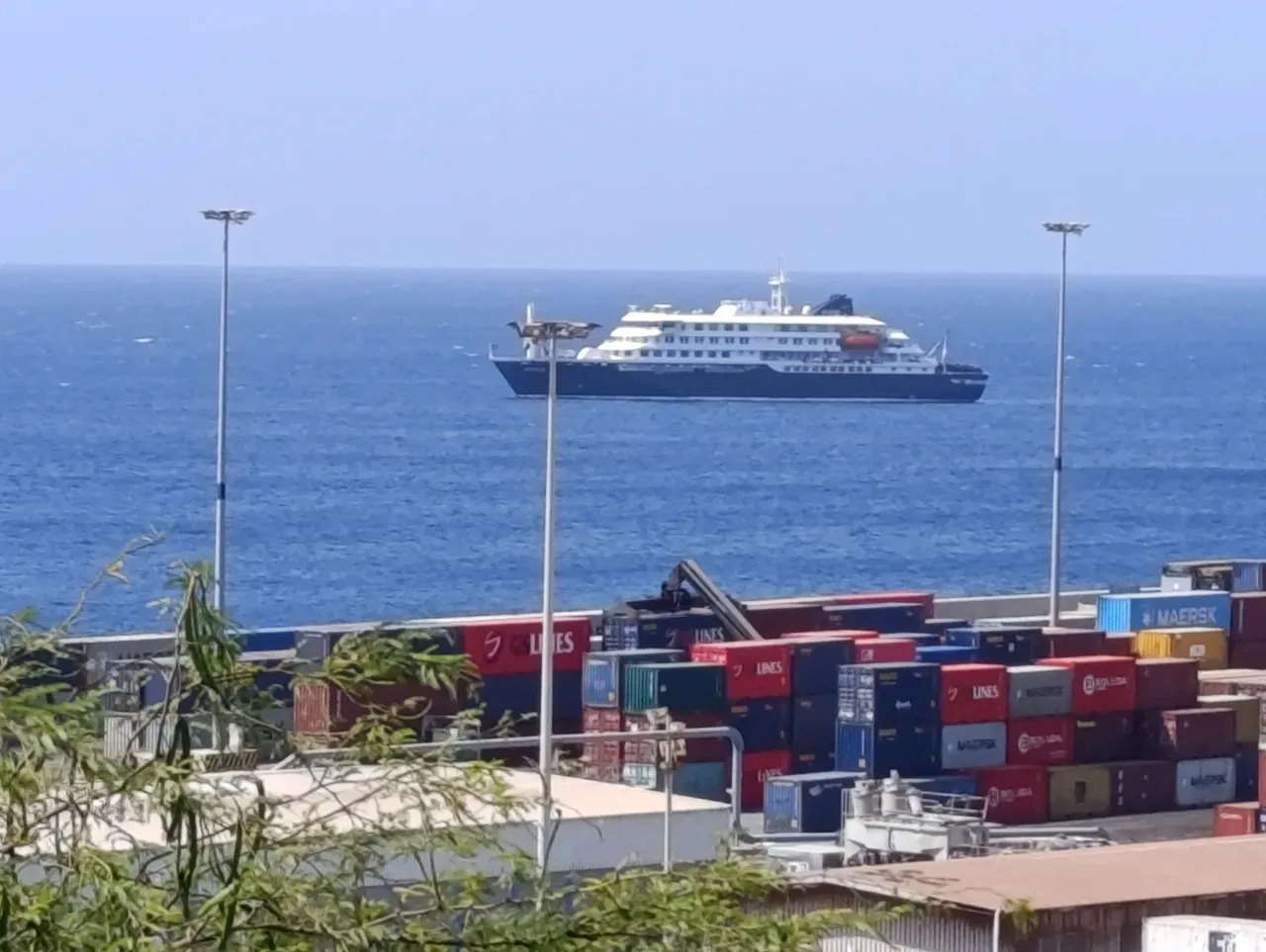
Three passengers are dead after a hantavirus outbreak aboard the Dutch-flagged cruise vessel MV Hondius, prompting an international containment operation involving the World Health Organization, Spanish authorities, and multiple foreign governments.
The ship, carrying roughly 150 passengers and crew, is expected to dock in Tenerife on Sunday. Spanish ministry officials said WHO Director-General Tedros Adhanom Ghebreyesus will travel there alongside Spain’s health and interior ministers to oversee evacuation coordination and containment protocols.
Health officials are treating the outbreak cautiously because confirmed cases involve the Andes strain of hantavirus, the only known hantavirus capable of person-to-person transmission.
The outbreak began after passengers on the expedition vessel developed symptoms consistent with hantavirus pulmonary syndrome, a severe respiratory disease linked primarily to rodent exposure. According to WHO spokesperson Christian Lindmeier, six confirmed infections had been identified by Friday from eight suspected cases. WHO said there were no additional suspected cases remaining aboard the vessel.
Three infected passengers later died.
The dead include a Dutch husband and wife and a German woman, according to Spanish ministry sources and WHO briefings. The Dutch woman had briefly boarded a KLM flight from Johannesburg to the Netherlands on April 25 before being removed prior to departure after concerns emerged about her condition. She died the next day in a Johannesburg hospital.
WHO officials are treating the MV Hondius outbreak as low risk to the public, despite confirmation of the Andes strain.
Three passengers have died, but WHO says transmission aboard the ship appears limited even among cabin contacts.
Related News
Spanish authorities are preparing a controlled evacuation operation in Tenerife involving international passenger transfers.
At least three countries, Spain, South Africa, and Singapore, are now monitoring passengers linked to the outbreak.
WHO Moves to Contain International Exposure
Spanish ministry sources said Tedros Adhanom Ghebreyesus would join operational teams in Tenerife to supervise coordination between health agencies and security authorities. The Canary Islands operation is expected to include controlled disembarkation procedures, medical screening, and repatriation flights for passengers returning home.
Officials are trying to prevent panic.
WHO spokesperson Christian Lindmeier stressed during a Friday briefing that the outbreak posed “absolutely low” risk to the general population. He pointed to early epidemiological findings suggesting limited transmissibility, even among people sharing cabins with infected passengers.
The Andes virus differs from most hantavirus strains because limited human-to-human transmission has been documented previously in South America, particularly in Argentina and Chile. Yet WHO officials emphasized that transmission generally requires close exposure and prolonged contact with infected bodily fluids.
Lindmeier described a developing pattern aboard the ship where some cabin partners of infected passengers had not contracted the disease. That observation, while preliminary, appears to support WHO’s assessment that the virus is not spreading efficiently in the confined cruise environment.
Health agencies have not disclosed where exposure to infected rodents may have originally occurred. The ship’s recent itinerary and expedition activities have not been fully released publicly. Officials also have not clarified whether environmental testing has begun aboard the vessel itself.
Tenerife Becomes the Operational Hub
The decision to direct the ship toward Tenerife effectively turns the Spanish island into a temporary international disease-control center. Spanish health secretary Javier Padilla confirmed Friday that authorities were already monitoring secondary contacts connected to the outbreak.
Padilla said a woman in eastern Spain developed symptoms after sitting “two rows behind” the Dutch passenger who later died. The woman has been isolated in hospital while testing continues. Padilla described the potential exposure as “a pretty unlikely case,” reflecting current assumptions about the virus’s low transmissibility.
Spanish interior ministry officials also disclosed that a South African woman connected to the same KLM flight remained asymptomatic after spending a week in Barcelona before returning home.
That widened the surveillance net.
Public health responses now span several jurisdictions. South African authorities handled the initial hospitalization. Spanish authorities are monitoring possible secondary exposures. Dutch officials are involved because the vessel is Dutch-flagged and several victims were Dutch nationals. Singapore authorities separately confirmed that two Singapore residents from the cruise tested negative but would remain under quarantine observation.
A Cruise Ship Creates a Different Risk Equation
Cruise outbreaks create logistical problems that land-based outbreaks often avoid. Passenger manifests cross multiple legal jurisdictions. Medical records move through several national systems simultaneously. Isolation capacity aboard expedition vessels is usually limited compared with dedicated medical facilities.
The Hondius case illustrates that pressure clearly.
The vessel carries approximately 150 people, according to Spanish ministry sources. Even with only six confirmed infections, authorities must now trace passenger interactions, cabin assignments, dining arrangements, transport histories, and post-disembarkation travel plans across multiple countries.
Our analysis of WHO outbreak notices and cruise-related health advisories from the past decade identified repeated containment difficulties linked to delayed symptom recognition aboard ships, especially when diseases initially resemble influenza or pneumonia. Hantavirus symptoms commonly begin with fever, muscle pain, fatigue, and respiratory distress, symptoms that can overlap with several other infectious diseases during early stages.
The WHO’s public posture remains measured. Officials have repeatedly stressed that the outbreak is small, transmission appears limited, and current evidence does not suggest widespread exposure among passengers or airline contacts.
Still, the agency’s decision to send its director-general personally to Tenerife signals the level of international coordination now required.
The Andes Virus Raises Specific Concerns
Most hantavirus infections occur after humans inhale particles contaminated by rodent urine or droppings. Human transmission is considered rare for most strains. Andes virus is the exception documented in medical literature.
WHO has not publicly confirmed where infected passengers may have encountered rodents or contaminated environments before symptoms appeared. The agency also has not identified whether all confirmed cases shared a common excursion, enclosed facility, or exposure point before illness developed.
Without that information, investigators are left examining overlapping travel histories.
The timing complicates matters further. The Dutch passenger removed from the Johannesburg-bound KLM flight on April 25 died one day later, indicating her illness had already progressed significantly before authorities intervened. That creates questions about how long infected passengers may have circulated before containment measures intensified.
Health officials are now trying to answer those questions retrospectively.
Is the virus spreading easily between people?
WHO says no. Officials said even cabin-sharing passengers sometimes avoided infection. The Andes strain can spread person-to-person, but health authorities say transmission appears limited and requires close contact.
Why is WHO sending Tedros to Tenerife?
Because passengers from multiple countries are involved, and Spain is becoming the main evacuation point. WHO wants centralized coordination before passengers disperse internationally.
Are airline passengers at serious risk?
Right now, officials say the risk is low. Spanish authorities are still testing one woman linked to the Johannesburg flight, but no broader transmission cluster has been confirmed.
The next unresolved issue is whether health authorities will classify any secondary infections outside the ship as confirmed human-to-human transmission linked to the Andes strain. Spanish officials have not announced when laboratory results from the hospitalized woman in eastern Spain will be released, and WHO has not disclosed whether additional quarantine orders or travel restrictions could follow if further positive cases emerge after the Tenerife disembarkation.
Add a Comment