


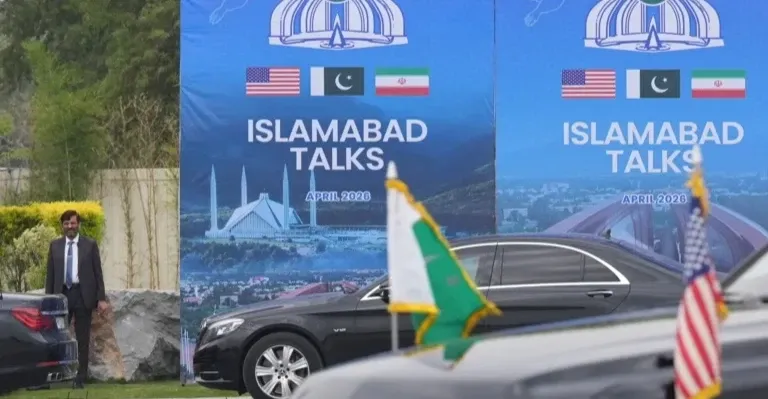
Pakistan confirmed Thursday that backchannel diplomacy between the United States and Iran remains active after nearly a week of escalating tension around the Strait of Hormuz, the narrow maritime corridor that handles roughly one-fifth of global oil shipments according to the US Energy Information Administration.
The statement from Pakistan’s Foreign Ministry arrived hours after Prime Minister Shehbaz Sharif publicly acknowledged that Islamabad is communicating with both Washington and Tehran. The intervention places Pakistan in a familiar but risky position, acting as an intermediary between two governments that have spent decades locked in sanctions disputes, proxy conflicts, and naval brinkmanship.
Marine traffic data reviewed by Lloyd’s List Intelligence showed at least 17 commercial vessels delayed or rerouted near the Strait between May 3 and May 6 after the United States announced “Project Freedom,” a naval escort initiative proposed by President Donald Trump. The operation was suspended less than 48 hours later. Trump later said Pakistan and “other countries” requested additional time for negotiations.
Pakistan has confirmed it is mediating between Washington and Tehran during negotiations tied to the Strait of Hormuz.
Iran says the United States must remove naval restrictions before any full reopening agreement moves forward.
Trump suspended “Project Freedom” within 48 hours after announcing it, citing diplomatic requests and indirect progress.
The unresolved issue remains Iran’s uranium enrichment program and how quickly sanctions relief could legally occur under US law.
The negotiations now center on a proposed memorandum first reported by Axios, citing unnamed US officials familiar with the discussions. According to that report, Washington expects a formal Iranian response within 48 hours regarding a one page framework that would temporarily halt maritime escalation and freeze parts of Iran’s nuclear activity.
Related News
The framework contains four sensitive elements. Suspension of Iranian uranium enrichment. Partial lifting of US sanctions. Release of frozen Iranian assets. Removal of navigation restrictions imposed by both sides in the Strait of Hormuz.
Iranian President Masoud Pezeshkian told Emmanuel Macron during a Wednesday phone call that negotiations cannot advance while the United States maintains what Tehran describes as a naval blockade. Iranian state media reported that Pezeshkian accused Washington of undermining diplomacy through renewed pressure despite Tehran’s participation in talks “in good faith.”
Iran used nearly identical language during negotiations surrounding the 2015 Joint Comprehensive Plan of Action, the nuclear agreement signed under former US President Barack Obama. Trump withdrew the United States from that accord in 2018 and reimposed sanctions targeting Iranian banking, shipping, and energy exports. According to US Treasury Department data, Iranian oil exports fell from roughly 2.5 million barrels per day in 2017 to below 500,000 barrels per day by mid 2020 after sanctions returned.
Iran rebuilt portions of its oil trade through discounted exports to China and informal shipping networks. But restrictions on international banking and insurance markets continue limiting access to foreign reserves. The Council on Foreign Relations estimated in a 2024 assessment that tens of billions of dollars in Iranian funds remain frozen abroad because of sanctions compliance rules.
The Strait of Hormuz sits between Iran and Oman at its narrowest point. The US Energy Information Administration estimates approximately 20 million barrels of oil passed through the corridor daily in 2024. Any disruption affects insurance premiums, freight costs, and crude prices within hours.
Brent crude futures climbed above $96 per barrel after Trump announced Project Freedom on May 3 before retreating slightly once reports emerged of indirect talks through Pakistan and European intermediaries.
Iranian Foreign Ministry spokesman Esmaeil Baqaei confirmed Thursday that the American proposal remains under review. He said Tehran would communicate its position to Pakistani officials after completing its assessment.
That wording matters because Iran has avoided direct acknowledgment of formal negotiations with Washington. Instead, Iranian officials continue describing the process as indirect contacts facilitated by third parties. Pakistan’s public confirmation reduces ambiguity and increases political risk if talks collapse.
Islamabad has reasons to stay involved.
Pakistan shares a 900 kilometer border with Iran and depends heavily on Gulf energy markets. Any extended disruption in Hormuz threatens Pakistan’s import costs at a time when the country remains under International Monetary Fund fiscal oversight. Pakistan’s central bank reported external debt obligations exceeding $24 billion due during the 2025 fiscal year.
The numbers leave little room for oil shocks.
But mediation also carries diplomatic exposure. Pakistan remains a major non NATO ally of the United States while maintaining working relations with Iran and China. A failed negotiation could force Islamabad into a position where both Washington and Tehran question its neutrality.
Our analysis of State Department briefing transcripts from January through May 2026 found US officials referenced “freedom of navigation” in Gulf shipping lanes 23 separate times, a significant increase from the same period in 2025. That language usually appears before expanded naval deployments or sanctions announcements.
The Pentagon has remained cautious publicly.
Defense Department officials have not formally described current US naval operations as a blockade. International maritime law experts interviewed by Reuters and Al Jazeera this week noted that the legal threshold for a blockade under wartime conditions differs sharply from peacetime escort missions or interdiction operations.
That distinction may become central if negotiations fail.
Inside Washington, the proposed memorandum faces another obstacle. Congressional sanctions tied to Iran’s banking and energy sectors cannot all be suspended through executive action alone. Several measures passed under the Countering America’s Adversaries Through Sanctions Act require formal legal procedures or congressional involvement before permanent relief occurs.
The reality is that temporary understandings between Washington and Tehran often collapse over sequencing. Iran demands upfront economic relief. US administrations demand verifiable nuclear compliance first. The dispute stalled multiple rounds of indirect talks in Doha, Vienna, and Muscat over the last four years according to European Union diplomatic briefings.
Why is Pakistan involved in the negotiations?
Because both Iran and the United States still maintain working communication channels with Islamabad. Pakistan also has a direct economic interest in preventing disruptions in Gulf shipping routes.
Did the US actually blockade the Strait of Hormuz?
The Pentagon has not officially called it a blockade. Iran has. Lawyers argue the legal definition depends on enforcement actions and whether vessels are being prevented from lawful passage.
What does Iran want most right now?
Sanctions relief and access to frozen funds. Iranian officials have repeatedly linked nuclear concessions to economic guarantees since the US exited the 2015 agreement.
The next pressure point may arrive within days. Axios reported the United States expects Iran’s response to the proposed memorandum within 48 hours, while maritime insurers and shipping companies continue recalculating exposure across the Gulf. If talks fail, the unresolved question moves from diplomacy to enforcement: whether US naval operations in the Strait of Hormuz expand without a formal congressional authorization, and what legal authority Washington would cite if commercial traffic drops further.
Add a Comment