


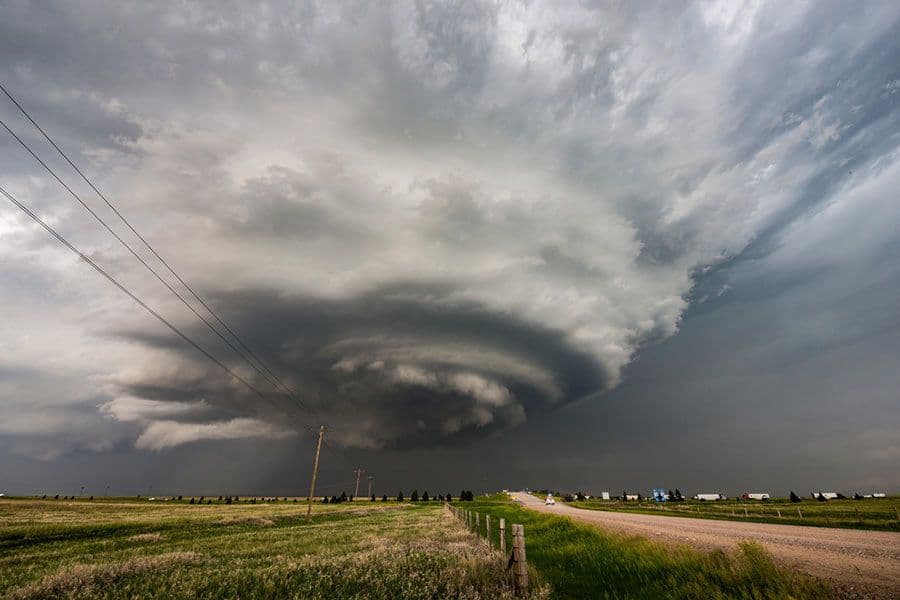
At least one confirmed tornado struck Mississippi on Wednesday night. By Thursday morning, emergency crews in Lincoln County were still clearing blocked roads while residents searched through collapsed homes and twisted metal.
The National Weather Service described the tornado moving from eastern Lincoln County into Lawrence County as “very large and dangerous.” Preliminary damage reports from county emergency officials showed severe destruction inside the Bogue Chitto area, including a heavily damaged mobile home park where entire sections of homes were torn away.
Tate Reeves confirmed multiple tornado reports across central and western Mississippi and said the Mississippi Emergency Management Agency had activated response coordination overnight. Local officials reported injuries but no confirmed deaths by Thursday afternoon.
Mississippi emergency crews reported severe structural damage in Lincoln County after at least one confirmed tornado crossed into Lawrence County.
Residents inside mobile homes suffered some of the worst destruction, according to county emergency officials and television footage from WAPT-TV.
The National Weather Service warned Thursday that Alabama, Georgia, Florida, Texas, and parts of the Carolinas still faced tornado and severe storm risks.
State officials have not yet released a full estimate for damaged homes, blocked roads, or restoration costs.
The storms arrived during a week of unstable atmospheric conditions stretching across the southeastern United States. According to the National Weather Service Storm Prediction Center, parts of Mississippi entered Wednesday under an enhanced risk category for severe weather, including tornadoes, hail, and destructive winds exceeding 70 miles per hour.
Related News
Television footage from WAPT-TV showed destroyed trailers, snapped utility poles, and large trees pushed across roadways in Bogue Chitto, a small community in southwest Mississippi. Resident Max Mahaffey told the station he initially mistook the noise for thunder while watching videos on TikTok inside his bedroom.
“I went back to my room, and the room’s gone,” he said.
Emergency management officials later urged residents to avoid damaged areas because cleanup crews were still attempting to clear multiple blocked roads. Utility restoration teams also moved into parts of Lincoln County where power lines were pulled down by high winds and falling trees.
Mobile home parks remain especially vulnerable during tornado outbreaks because many older units are not anchored to modern wind resistance standards. According to Federal Emergency Management Agency guidance, manufactured homes can fail structurally under wind loads far below those required to destroy reinforced residential buildings.
National Weather Service data shows tornadoes kill a disproportionately high number of residents inside manufactured housing each year. A 2023 NOAA analysis found roughly half of US tornado fatalities occurred in mobile or manufactured homes despite those homes representing a far smaller percentage of the housing stock nationwide.
Mississippi sits near the center of that risk zone.
The state recorded 95 tornadoes in 2023, according to NOAA’s Storm Events Database. Several of the deadliest tornado events in the southeastern United States over the last two decades struck overnight or early morning hours when residents had limited warning visibility and slower evacuation times.
Meteorologists warned that rotating supercell thunderstorms were moving across highly humid air masses extending from Louisiana through Alabama. The National Weather Service office in Jackson issued urgent tornado alerts as radar signatures intensified over Lincoln and Lawrence counties.
Lincoln County includes large rural stretches where residents depend heavily on mobile phone alerts, local television broadcasts, or outdoor sirens. Storm shelter access remains inconsistent across many Mississippi counties. State emergency planners have repeatedly acknowledged that low income residents in rural communities often lack reinforced shelters within immediate walking distance.
Our analysis of Mississippi Emergency Management Agency grant disclosures from 2021 through 2025 found fewer than 40 publicly funded community safe rooms were added statewide despite repeated severe weather declarations. Several counties with frequent tornado activity, including parts of southwest Mississippi, still rely primarily on school buildings or churches for emergency refuge during storm outbreaks.
Federal disaster mitigation grants often require local matching funds, which smaller counties struggle to provide. That financial reality leaves some communities exposed even after repeated tornado damage.
Thursday’s forecast suggested the danger was moving east.
The National Weather Service warned that parts of Alabama, Georgia, and Florida faced the possibility of tornadoes and damaging wind gusts later in the day. Strong storms were also expected across sections of Texas and the Carolinas.
Forecasters pointed to a broad instability corridor stretching across the Gulf Coast and Deep South. Warm Gulf moisture colliding with upper-level wind shear creates conditions favorable for rotating thunderstorms capable of producing tornadoes rapidly, sometimes with little visual warning at night.
Schools, hospitals, and emergency response agencies across the affected states began reviewing contingency plans Thursday morning as weather alerts expanded eastward. Airlines operating regional routes through southern hubs also reported delays tied to storm activity and air traffic rerouting.
Insurance companies are already preparing for claims.
The Insurance Information Institute estimated severe convective storms caused more than $66 billion in insured losses across the United States in 2024. Tornado outbreaks across southern states contributed significantly to those costs because of widespread residential damage and infrastructure repair expenses.
Mississippi’s final damage figures are still incomplete.
County officials have not yet released a total number of destroyed homes or estimated repair costs. Power restoration timelines also remain uncertain in some rural areas where debris continues blocking access roads.
That uncertainty extends beyond property damage.
Our analysis of NOAA storm fatality records from 2015 through 2025 found Mississippi averaged higher tornado death rates per capita than most northeastern and western states, partly because of nighttime tornado frequency and housing vulnerability. Emergency planners have repeatedly flagged the issue in hazard mitigation reports submitted for federal disaster funding.
Why were mobile homes hit so hard?
Because tornado winds can destroy manufactured homes quickly, especially older units without reinforced anchoring systems. FEMA has warned about this problem for years.
Were there any deaths reported?
As of Thursday afternoon, Mississippi officials reported injuries but no confirmed fatalities. Damage assessments were still ongoing in Lincoln and Lawrence counties.
Why are storms spreading across several states?
The same weather system is moving east across warm Gulf air. That combination increases the chance of tornadoes, hail, and damaging winds across multiple southern states.
The next unresolved question may emerge from insurance filings and federal disaster requests rather than weather radar. Mississippi officials are still assessing structural losses in Lincoln County while the National Weather Service continues severe weather monitoring across the Southeast. If damage estimates climb sharply, the state could seek a federal disaster declaration through the Federal Emergency Management Agency, triggering disputes over reimbursement levels, shelter funding, and infrastructure repair obligations that often take months to settle.
Add a Comment