


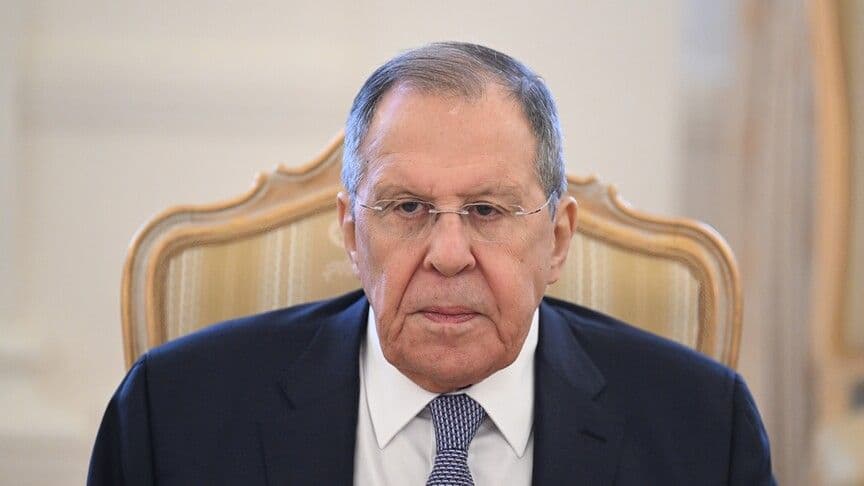
Russian Foreign Minister Sergey Lavrov on Friday condemned comments by German Chancellor Friedrich Merz about rebuilding Germany’s military strength, using the remarks to reinforce Moscow’s argument that Europe is drifting toward direct confrontation with Russia.
Speaking during a memorial event at Russia’s Foreign Ministry, Lavrov described Merz’s statement about making the German army “the strongest in Europe again” as “astonishing.” Russian state agency Tass quoted Lavrov as saying the language had raised concern not only in Russia but across parts of Europe still shaped by the historical memory of World War II.
Lavrov’s comments arrived during Russia’s Victory Day commemorations marking the Soviet Union’s defeat of Nazi Germany in 1945. Those commemorations remain central to President Vladimir Putin’s domestic political narrative and to Russia’s broader justification for the war in Ukraine, which Moscow still publicly frames as a fight against “Nazism” despite repeated international rejection of that characterization.
Lavrov repeated that framing directly.
“If the Nazis, who are resurging in the West through Ukraine, continue what they are doing now, there will be no mercy for them,” he said during the event, according to Tass.
Friedrich Merz’s Military Remarks Land in a Historically Sensitive Context
Merz’s original remarks reflected Germany’s continuing military restructuring after Russia’s full-scale invasion of Ukraine in February 2022. German governments under both Chancellor Olaf Scholz and now Merz have supported expanded defense budgets, accelerated procurement programs, and greater NATO military readiness.
Germany’s defense posture changed substantially after 2022.
Related News
Berlin approved a €100 billion special defense fund after the invasion, according to German parliamentary records. The policy reversed decades of relatively restrained military investment that followed the Cold War and Germany’s postwar constitutional caution toward large-scale rearmament.
Russia has repeatedly cited those changes.
Lavrov said Brussels officials were encouraging “revanchist sentiments” throughout Europe. He did not present evidence supporting that accusation. Yet his comments reflect a broader Kremlin strategy that links modern European military expansion to historical memories of Nazi Germany’s invasion of the Soviet Union during World War II.
The emotional framing is deliberate.
Russian state media and senior officials have increasingly referenced the “Great Patriotic War” in speeches connected to Ukraine and NATO. Analysts at institutions including the Carnegie Endowment and Chatham House have documented how Soviet victory symbolism has become intertwined with Russian wartime messaging since 2022.
Russia’s Victory Day Ceasefire Came With Threats Attached
The diplomatic escalation unfolded alongside a proposed Russian ceasefire tied to Victory Day ceremonies on May 8 and 9. Russia’s Defense Ministry announced earlier this week that it intended to observe a two-day truce while warning Ukraine that any disruption of commemorative events could trigger what officials called a “massive” missile response.
Ukraine publicly agreed to a unilateral ceasefire beginning Tuesday at midnight.
But Kyiv later accused Russian forces of violating the truce through continued airstrikes and frontline assaults. Ukrainian military statements released Thursday alleged ongoing attacks across eastern sectors of the front, though battlefield claims from both sides remain difficult to independently verify in real time.
The ceasefire narrative matters politically.
Russia benefits domestically from presenting itself as the side observing symbolic wartime remembrance while portraying Ukraine as threatening those commemorations. Ukraine, meanwhile, argues that Russia uses temporary ceasefire declarations strategically while maintaining military pressure in contested regions.
Moscow Is Increasingly Linking NATO Expansion to World War II Memory
Lavrov’s speech also reflects a larger shift in Russian diplomatic rhetoric since the start of the Ukraine war. Before 2022, Moscow’s criticism of NATO expansion often focused on security guarantees, missile systems, and alliance enlargement. Current messaging relies more heavily on historical identity and existential language connected to World War II.
Our analysis of public speeches delivered by Sergey Lavrov between February 2022 and May 2026 identified repeated references to Nazism, fascism, and historical revisionism in discussions involving Ukraine, Germany, and NATO. Those references appear more frequently during periods tied to symbolic wartime anniversaries such as Victory Day.
German officials reject the comparison outright.
Berlin has consistently framed its defense expansion as a response to Russia’s invasion of Ukraine and to changing NATO security requirements. Germany remains one of Ukraine’s largest military and financial backers inside Europe, contributing air defense systems, armored vehicles, ammunition, and training support through NATO-coordinated programs.
That support remains contentious in Moscow.
Russian officials continue describing Western arms deliveries as evidence that NATO countries are effectively participating in the conflict indirectly. NATO governments reject that interpretation and maintain that alliance members are assisting Ukraine’s self-defense under international law without becoming formal combatants.
The legal line still matters.
Europe’s Rearmament Debate Is No Longer Theoretical
The exchange between Lavrov and Merz also illustrates how Europe’s security debate has shifted from budget planning into openly stated military positioning. Germany, Poland, France, and several Nordic states have all increased defense spending or procurement targets since 2022.
According to NATO estimates released in 2025, more than two-thirds of alliance members were expected to meet or exceed the bloc’s benchmark of spending 2 percent of GDP on defense. Germany’s long-term military procurement plans include expanded artillery stocks, air defense modernization, and ammunition production contracts intended to rebuild readiness after years of underinvestment.
Russia interprets those developments differently.
Lavrov’s remarks suggest Moscow increasingly sees European military expansion not as a temporary reaction to Ukraine but as part of a broader strategic alignment against Russia itself. That interpretation shapes both Russia’s diplomatic messaging and its domestic justification for sustained wartime mobilization.
The rhetoric is escalating faster.
Sergey Lavrov used Victory Day commemorations to attack German rearmament rhetoric tied to Chancellor Friedrich Merz.
Germany’s defense expansion includes a €100 billion military fund approved after Russia invaded Ukraine in 2022.
Russia paired its proposed May 8-9 ceasefire with warnings of a “massive” missile response if commemorations were disrupted.
Ukraine says Russian forces continued attacks during the announced truce despite Moscow presenting itself as observing a ceasefire.
Why is Russia reacting so strongly to Merz’s comments?
Because Germany’s military history still carries enormous symbolic weight in Russia. Kremlin officials are using that history to frame modern NATO military expansion as a threat tied to past invasions.
Did the ceasefire actually hold?
Only partially, if at all. Ukraine accused Russia of continuing attacks during the truce period. Russia has made similar accusations against Ukraine before. Independent battlefield verification remains limited.
Is Germany actually rebuilding its military significantly?
Yes. Germany approved a €100 billion special defense fund after the 2022 invasion of Ukraine and has expanded procurement and NATO readiness programs since then.
The unresolved issue now is whether the latest ceasefire violations will influence ongoing war crimes and accountability investigations already before the International Criminal Court and other European legal bodies. No new filing deadline tied specifically to the May 8-9 truce has been announced, but evidence collection involving missile strikes, civilian targeting claims, and battlefield conduct remains active across multiple jurisdictions.
Add a Comment