


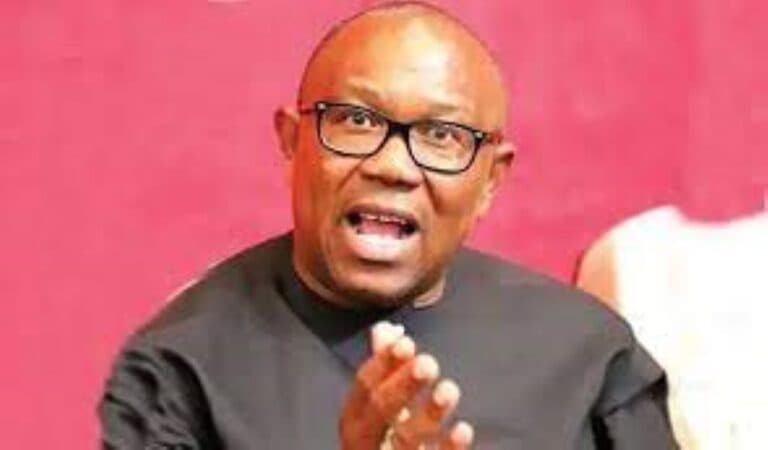
Peter Obi’s N5bn Defamation Suit Against Kenneth Okonkwo Opens New Rift Inside Nigeria’s Opposition Politics
Peter Obi demanded N5 billion from Kenneth Okonkwo this week. The former allies, who campaigned together during Nigeria’s 2023 presidential election, are now threatening each other with court action and public disclosures after a televised allegation involving bribery claims inside the Nigeria Democratic Congress (NDC).
The dispute escalated on June 9, when Obi’s lawyers issued a pre action notice accusing Okonkwo of defamation over comments made during an appearance on Channels Television’s Sunrise Daily programme on June 8.
According to the letter signed by senior advocate Alex Ejesieme, Okonkwo allegedly claimed that Obi and senior NDC leaders in the South East demanded N10 million payments from aspirants seeking House of Representatives tickets under the party platform. The legal notice stated that the comments were subsequently republished by blogs, news platforms and social media accounts, extending their reach beyond the original television audience.
The accusation goes beyond internal party politics. Under Nigerian law, bribery allegations against a public political figure can expose both the speaker and the accused to reputational and legal scrutiny, particularly when no supporting evidence is produced publicly.
Obi’s legal team framed the comments as criminal imputations.
“The above statements, in their natural and ordinary meaning, and by necessary implication, falsely and maliciously represent our client as a person who demands, solicits, organises and collects bribes,” the letter stated. The lawyers further alleged the remarks portrayed Obi as “a fraudster, a scammer and a dishonest political actor.”
Defamation disputes involving politicians in Nigeria rarely stop at apologies. Court filings often become vehicles for exposing internal communications, campaign financing records and personal disputes that would otherwise remain private. Okonkwo’s immediate response suggests he understands that risk.
Related News
- Here’s the investigative-style report based on your material, structured to match your newsroom rules and cadence requirements
- Police Probe INEC Data Leak After Emeka Ike Registration Records Surface Online
- Emeka Ike Threatens Legal Action After Voter Data Leak Raises Questions About Access to INEC Records
In a post published on his X account, Okonkwo mocked the demand for N5 billion damages and accused Obi of attempting extortion. He also suggested that court proceedings could expose information from inside Obi’s 2023 presidential campaign.
“Anyone who decides to sue his former spokesperson for defamation is indeed very unwise,” Okonkwo wrote. He added that he served closely within Obi’s campaign structure and implied he possessed information capable of embarrassing the former Anambra governor if litigation proceeds.
Neither side presented documentary evidence publicly this week to support their competing claims. Obi’s lawyers insisted the allegations were “wholly unsupported by any fact.” Okonkwo, meanwhile, did not publish documents or names of aspirants allegedly involved in the payments he described during the television interview.
Under Nigerian defamation law, truth remains a defence if supported by verifiable evidence. Yet courts also examine whether statements were made recklessly or with malicious intent. Legal practitioners familiar with political defamation disputes say the burden could shift quickly depending on what material either side eventually submits.
We reviewed the June 9 pre action letter and found Obi’s legal team demanding three specific remedies within seven days: a public retraction, a written apology receiving equal publicity to the original allegations, and N5 billion in “general, aggravated and exemplary damages.”
The lawyers also requested a written undertaking preventing Okonkwo from repeating similar allegations in future. Failure to comply, the letter warned, would trigger formal litigation seeking injunctive relief and additional legal costs.
The dispute exposes deeper fractures inside Nigeria’s opposition politics heading toward another election cycle. Obi and Okonkwo were among the most visible public faces of the Labour Party’s 2023 presidential campaign. Okonkwo, an actor turned politician, frequently defended Obi on national television and became one of the campaign’s most aggressive media surrogates.
After the 2023 election, internal disagreements over strategy, coalition building and party leadership widened across opposition circles. Several former Obi allies accused his political structure of centralising decision making around a small group of advisers. Obi himself largely avoided direct public confrontation until this week’s legal escalation.
The allegations involving legislative ticket payments strike at a sensitive issue within Nigerian political parties. Multiple parties, including the All Progressives Congress (APC) and the Peoples Democratic Party (PDP), have faced repeated accusations over monetised nomination processes during election cycles.
Yet public proof rarely surfaces in court because aspirants often avoid formal complaints after losing internal party contests. Political financing disclosures in Nigeria also remain weakly enforced despite statutory reporting requirements under the Electoral Act.
Okonkwo’s remarks landed at a particularly difficult moment for Obi politically. The former governor has spent recent months criticising President Bola Ahmed Tinubu’s borrowing policies and positioning himself as a fiscal accountability advocate ahead of possible future presidential ambitions.
That contrast is unavoidable.
A bribery allegation involving legislative tickets directly undercuts Obi’s public messaging around transparency, even without independently verified evidence. Political strategists within opposition circles privately acknowledge that prolonged litigation could distract from the economic criticisms Obi has directed at the Tinubu administration.
The legal fight may also test the limits of political speech protections in Nigeria’s broadcast environment. Television interviews increasingly function as venues for unverified political accusations that later migrate to digital platforms before fact checking occurs. Once clips circulate online, legal remedies become harder to contain.
Channels Television itself was not named in Obi’s legal notice, according to the publicly circulated letter. The focus remained solely on Okonkwo and the alleged falsity of his statements.
Our analysis of archived social media reposts found versions of Okonkwo’s interview circulating across dozens of political blogs within hours of the original broadcast. Several reposts removed surrounding context and highlighted only the bribery allegation against Obi and NDC leaders.
Legal experts contacted by this publication said the N5 billion damages demand appears designed partly as deterrence. Nigerian courts rarely award the full sums requested in political defamation cases unless plaintiffs demonstrate quantifiable reputational or financial injury supported by evidence.
Public court proceedings could compel witness testimony from former campaign officials, aspirants and party operatives linked to the South East political structure Okonkwo referenced during the interview. If that occurs, the case may evolve from a reputational dispute into a broader examination of candidate selection practices inside opposition politics.
Peter Obi’s lawyers gave Kenneth Okonkwo seven days to retract bribery allegations tied to N10 million payments from House of Representatives aspirants.
The legal notice demands N5 billion in damages and a public apology with equal publicity to the original television interview.
Kenneth Okonkwo says he may disclose information from inside Obi’s 2023 presidential campaign if the dispute reaches court.
Neither side has publicly produced documentary evidence supporting their claims as of June 10, 2026.
Did Kenneth Okonkwo provide evidence for the bribery allegation?
Not publicly. He made the allegation during a television interview and later defended himself on X, but no documents, payment records or witness statements have been released yet.
Can Peter Obi actually win N5 billion in court?
Possible, but difficult. Nigerian courts often reduce damage claims in political defamation cases unless there is clear evidence showing measurable reputational or financial harm.
Why is this dispute attracting attention beyond the two men?
Because both figures worked closely during the 2023 election campaign. A court case could expose internal campaign operations, funding disputes and candidate selection practices inside opposition politics.
The next unresolved question is whether Obi’s lawyers will file formal proceedings at the Federal Capital Territory High Court after the seven day deadline expires. If no settlement emerges, the court could soon be asked to determine whether Okonkwo’s televised bribery allegations justify N5 billion in damages and whether the disputed statements qualify as protected political speech or actionable defamation.
Add a Comment