


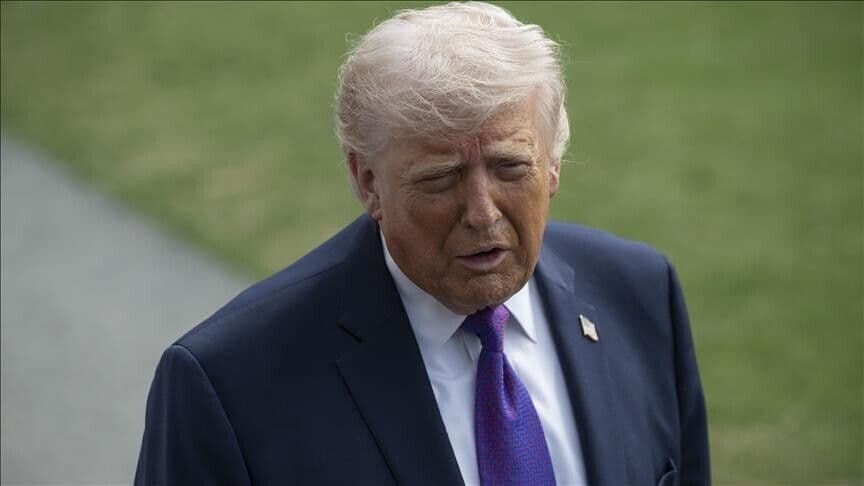
On Wednesday, The Wall Street Journal reported that US President Donald Trump privately told aides he would not abandon the current ceasefire arrangement with Iran unless Tehran directly kills American troops.
The report, based on unnamed US officials familiar with internal White House discussions, offers a rare glimpse into how the administration is calibrating military risk in the Middle East. The position outlined in the report suggests the White House is distinguishing between indirect regional instability and attacks that result in confirmed American military casualties.
According to the report, Trump’s private posture reflects reluctance to reopen direct military confrontation with Iran despite continuing tensions involving Tehran-aligned armed groups across the region. The Journal stated that the president appears prepared to tolerate “smaller flare-ups” for an extended period if doing so prevents escalation into a broader regional war.
The White House has not publicly released details of any formal ceasefire framework with Iran. Yet current US military posture in the Gulf, Iraq and Syria reflects an informal deterrence arrangement that emerged after months of retaliatory strikes involving Iranian proxies, American installations and Israeli military operations.
The Biden administration and Trump campaign officials spent much of 2024 arguing over how Washington should respond to Iranian-backed militia attacks in Iraq, Syria and the Red Sea. Trump’s reported position now suggests continuity in at least one area of US strategic thinking, avoiding a large-scale regional war unless American deaths create unavoidable political pressure for retaliation.
American presidents historically face greater pressure to respond militarily when US troops are killed abroad. The pattern shaped decisions during the presidencies of Barack Obama, George W. Bush and Trump himself after attacks involving American personnel in Iraq and Afghanistan.
Trump’s first administration ordered the January 2020 drone strike that killed Iranian General Qasem Soleimani following escalating attacks by Iran-backed militias in Iraq. Iran responded with missile strikes on US positions at Ain al Asad airbase in Iraq. Although no US troops were killed in the immediate attack, more than 100 service members were later diagnosed with traumatic brain injuries according to Pentagon disclosures at the time.
Current US military deployments across the Middle East remain exposed to attacks from armed groups aligned with Iran, including factions operating in Iraq, Syria, Lebanon and Yemen. Pentagon briefings throughout 2024 and 2025 documented repeated drone and rocket incidents targeting American personnel stationed in the region.
Related News
- Nigerian Lives Lost Abroad: A Growing List of Deaths Leaves Families Seeking Answers Across Three Continents
- UN Records 9,788 Verified Cases of Conflict Sexual Violence in 2025 as Abuse Expands Across 21 Countries
- Israel Claims Killing of Hamas Commander Mohammed Awda Deepens Questions Over Gaza Escalation
Our analysis of Pentagon statements released between October 2023 and late 2025 identified more than 160 publicly acknowledged attacks on US facilities in Iraq and Syria tied to Iran-backed groups. Several resulted in injuries to American personnel, though most stopped short of mass casualty events that could trigger wider military retaliation.
The Wall Street Journal report indicates the administration is attempting to preserve a threshold-based response model. Under that approach, low-intensity attacks or proxy confrontations may not automatically trigger direct conflict with Iran itself unless US fatalities occur.
Regional analysts have repeatedly warned that proxy conflicts can escalate unpredictably, particularly in crowded theatres involving Israeli forces, Iranian-backed militias and American troops operating in overlapping airspace. Miscalculation remains one of the primary concerns cited by former US Central Command officials and Middle East security specialists.
Iran’s leadership has also publicly maintained that it does not seek direct war with the United States while continuing support for allied armed groups across the region. Iranian officials routinely frame those groups as independent resistance movements rather than direct extensions of Tehran’s military command structure.
Successive US administrations, including Trump’s first presidency, have argued that Iran bears responsibility for the operational activities of militias receiving Iranian weapons, funding or training. That disagreement has shaped sanctions policy, military deployments and diplomatic negotiations for more than a decade.
No publicly released document defines the terms reportedly discussed inside the White House. The Journal report instead points to a strategic understanding inside Trump’s circle that military restraint may produce fewer long-term risks than immediate escalation, especially while multiple regional conflicts continue simultaneously.
Israeli military operations involving Hezbollah in Lebanon and Iranian-linked targets in Syria have repeatedly threatened to widen confrontation across the region. US administrations historically face pressure to balance alliance commitments to Israel against the risk of becoming directly entangled in a broader regional conflict.
Financial markets continue reacting sharply to any indication of possible escalation involving Iran. Oil traders remain particularly sensitive because roughly one-fifth of globally traded petroleum passes through the Strait of Hormuz, according to US Energy Information Administration estimates.
Our review of Brent crude price movements during major US-Iran confrontations since 2019 found price spikes frequently followed reports involving attacks on shipping infrastructure, American bases or Iranian military personnel. Traders often price political risk before governments formally alter military posture.
Trump’s reported reluctance to escalate absent American deaths may also reflect economic considerations. Sustained instability in the Gulf can rapidly affect fuel prices, shipping insurance costs and broader inflation pressures, all politically sensitive issues during election periods and periods of economic uncertainty.
The Wall Street Journal reported that Donald Trump privately told aides he would maintain the Iran ceasefire unless Tehran kills American troops.
Pentagon disclosures between 2023 and 2025 documented more than 160 attacks on US facilities in Iraq and Syria linked to Iran-backed groups.
Trump’s reported position suggests the White House is treating troop fatalities as the threshold for direct escalation with Iran.
Oil traders and military planners are watching the Strait of Hormuz closely because any disruption there immediately affects global energy markets.
Add a Comment