


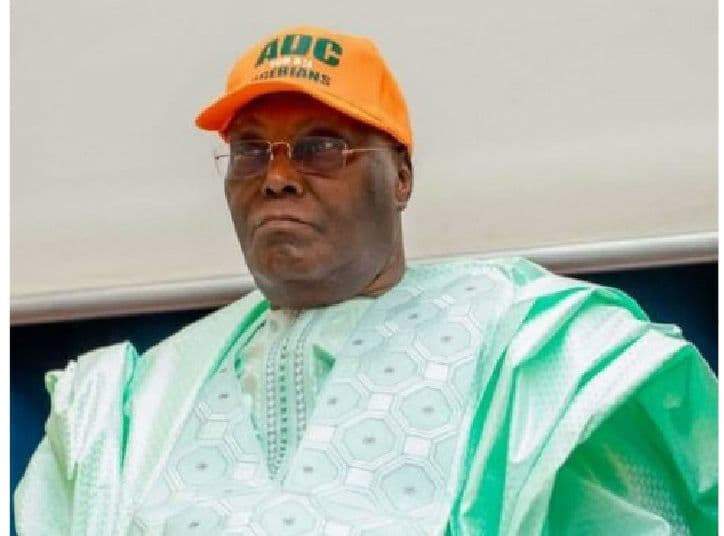
.Former Rivers State Governor Chibuike Amaechi has emerged as the preferred running mate for former Vice President Atiku Abubakar within sections of the opposition coalition preparing for the 2027 election cycle, according to arguments advanced by APC chieftain Sogbeye Eli, who says neither the South-East nor South-West offers Atiku meaningful electoral expansion through a vice-presidential pick.
Sogbeye Eli argued that Peter Obi and Bola Tinubu already dominate the South-East and South-West voting blocs.
Eli said Chibuike Amaechi’s second-place finish at the APC 2022 primary demonstrated enduring national relevance.
The APC chieftain linked Amaechi’s potential selection to concerns over Nigeria’s religious balance after the APC’s Muslim-Muslim ticket in 2023.
Eli claimed the South-South presents fewer electoral complications for Atiku because no dominant regional candidate has emerged there for 2027.
Sogbeye Eli Rejects South-East and South-West Strategy
Sogbeye Eli said former Vice President Atiku Abubakar would gain little electoral value from choosing a running mate from either the South-East or South-West ahead of the 2027 presidential election.
In a statement posted on his verified social media accounts, Eli argued that regional loyalty to existing political figures has narrowed the strategic usefulness of the vice-presidential slot in both zones.
Related News
He specifically pointed to Peter Obi in the South-East and incumbent President Bola Tinubu in the South-West as entrenched political figures whose support bases would not shift because of a deputy position on another ticket.
“The predominant Igbo and Yoruba populations in the South-East and South-West respectively will not and cannot abandon the presidential candidates of the Nigeria Democratic Congress and All Progressives Congress for a vice-presidential slot,” Eli stated.
The reference to the “Nigeria Democratic Congress” appeared inconsistent with current national party structures. Obi contested the 2023 election under the Labour Party platform, not a party identified by that name.
Amaechi’s 2022 APC Primary Performance Is Being Revisited
Eli argued that former Minister of Transportation Chibuike Amaechi remains politically relevant because of his performance during the APC presidential primary in 2022.
Amaechi finished second behind Tinubu during the party’s primary contest in June 2022. The field included then Vice President Yemi Osinbajo, Senate President Ahmad Lawan, several sitting governors, and cabinet ministers.
Eli described Amaechi’s finish as evidence that his support within elite political structures was not accidental. He argued that Amaechi’s background as a South-South politician provides what he called a “neutral credential” because no dominant presidential candidate from the region currently appears positioned to split opposition votes.
“If President Goodluck Ebele Jonathan had joined the race, the political calculation in the South-South would be completely different,” Eli said.
Jonathan has not declared any intention to contest the 2027 election.
Religious Balancing Remains Part of Coalition Calculations
Eli also linked the vice-presidential debate to continuing political tensions surrounding religious representation in national tickets.
He referenced internal objections that emerged within the APC before the 2015 election, when some party stakeholders reportedly resisted the possibility of Tinubu joining Muhammadu Buhari on a Muslim-Muslim ticket. Buhari eventually selected Yemi Osinbajo, a Christian pastor and law professor, as his running mate.
Tinubu’s decision to run alongside Vice President Kashim Shettima on a same-faith ticket generated criticism from sections of Nigeria’s Christian community and church organisations. Eli argued that Atiku, a northern Muslim politician, may attempt to distinguish himself by selecting a Christian running mate.
“Consequently, a more liberal Muslim Atiku has to demonstrate sensitivity to Nigerian Christians in balancing the ticket,” Eli stated.
The statement reflects a broader debate within Nigeria’s major political parties over whether electoral arithmetic or religious balancing carries greater strategic importance in presidential contests.
The comments also reveal how early coalition discussions are beginning to focus less on ideology and more on regional vote retention.
Our review of voting patterns from the 2023 presidential election shows Obi dominated large parts of the South-East with overwhelming margins, while Tinubu retained decisive influence across much of the South-West. Those outcomes have intensified concerns among opposition strategists about where additional votes can realistically be obtained in 2027.
Eli’s argument suggests that some political actors now view the South-South as a less politically crowded zone compared to regions already tied strongly to established presidential figures.
Yet the calculation remains speculative. No formal opposition coalition has announced a presidential ticket for 2027. Atiku himself has not publicly confirmed any running mate discussions, and Amaechi has not declared acceptance of any vice-presidential role.
The political timing matters because Nigerian presidential campaigns often shift rapidly after party primaries, defections, and court disputes reshape alliances. Public endorsements issued more than a year before formal primaries rarely remain static.
Amaechi’s possible emergence would also carry implications inside Rivers State politics, where alignments remain fractured after the breakdown between former Governor Nyesom Wike and his successor Siminalayi Fubara.
Amaechi and Wike have remained political rivals for more than a decade.
Eli’s intervention places Amaechi back into national coalition discussions at a moment when Rivers State continues to occupy an outsized role in opposition calculations because of its voting population, oil revenues, and history of aggressive political mobilisation.
The question now is whether Atiku’s camp sees Amaechi as an electoral bridge or a regional liability. That issue may become clearer once opposition parties begin formal merger negotiations and primary timetables are released by the Independent National Electoral Commission. Until then, the larger dispute remains unresolved: whether Nigeria’s opposition intends to build a ticket around regional balancing, religious optics, or raw vote preservation heading into 2027.
Add a Comment