


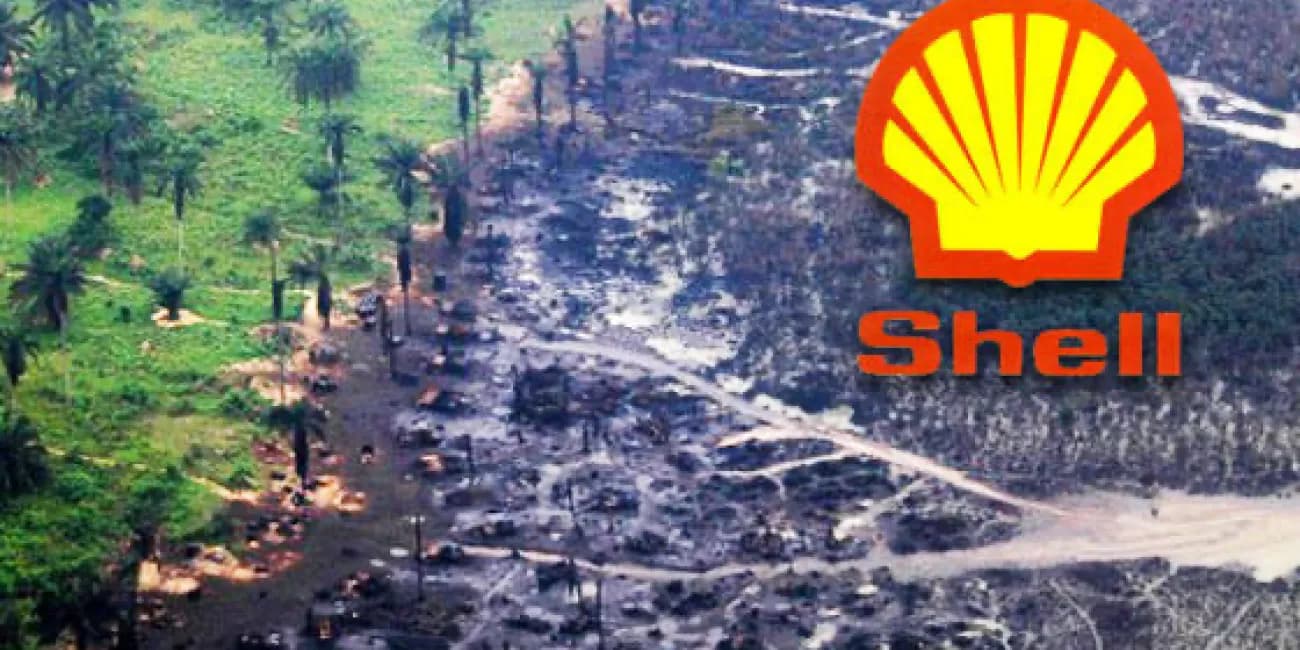
More than 100 oil leaks are central to a court case now confronting Shell plc over pollution allegations in Nigeria’s Niger Delta, after internal company documents obtained by the BBC showed the oil major continued operating a key pipeline despite repeated warnings about theft, corrosion, and environmental exposure.
The documents, cited in ongoing litigation involving affected communities, relate to spills recorded between 2011 and 2013 along the Trans Niger Pipeline, one of the country’s major crude transport routes. Lawyers representing residents argue the records undermine Shell’s longstanding position that sabotage and illegal refining were the dominant causes of contamination.
Communities in the Bille and Ogale areas of Rivers State are pursuing claims in the English courts against Shell plc and its former Nigerian subsidiary, Shell Petroleum Development Company of Nigeria Ltd (SPDC). The claimants allege that repeated spills contaminated drinking water, farmland, fishing areas, and mangrove ecosystems over several years.
Shell has consistently argued that many spills resulted from criminal interference.
That distinction matters because liability and compensation calculations under Nigerian oil spill law often depend on the established cause of the leak. If sabotage is proven, operators may avoid some compensation obligations. If operational failures or inadequate maintenance are established, legal exposure widens significantly.
According to the BBC’s reporting, internal records showed Shell staff discussing persistent concerns about the integrity of sections of pipeline infrastructure and the increasing frequency of theft-related breaches before several major spills occurred. The records reportedly included references to pipeline weaknesses and operational risks associated with continuing crude transport under those conditions.
The company has not denied the documents’ existence.
Shell told the BBC that the Niger Delta faced “an unprecedented criminality situation,” arguing that oil theft, illegal bunkering, and sabotage remained central drivers of pollution in the region. The company also stated that spills from operational failures had reduced substantially over time because of investments in maintenance and surveillance systems.
Related News
Claimants argue that once Shell internally acknowledged elevated risks associated with operating the pipeline network, continued operations exposed surrounding communities to foreseeable environmental harm. That argument mirrors legal strategies used in previous transnational environmental claims against multinational energy companies, particularly where internal warnings later became public evidence.
The Niger Delta has generated decades of litigation tied to oil pollution, weak regulatory enforcement, and disputed cleanup obligations. Reports by the United Nations Environment Programme (UNEP), particularly its 2011 assessment of Ogoniland, documented extensive hydrocarbon contamination affecting groundwater, soil, and fisheries in parts of Rivers State. UNEP found some communities had drinking water contaminated with benzene at levels hundreds of times above World Health Organization guidelines.
The Hydrocarbon Pollution Remediation Project (HYPREP), established after the UNEP report, has faced repeated criticism over delays, contract disputes, and uneven implementation. Civil society groups and local residents have argued publicly that remediation efforts moved slower than the spread of environmental damage.
Company disclosures over the past decade frequently stated that most spills recorded in the Niger Delta were linked to third party interference. Nigerian regulators have also documented widespread crude theft networks operating across pipeline infrastructure. The Nigerian National Petroleum Company Limited estimated in previous briefings that the country lost hundreds of thousands of barrels per day at peak theft periods.
But sabotage alone does not automatically end liability arguments.
Legal filings in pollution cases often examine whether operators took reasonable preventive steps after identifying recurring vulnerabilities. Lawyers for the affected communities argue Shell continued operating infrastructure despite known systemic threats, including theft patterns and pipeline deterioration. That position appears central to the current proceedings.
Our analysis of publicly available Nigerian Oil Spill Monitor records identified at least 93 spill incidents connected to SPDC infrastructure in Rivers State between January 2011 and December 2013. The records vary in attributed causes, with several classified as sabotage and others linked to operational failures. Environmental lawyers say those classifications themselves are frequently disputed during compensation negotiations.
Niger Delta residents have long accused oil companies and regulators of controlling access to spill investigation procedures known as Joint Investigation Visits (JIVs). Those visits determine official causes and estimated spill volumes. Community groups argue power imbalances during the process affect findings later used in court.
The broader financial context also matters. Shell completed the sale of its onshore Nigerian subsidiary to Renaissance Africa Energy Holdings earlier this year after years of attempting to reduce exposure to litigation, sabotage losses, and operational disruptions in the Delta. Yet several historic liabilities remain under legal review despite the divestment structure.
The United Kingdom Supreme Court already ruled in 2021 that Nigerian communities could pursue certain environmental claims against Shell plc in English courts. That decision weakened one of the company’s earlier jurisdictional defences and opened a wider pathway for overseas litigation involving parent company oversight of foreign subsidiaries.
Environmental campaigners view the litigation as a test of how far multinational corporations can be held responsible for decisions made after internal risk assessments identify foreseeable harm. Corporate lawyers counter that operating conditions in the Niger Delta involve organised criminal networks capable of breaching even upgraded infrastructure.
We reviewed court summaries and prior regulatory findings showing at least 1,010 recorded spill incidents linked to SPDC facilities between 2007 and 2014 across multiple Niger Delta states. The figures include spills attributed to sabotage, equipment failure, and unknown causes. The volume of incidents complicated cleanup enforcement because compensation disputes often delayed remediation for years.
In Bille and Ogale, residents have alleged long term impacts on fishing income, crop yields, and access to potable water. Several affidavits filed in earlier proceedings described families purchasing drinking water privately because local sources were considered unsafe after repeated spills.
The company maintains it has paid compensation where appropriate, conducted remediation work, and improved surveillance technology around pipeline infrastructure. It also argues that illegal refining camps and repeated attacks on pipelines created conditions outside normal operational control.
The reality is, the litigation now extends beyond a narrow pollution dispute. The internal documents reported by the BBC potentially shift attention toward corporate decision making itself, specifically whether executives and operational managers continued transporting crude after concluding that risks had become structurally unmanageable.
Internal Shell documents reportedly showed staff warning about pipeline risks years before several major spills reached court.
Communities in Bille and Ogale are using those records to challenge Shell’s sabotage-based defence strategy.
UNEP findings from 2011 still shape arguments about contamination and delayed cleanup in Rivers State.
The case now focuses as much on corporate decisions as on the spills themselves.
Why is this case happening in a UK court instead of Nigeria?
Because earlier UK Supreme Court rulings allowed Nigerian communities to sue Shell plc directly in England under certain circumstances. The argument is that parent company oversight decisions were made there.
Is Shell denying the spills happened?
No. The dispute is mostly about causation, responsibility, and whether the company responded reasonably after identifying risks tied to theft and infrastructure failures.
What makes the internal documents important?
They may show the company knew operational risks were escalating before some spills occurred. That can affect negligence arguments and compensation claims in court.
The unresolved issue now sits before the English High Court, where lawyers for the Niger Delta communities are expected to continue pressing for liability findings and compensation tied to pollution claims spanning more than a decade. No final damages figure has been determined publicly. The core dispute remains whether Shell’s internal risk assessments created a legal duty to suspend or alter pipeline operations before additional leaks occurred, and whether failure to do so exposed the company to broader environmental liability under English and Nigerian law.
Add a Comment