


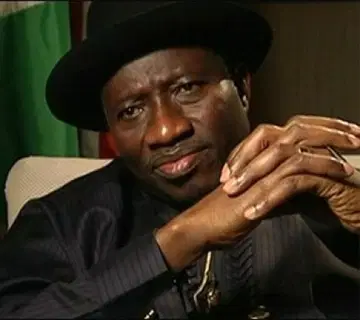
Armed thugs disrupted a Peoples Democratic Party convention in Abuja on Sunday, forcing delegates, supporters and journalists to flee and overshadowing an event convened to ratify former President Goodluck Jonathan as the party's presidential candidate for the 2027 election.
According to accounts from organisers and attendees, men carrying sticks and other weapons stormed the gathering after party leaders had completed key proceedings connected to Jonathan's adoption. Several participants were reportedly assaulted, while mobile phones and other valuables were stolen during the disturbance.
Party leaders had assembled earlier at a private residence in Area 10, Garki, Abuja, which was being used as the secretariat of the PDP Interim National Working Committee. The gathering later moved to the A-Class Event Centre, where party officials sought formal ratification of Jonathan's candidacy before delegates.
The central motion came from Dr Tony Aziegbemi, the Edo State PDP chairman and chairman of the PDP State Chairmen's Forum. Addressing delegates, Aziegbemi said the endorsement reflected the position reached by state party structures nationwide.
“On behalf of all the state chairmen that conducted free, fair and credible primaries in their various states, and having adopted President Goodluck Ebele Jonathan as our sole presidential candidate, I hereby move that this special convention ratify the motion,” Aziegbemi told delegates.
Senator Mohamed Sanusi Dagash seconded the motion. According to remarks delivered during the proceedings, he argued that the party's internal difficulties had not altered what he described as its national political mission.
Ratification ceremonies are designed to demonstrate consensus, particularly when a party wishes to project organisational stability before a national election cycle. Public displays of unity become more important when a party is attempting to reassure members, donors and political allies that leadership disputes have been settled.
The violence that followed shifted attention away from the adoption process itself and toward questions about security, crowd control and the ability of organisers to protect delegates at a high-profile political gathering in the federal capital.
Related News
Accounts from attendees indicate that panic spread rapidly once armed individuals entered the venue. Delegates reportedly rushed toward exits while journalists and supporters sought safety. Claims that phones and valuables were stolen suggest the incident involved both physical disruption and opportunistic criminal activity.
As of the information available from the convention proceedings, no detailed casualty figures had been released. There was also no publicly available accounting of arrests, injuries requiring hospital treatment, or the total value of property allegedly stolen during the disruption.
The absence of those details limits what can be concluded.
Party officials nevertheless continued with efforts to frame the convention as procedurally valid. During the proceedings, senior PDP figure Kabiru Tanimu Turaki told delegates that the Independent National Electoral Commission (INEC) had been informed of the party's activities and expressed confidence that the process would receive official recognition.
“We know what we are doing,” Turaki said during the event.
Under Nigeria's electoral framework, notification requirements and compliance procedures often become important points of dispute when party nominations face internal challenges or litigation. Whether any future challenge emerges would depend on party rules, convention records, INEC correspondence and the actions of rival stakeholders.
Turaki also urged supporters to avoid physical confrontation despite the tension surrounding the event. Addressing delegates, he argued that political competition should be resolved through elections rather than violence.
“We will not fight. The time of fighting will come when we meet at the polls. We will meet you there, we'll fight you there, we'll defeat you there,” he said.
He subsequently declared the special convention concluded and advised participants to return peacefully to their destinations.
The convention occurred against a backdrop of continuing efforts by opposition parties to reposition themselves ahead of the 2027 electoral cycle. Internal party structures, candidate selection processes and leadership legitimacy are likely to face increased scrutiny as political alliances evolve over the coming months.
Our analysis of the convention record identifies one immediate challenge for party organisers: the political message of candidate ratification was overtaken by security concerns within hours. The public discussion that followed focused less on procedural endorsements and more on how armed individuals gained access to a major party gathering in Abuja.
That is now the dominant question.
Security failures at political events often produce competing narratives. Organisers may attribute disruptions to opponents, while critics may argue that internal factional disputes played a role. Based on the information currently available, no evidence has been publicly presented identifying those responsible for the attack, their affiliations, or their motive.
Dr Tony Aziegbemi formally moved the ratification of Goodluck Jonathan as the PDP's presidential candidate during proceedings involving delegates from 36 states.
Violence at the Abuja venue quickly overshadowed the political objective of the convention and became the central issue discussed afterward.
Kabiru Tanimu Turaki told delegates that INEC had been informed of the party's activities before the convention concluded.
No verified public accounting of arrests, injuries or stolen property had been released in the immediate aftermath of the disruption.
Was Goodluck Jonathan officially ratified at the convention?
According to statements made during the proceedings, delegates approved the motion. Whether that process faces any future challenge depends on party rules, documentation and any action taken by stakeholders.
Who attacked the convention?
Nobody knows yet. The information provided identifies armed thugs but does not establish names, affiliations or motives. Any stronger claim would require evidence from investigators.
Did police make any arrests?
No arrest information was included in the available accounts. If arrests occurred, authorities had not publicly detailed them in the material reviewed for this report.
The next unresolved issue is whether any party member, delegate or stakeholder will challenge the convention's validity before the Federal High Court in Abuja. No filing had been disclosed at the time of reporting, no hearing date was known, and the legal right potentially in dispute remains the validity of the party's presidential nomination process for 2027.
Add a Comment