


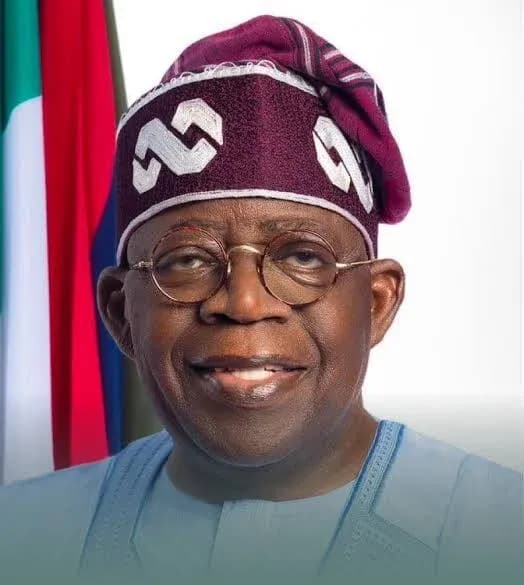
President Bola Tinubu said Friday that security operations across Nigeria had intensified under his administration as he marked the third anniversary of his presidency with a nationwide address focused on safety, economic recovery and infrastructure spending.
The speech arrives at a politically sensitive moment. Inflation remains elevated. Food prices continue pressuring households. Security incidents persist across several regions despite repeated military offensives and expanded police deployments.
The administration is under pressure.
Tinubu told Nigerians that the Armed Forces and security agencies were increasing operations against terrorists, kidnappers, bandits, oil thieves and organised criminal networks. He said some highways and communities were becoming safer and more economically active.
“Our Armed Forces and security agencies have intensified operations against terrorists, bandits, kidnappers, oil thieves and criminal networks,” the president said in the address released Friday.
The president also claimed the federal government was improving intelligence gathering, surveillance systems, logistics support, technology deployment and inter-agency coordination. According to Tinubu, the government intends to “reclaim the authority of the Nigerian state wherever criminality threatens peace and order.”
The speech did not include numerical data measuring security improvements nationwide. No casualty figures, territorial recovery statistics, arrest totals or prosecution records were cited during the address. The absence of quantified benchmarks complicates independent assessment of the administration’s security claims, particularly because different agencies often publish conflicting operational figures.
Nigeria continues to experience multiple overlapping security crises. In the North West, armed bandit groups remain active across parts of Zamfara, Katsina and Sokoto States despite repeated military operations. In the North East, insurgent attacks linked to Boko Haram and Islamic State West Africa Province continue to target military formations and civilian communities.
Related News
Data compiled by Nigerian security trackers and civil society organisations through 2025 documented recurring abductions along major transport corridors and rural communities. Several state governments have also continued spending heavily on local security initiatives, including vigilante support and logistics assistance for federal security agencies.
Tinubu’s anniversary speech attempted to present security and economic recovery as interconnected goals. The president argued that safer roads and communities would encourage commercial activity and restore confidence in affected regions.
But economic pressures remain visible across the country.
The National Bureau of Statistics reported inflation rates above 30 percent during parts of Tinubu’s first two years in office following major policy decisions including fuel subsidy removal and exchange rate liberalisation. Those reforms were defended by administration officials as necessary fiscal corrections after years of mounting debt obligations and subsidy spending.
Transport costs surged nationwide after the subsidy removal announced in May 2023. Food inflation accelerated. Manufacturers repeatedly cited currency volatility and import costs as operational risks during the same period.
Tinubu’s address acknowledged economic hardship indirectly by emphasising “economic recovery” and infrastructure development. Yet the speech offered few specifics on household-level relief measures beyond general references to reforms already underway.
The president also framed infrastructure spending as evidence that government policies were beginning to produce visible outcomes. He said progress was emerging across “key sectors of the economy,” though the address did not identify particular projects, completion schedules or financing structures.
That omission is important because several flagship federal infrastructure projects remain partially funded or dependent on long-term borrowing arrangements. Budget implementation documents from recent fiscal cycles have shown recurring gaps between approved capital allocations and actual releases.
Our analysis of federal budget performance reports between 2023 and early 2026 found repeated underperformance in capital expenditure releases during key quarters, even as ministries announced ambitious infrastructure targets publicly. In several sectors, including roads and power, contractors continued reporting delayed payments and revised completion schedules.
Federal appropriations for defence and internal security increased substantially during Tinubu’s administration. But operational complaints from military personnel and police officers regarding equipment, allowances and logistics have continued surfacing publicly through legislative hearings and union statements.
The presidency’s messaging strategy also reflects growing concern about public perception ahead of the next election cycle. Political analysts and opposition figures have increasingly tied rising living costs to federal policy decisions implemented during Tinubu’s first term.
Government officials have repeatedly argued that current economic pain reflects inherited structural problems rather than the reforms themselves. Finance ministry officials and presidential advisers have defended subsidy removal and exchange rate changes as unavoidable measures necessary to stabilise public finances.
Labour unions, including the Nigeria Labour Congress and Trade Union Congress, staged protests and negotiations over wage adjustments during Tinubu’s tenure. State governments also struggled with implementation of revised wage structures as inflation eroded purchasing power.
The security narrative intersects directly with that economic pressure. Persistent insecurity affects agricultural production, transport routes and commercial investment. Farmers displaced by violence reduce cultivation. Trucking costs rise when highways become kidnapping hotspots. Insurance premiums increase in volatile regions.
Tinubu’s speech sought to project continuity and administrative control entering the second half of his first term. Yet the administration still faces unresolved questions over whether security gains claimed by officials are durable enough to support meaningful economic recovery outside major urban centres.
The presidency did not disclose fresh security benchmarks, procurement details or measurable targets tied to the next phase of anti-banditry and anti-kidnapping operations. Without those specifics, independent verification remains difficult beyond individual military press releases and isolated operational briefings.
President Bola Tinubu used his third anniversary speech to argue that security operations and economic reforms are beginning to stabilise parts of Nigeria.
The address included broad security assurances but provided no nationwide figures for arrests, territorial recovery or reductions in attacks.
Federal budget documents between 2023 and 2026 show recurring gaps between announced infrastructure ambitions and actual capital releases.
Inflation, transport costs and kidnapping risks continue shaping public perception of the administration despite official claims of gradual recovery.
Did Tinubu announce any new security policy?
No. The speech mostly repeated existing government positions about improving intelligence, surveillance and inter-agency cooperation.
Did the president provide economic data in the speech?
Not really. Tinubu spoke generally about recovery and infrastructure progress but avoided detailed figures on inflation, unemployment or household income pressures.
Why does the lack of benchmarks matter?
Because broad security claims are difficult to verify without numbers. Arrest totals, prosecution data and attack trends allow independent comparison over time.
The unresolved question now is whether the Tinubu administration will attach measurable targets to its security and economic claims before the next federal budget cycle reaches the National Assembly. Appropriation debates later this year are expected to focus heavily on defence allocations, subsidy-related spending pressures and the financing gap attached to ongoing infrastructure projects that remain only partially funded.
Add a Comment