


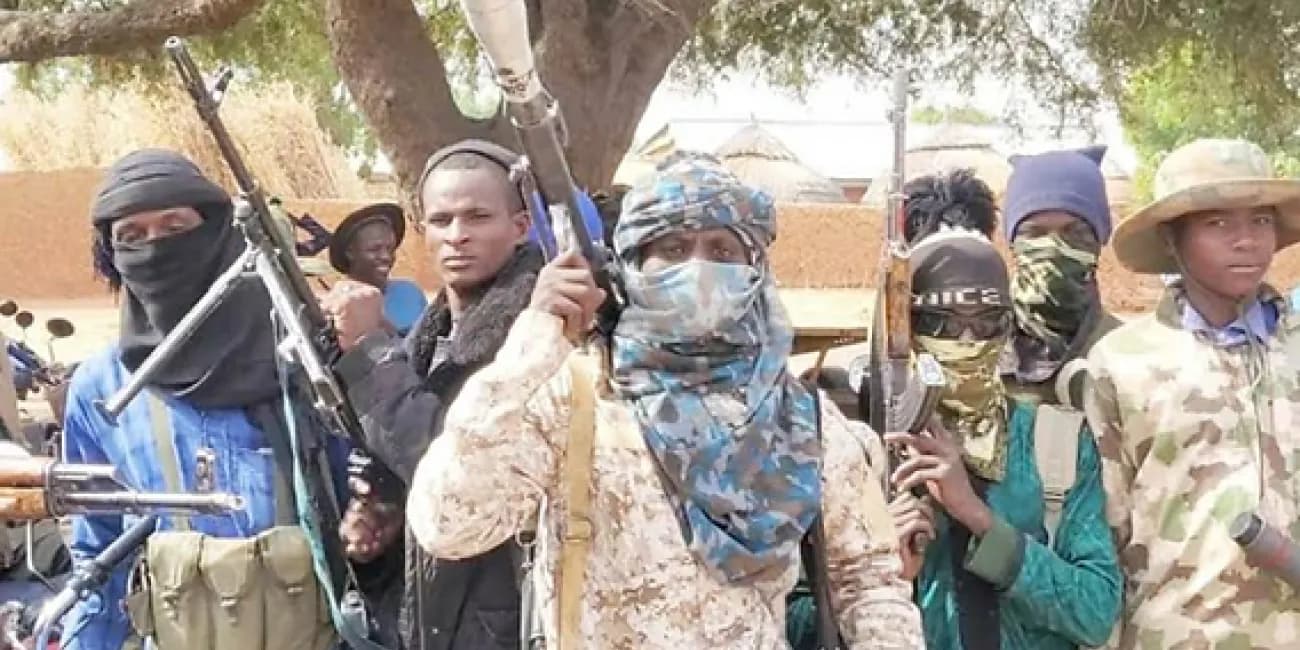
One worshipper was killed and several others abducted on Friday night when armed bandits attacked a mosque in Unguwan Namama village, Giwa Local Government Area of Kaduna State.
The attack occurred despite repeated assertions by the Kaduna State Government that security operations have reduced bandit activity across parts of the state. According to local accounts, the assailants stormed the village at about 8 p.m., opened fire on worshippers, and abducted an undetermined number of residents during and after evening prayers.
As of the time of reporting, authorities had not publicly released a definitive casualty or abduction figure.
One worshipper, Adamu Ibraheem, was confirmed dead after bandits attacked a mosque in Giwa Local Government Area at about 8 p.m.
Several worshippers sustained gunshot injuries and were taken to hospital, according to local sources.
Residents say the attackers targeted worshippers during ongoing prayers and as people exited the mosque.
The incident occurred while Kaduna State officials have continued to highlight progress in anti-banditry operations.
Residents familiar with the incident said the attackers entered Unguwan Namama village on Friday night and moved toward the mosque while prayers were underway.
Related News
According to accounts provided by community members, the armed men opened fire on worshippers, causing panic among those attempting to flee. Sources said the gunmen positioned themselves around the area and continued shooting as worshippers emerged from the mosque.
Abubakar Abdullahi, identified as a relative of the deceased victim, confirmed the killing of Adamu Ibraheem in a message sent to journalists. His account aligns with reports from residents who said at least one worshipper died at the scene while others suffered gunshot wounds.
Several injured victims were reportedly transported to medical facilities for treatment.
At the time of filing, neither community leaders nor security agencies had released a verified figure for those injured or abducted. Such uncertainty is common in the immediate aftermath of rural attacks, particularly in areas where communications infrastructure remains limited and families are still attempting to locate missing relatives.
Giwa Local Government Area has repeatedly featured in security reports involving bandit attacks, kidnappings, cattle rustling, and village raids. The area lies within a corridor that has experienced years of armed violence linked to criminal groups operating across parts of northwestern Nigeria.
Security agencies have conducted multiple operations in the region.
The persistence of such incidents highlights the challenge facing authorities attempting to secure vast rural territories with dispersed settlements and difficult terrain. Security analysts have frequently identified mobility, intelligence gathering, and rapid response capacity as major obstacles in counter-banditry campaigns across affected states.
In Kaduna, state officials have often pointed to military operations and inter-agency cooperation as evidence of progress.
Friday's attack will inevitably be measured against those claims.
Government Claims Versus Ground Reality
The Kaduna State Government has, in recent months, highlighted gains against armed groups operating within the state.
Officials have cited security operations, arrests, intelligence-driven interventions, and military offensives aimed at disrupting criminal networks. Such claims have formed part of a broader narrative that conditions are improving in previously volatile areas.
A single attack does not invalidate broader security improvements. At the same time, incidents involving fatalities, mass abductions, and attacks on places of worship raise legitimate questions about the extent to which communities feel protected.
Those questions are difficult to ignore.
Security assessments are ultimately measured not only by operational statistics but also by the ability of residents to attend religious services, travel, farm, and conduct daily activities without fear of attack.
For residents of Unguwan Namama, Friday night's events are likely to shape perceptions more powerfully than official statements.
The Human Cost Behind the Numbers
Public discussions about banditry often focus on casualty figures, arrests, or operational updates.
Those metrics rarely capture the immediate consequences for affected communities. Families of abducted victims face uncertainty that can last weeks, months, or longer. Injured survivors frequently require medical treatment and may experience lasting physical or psychological effects.
Communities affected by recurring violence often experience disruptions to farming, commerce, education, and religious activities. Fear can alter movement patterns and reduce economic activity long after gunmen have left an area.
In Unguwan Namama, residents are now confronting those realities once again.
Authorities have yet to publicly confirm the precise number of abducted victims. The number of injured worshippers also remains unclear. Security agencies have not disclosed whether any suspects have been identified, pursued, or apprehended in connection with the attack.
They will help determine whether the attack was a targeted operation, an opportunistic raid, or part of a broader pattern of criminal activity affecting communities in Giwa Local Government Area.
Our analysis of the available accounts found one confirmed fatality, at least several reported injuries, and multiple abductions whose exact scale remains unknown. Until security agencies release verified figures, caution is required when assessing the full extent of the incident.
How many people were abducted?
Authorities have not released a confirmed figure. Multiple sources reported that several worshippers were taken, but the exact number remains unclear.
Who was killed in the attack?
Residents and relatives identified the deceased worshipper as Adamu Ibraheem. Local accounts indicate he died during the assault on the mosque.
Have security agencies made any arrests?
As of the latest available information, no arrests had been publicly announced in connection with the attack.
The next unresolved question is whether security agencies can identify and recover those abducted during the assault on Unguwan Namama. No court proceedings have yet been announced, no official deadline for updates has been provided, and the central right still in dispute is the most fundamental one: the safe return of residents taken from the community during the attack.
Add a Comment