


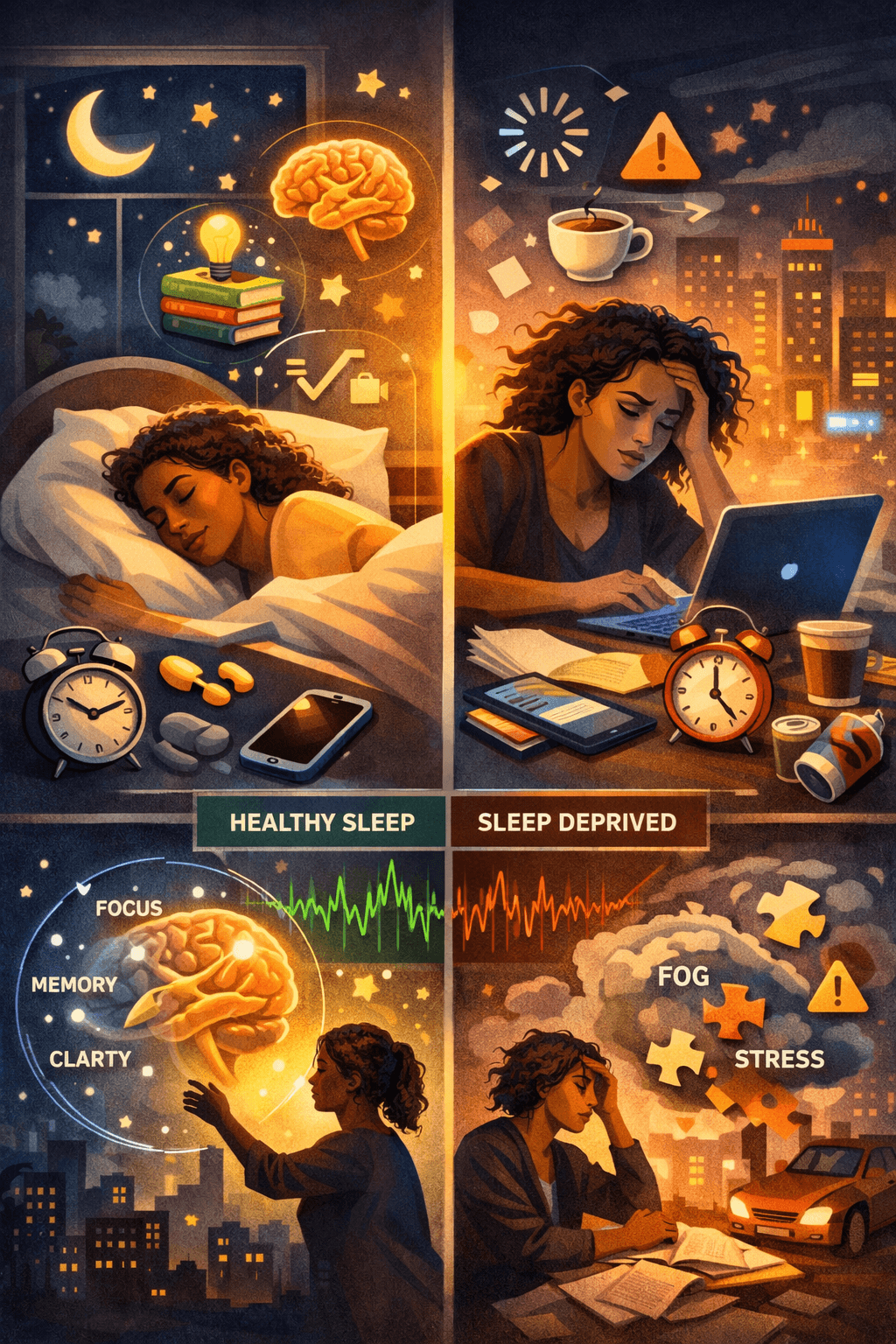
Sleep Hygiene and the Brain: Practical Steps to Better Rest and Sharper Thinking
Sleep is often treated as optional, something to be sacrificed in pursuit of productivity or social demands. However, growing scientific evidence continues to show that sleep quality, not just sleep duration, plays a central role in how the brain functions each day. From memory and decision-making to emotional balance and long-term brain health, sleep hygiene has emerged as a critical but frequently
overlooked public health issue.
According to reports by the World Health Organization and the U.S. Centers for Disease Control and Prevention, adults who regularly get poor-quality sleep are more likely to experience reduced concentration, slower reaction times, and increased risk of chronic illnesses. In
Nigeria and other fast-growing economies, experts say the problem is compounded by long working hours, irregular schedules, heavy screen use, and rising stress levels.
As awareness of mental performance and productivity grows, sleep hygiene is gaining renewed attention not as a luxury, but as a necessity.
What Sleep Hygiene Really Means
Sleep hygiene refers to the daily habits, routines, and environmental factors that influence how well a person sleeps. It is not about sleeping longer alone. It focuses on creating the right conditions for the brain to enter and maintain restorative sleep.
According to the American Academy of Sleep Medicine, good sleep hygiene includes consistent bedtimes, a quiet and dark sleeping environment, limited caffeine intake late in the day, and reduced exposure to screens before bed. It also involves behavioral choices, such as avoiding heavy meals or intense mental activity close to bedtime.
Related News
Dr. Funke Adeyemi, a clinical psychologist based in Lagos, explains that many people underestimate how sensitive the brain is to routine disruption. “Sleep works best when the body clock is respected. Even small changes, like going to bed an hour later every night, can reduce sleep quality over time,” she said in an interview with Punch.
Why Sleep Matters for Cognitive Performance
Sleep plays a direct role in how the brain processes and stores information. During deep sleep stages, the brain consolidates memories, clears metabolic waste, and restores neural connections that support learning and focus.
Research published by the National Institutes of Health shows that sleep deprivation reduces activity in the prefrontal cortex, the area responsible for decision-making, problem-solving, and impulse control. This explains why people who sleep poorly often struggle with attention, emotional regulation, and productivity.
Meanwhile, a 2023 report by the Sleep Foundation noted that even moderate sleep loss can impair cognitive performance at levels comparable to mild alcohol intoxication. Reaction times slow, errors increase, and judgment becomes less reliable.
For students, professionals, and shift workers, the consequences are especially significant. Chronic sleep deprivation has been linked to reduced academic performance, workplace errors, and higher accident rates.
Practical Sleep Hygiene Tips That Actually Work
Experts emphasize that improving sleep hygiene does not require expensive treatments or medication. Small, consistent adjustments often produce meaningful results.
One of the most effective strategies is maintaining a fixed sleep schedule, even on weekends. According to sleep researchers, irregular sleep patterns confuse the body’s internal clock, making it harder to fall asleep naturally.
Creating a sleep-friendly environment is equally important. A dark, cool, and quiet room supports melatonin production, the hormone responsible for sleep. Using blackout curtains, reducing noise, and keeping electronic devices away from the bed can significantly improve sleep quality.
Limiting screen time before bed is another key recommendation. The blue light emitted by phones and laptops suppresses melatonin and delays sleep onset. Experts advise switching off screens at least one hour before bedtime.
Caffeine intake also plays a major role. While coffee and energy drinks improve alertness in the short term, consuming them late in the day can disrupt sleep cycles. According to the Mayo Clinic, caffeine can remain in the bloodstream for up to eight hours.
Physical activity helps, but timing matters. Moderate exercise during the day improves sleep depth, while intense workouts late at night may have the opposite effect.
A Less Discussed Factor: Cognitive Overload
One emerging insight that receives less public attention is the impact of cognitive overload on sleep quality. Continuous exposure to news alerts, social media, and work messages keeps the brain in a heightened state of alertness, even when the body is tired.
Neuroscientists describe this as “mental hyperarousal,” a condition in which the brain struggles to power down. According to a 2024 analysis published in the Journal of Sleep Research, people who engage in high levels of digital multitasking report poorer sleep efficiency, even when total sleep time remains unchanged.
This suggests that sleep hygiene is not only about physical habits but also about managing mental stimulation, especially in the hours leading up to bedtime.
The renewed focus on sleep comes at a time when remote work, economic pressure, and digital dependency are reshaping daily routines. According to the Nigerian Sleep Society, urban adults now sleep an average of one to two hours less than they did two decades ago.
Health experts warn that the long-term effects could include increased rates of anxiety, memory decline, and reduced workplace productivity. There are also broader economic implications, as fatigue-related errors and burnout contribute to lost work hours and rising healthcare costs.
Meanwhile, employers and policymakers are beginning to take note. Some organizations are experimenting with flexible work schedules and wellness programs that prioritize rest. Schools and universities are also revisiting early start times in response to research linking sleep deprivation to poor academic outcomes.
What to Watch Going Forward
Sleep specialists believe the next phase of public health discussion will focus on prevention rather than treatment. Wearable sleep trackers, digital wellness tools, and workplace sleep education programs are expected to expand in the coming years.
However, experts caution that technology alone is not the solution. Sustainable improvement, they say, depends on cultural change and personal discipline.
As Dr. Adeyemi noted, “Sleep is not wasted time. It is an investment in how well the brain performs the next day. When people understand that, their priorities begin to shift.”
Sleep hygiene is no longer a niche health topic. It sits at the center of cognitive performance, emotional stability, and long-term well-being. While modern life continues to place pressure on rest, simple, consistent habits can make a measurable difference.
As research continues to highlight the link between quality sleep and mental performance, the message is becoming clearer. Better sleep is not about doing less. It is about thinking better, working smarter, and protecting the brain for the future.
Add a Comment