


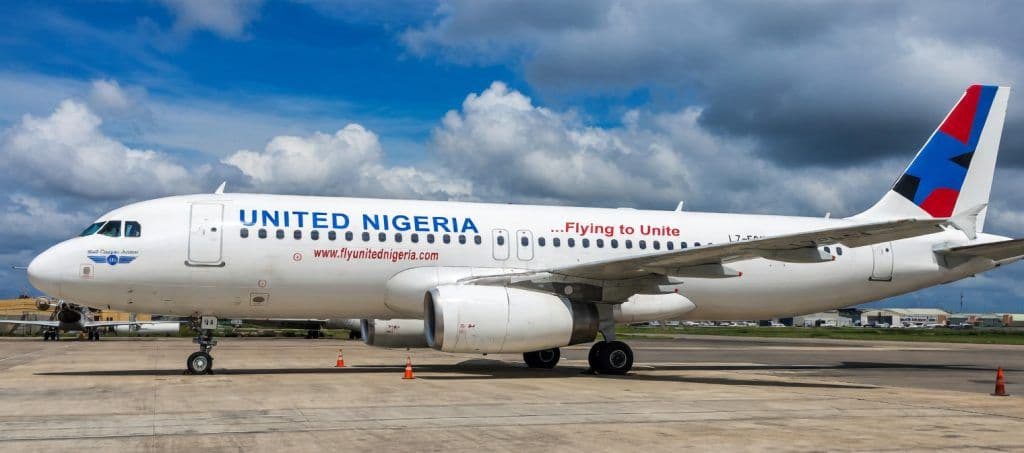
The disruptions involved a ground collision at Lagos and a bird strike on an inbound flight within hours of each other. Both events occurred on Sunday, March 29, 2026 and forced aircraft withdrawals from service across the network operated by United Nigeria Airlines.
The airline confirmed the events in a written operational statement released the same day.
No injuries were reported.
The incidents occurred at two separate airports and involved two different aircraft types. The first incident took place at the domestic wing of Murtala Muhammed International Airport in Lagos. The second occurred during the arrival phase of a flight from Asaba International Airport.
The timing mattered.
Lagos Ramp Incident Involving Flight UN0503 at Murtala Muhammed Airport
The first event occurred at approximately 8:40 a.m. local time when Flight UN0503 operated by United Nigeria Airlines arrived from Akanu Ibiam International Airport in Enugu. The aircraft involved was an Embraer 190 regional jet. After landing, the aircraft taxied to the apron at the domestic terminal known as MM2 within Murtala Muhammed International Airport.
Ground personnel positioned the aircraft between two other parked jets belonging to sister carriers operating from the same terminal. According to the airline’s March 29 operational statement, boarding preparations had begun for the next scheduled departure, Flight UN0500, planned for noon from Lagos.
Related News
The aircraft was stationary at that moment.
Another aircraft nearby had completed passenger boarding and began taxiing from the stand. A second aircraft was simultaneously performing a pushback manoeuvre toward the taxi lane used by outbound traffic. According to the airline’s operational report, the taxiing aircraft generated a strong jet blast while accelerating along the taxiway.
That blast moved equipment.
The force displaced a baggage trolley belonging to a ground handling company operating at the terminal. The trolley rolled across the ramp surface and struck the parked Embraer 190. The impact damaged the aircraft’s external antenna assembly and a section of the forward fuselage close to the nose landing gear.
Operations halted immediately.
Aircraft Withdrawal and Inspection Procedures Under NCAA Safety Oversight
Airlines operating within Nigeria are regulated by the Nigerian Civil Aviation Authority under the legal framework of the Civil Aviation Act 2006. Section 30 of that statute empowers the regulator to enforce operational safety compliance, including aircraft inspections after ground incidents or structural impact events.
United Nigeria Airlines said the affected aircraft was immediately removed from scheduled operations.
Maintenance inspection became mandatory.
The airline’s statement described the action as part of its safety procedures. Aircraft subjected to structural contact events typically undergo technical inspection before returning to flight status. These inspections may involve external structural checks, avionics testing, and documentation review recorded in the aircraft maintenance logbook.
No passengers were onboard during the ramp incident.
The absence of passengers limited the operational consequences to scheduling delays rather than passenger injury response.
Bird Strike Incident on Flight UN0509 from Asaba to Lagos
The second event occurred later the same day. Flight UN0509 departed Asaba International Airport bound for Lagos at approximately noon local time. The aircraft involved was an Airbus A320 operated by United Nigeria Airlines.
During the flight’s arrival phase into Murtala Muhammed International Airport, one of the aircraft’s engines experienced a bird strike.
Bird strikes are a known aviation hazard.
The International Civil Aviation Organization records thousands of such incidents annually worldwide in its wildlife strike database. Aircraft engines are designed to tolerate certain levels of bird ingestion without catastrophic failure, though inspection is required after impact events.
The airline confirmed that the aircraft landed safely.
After arrival in Lagos, the Airbus A320 was withdrawn from service pending engineering inspection.
Network Disruptions and Operational Impact Across United Nigeria Airlines
Two aircraft withdrawals within hours created operational consequences for the carrier. Airlines operate tightly scheduled aircraft rotations, meaning each aircraft typically performs several flights per day across multiple routes. Removing even one aircraft from service can affect subsequent departures.
Two removals compounded the problem.
Passengers scheduled on affected routes experienced delays as the airline adjusted its fleet allocation. United Nigeria Airlines issued a public apology to passengers in its March 29 statement and requested patience during schedule recovery efforts.
The airline did not disclose the number of flights delayed.
But operational mathematics provides context. An Embraer 190 typically seats around 100 passengers while an Airbus A320 can carry between 150 and 180 passengers depending on configuration. Multiple flights across the airline’s network may therefore have been affected once both aircraft were removed for inspection.
That ripple spreads quickly.
Two separate incidents involving United Nigeria Airlines aircraft occurred on March 29, 2026 within hours of each other.
A baggage trolley displaced by jet blast struck an Embraer 190 parked at Murtala Muhammed International Airport.
A second aircraft, an Airbus A320 operating Flight UN0509 from Asaba, suffered a bird strike during arrival into Lagos.
Both aircraft were withdrawn from service for inspection under safety procedures overseen by the Nigerian Civil Aviation Authority.
Did anyone get injured during the incidents?
No. The airline confirmed that no passengers or ground personnel were injured during either event.
Why remove the aircraft from service if the damage looked minor?
Aviation rules require inspection after structural contact or bird strikes. Airlines cannot return an aircraft to service until engineers confirm it meets safety standards.
Are bird strikes common in aviation?
Yes. Wildlife strikes are recorded worldwide every year. Aircraft engines and windshields are certified to withstand certain impacts, but inspections are mandatory afterward.
The operational question now moves beyond the airline’s internal maintenance hangar. If the ground collision involved third party equipment, liability could extend to the ramp handling company responsible for the baggage trolley that struck the Embraer 190. Any dispute over repair costs would likely proceed through civil litigation in the Federal High Court of Nigeria under aviation liability provisions tied to the Civil Aviation Act 2006. The repair valuation and responsibility for payment have not yet been disclosed. The cost of replacing damaged avionics or fuselage panels remains unresolved.
Add a Comment