


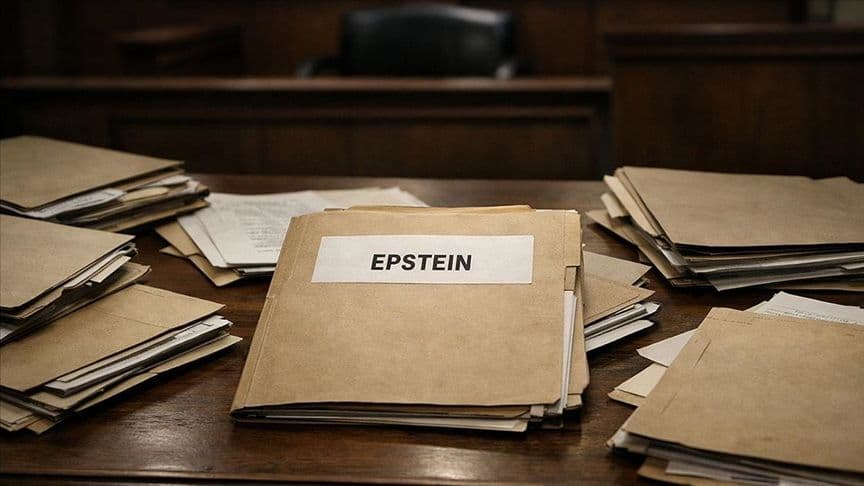
The proposed settlement, filed in 2025 and now before the United States District Court for the Southern District of New York, seeks to resolve claims that the bank facilitated the sex-trafficking operations of Jeffrey Epstein between June 30, 2008, and July 6, 2019. U.S. District Judge Jed S. Rakoff is scheduled to hold a fairness hearing in April 2026 to determine whether to approve the agreement.
The number is precise.
The Case Record: SDNY Filing and Scope of Claims
The operative complaint, filed in 2025 in the Southern District of New York, alleges that Bank of America maintained accounts tied to Epstein and his network, including associates such as Ghislaine Maxwell and Leon Black. The plaintiffs, represented by attorney Sigrid McCawley, claim the bank processed transactions that enabled trafficking activities.
The settlement class is defined with specificity. It covers women abused or trafficked by Epstein or his associates during an 11-year window ending July 6, 2019, the date of Epstein’s federal arrest in the Southern District of New York under Indictment No. 19 Cr. 490. Court submissions identify at least 60 victims as potential claimants under the agreement.
That scope is not incidental.
The complaint references alleged failures to file Suspicious Activity Reports under the Bank Secrecy Act, codified at 31 U.S.C. § 5318(g). Plaintiffs argue that the bank did not act on red flags tied to Epstein-linked accounts, including large transfers characterized in internal records as professional fees.
The $170 Million Transaction and Compliance Failures
Related News
One transaction sits at the center of the allegations. Plaintiffs cite approximately $170 million in payments from accounts associated with Leon Black, described in filings as compensation for “tax and estate planning advice.” The plaintiffs contend those funds were, in part, used to sustain Epstein’s operations.
Bank of America disputes that characterization. In a statement included in court filings dated March 2026, the bank said it “did not facilitate sex trafficking crimes” and entered the settlement to resolve the litigation without admitting liability. That language aligns with standard settlement practice in civil cases involving financial institutions.
No admission was required.
The absence of a liability finding means the court’s role shifts to evaluating fairness rather than adjudicating the underlying claims. Judge Rakoff’s April 2026 hearing will focus on whether the $72.5 million fund adequately compensates the defined class relative to the alleged harm and the risks of continued litigation.
Parallel Settlements: JPMorgan and Deutsche Bank
This is not the first financial settlement tied to Epstein’s network. In November 2023, JPMorgan Chase agreed to pay $290 million to Epstein survivors in a separate SDNY case, Doe v. JPMorgan Chase & Co., Case No. 22-cv-10019. Earlier, in May 2023, Deutsche Bank settled similar claims for $75 million in Doe v. Deutsche Bank AG, Case No. 22-cv-10018.
Those figures provide a benchmark. Bank of America’s $72.5 million settlement is lower than JPMorgan’s but roughly comparable to Deutsche Bank’s payout. The differences reflect variations in alleged timelines, client relationships, and internal compliance findings cited in each complaint.
The pattern is consistent.
Our analysis of the three settlements shows a combined payout of $437.5 million across the JPMorgan, Deutsche Bank, and Bank of America cases. That total does not include legal fees or administrative costs, which are typically deducted from settlement funds before distribution to claimants.
The Role of Associates and Witness Gaps
Leon Black’s position in the litigation highlights a recurring issue. Plaintiffs describe him as a “critical witness” due to his financial relationship with Epstein. Court filings indicate he was scheduled for an eight-hour deposition in March 2026. That deposition did not occur after the Bank of America settlement was announced.
Black has denied wrongdoing. He is not named as a defendant in the Bank of America case. His absence from the deposition record leaves a gap in sworn testimony that could have clarified the purpose and flow of the $170 million in payments referenced by plaintiffs.
That gap remains.
Ghislaine Maxwell, convicted in 2021 in United States v. Maxwell, Case No. 20 Cr. 330 (S.D.N.Y.), is referenced in the complaint as an associate whose accounts intersected with the financial network under scrutiny. Her conviction provides a factual anchor for the existence of a trafficking enterprise, though it does not directly establish liability for the bank.
Regulatory Context and Compliance Obligations
The legal theory underpinning the case rests on compliance failures. Under the Bank Secrecy Act and related regulations enforced by the Financial Crimes Enforcement Network, banks must monitor transactions and report suspicious activity. The plaintiffs argue that Bank of America’s systems did not meet those obligations in relation to Epstein-linked accounts.
Regulators have taken similar positions in past enforcement actions. FinCEN penalties against financial institutions often cite delayed or missing Suspicious Activity Reports as evidence of compliance breakdowns. The complaint situates Bank of America within that framework, though no regulatory penalty is at issue in this specific settlement.
The legal theory is familiar.
Judge Rakoff has previously scrutinized financial settlements for adequacy and transparency. In SEC v. Citigroup Global Markets Inc., 827 F. Supp. 2d 328 (S.D.N.Y. 2011), he rejected a proposed settlement for lacking sufficient factual admissions. That history suggests the April 2026 hearing may probe the structure and justification of the $72.5 million figure.
Compensation Mechanics and Distribution Questions
The settlement fund will be distributed among eligible claimants if approved. Court filings outline a claims process requiring verification of victim status within the defined period from June 30, 2008, to July 6, 2019. Administrative procedures, including notice and claims adjudication, will be overseen by a court-appointed administrator.
The exact payout per claimant is uncertain. With at least 60 identified victims, a simple division would suggest an average of approximately $1.2 million per claimant before fees and costs. Actual distributions will vary based on individual claims and the allocation formula approved by the court.
Numbers only tell part of it.
Bank of America’s $72.5 million settlement, filed in SDNY in 2025, covers at least 60 Epstein victims between 2008 and 2019 without any admission of liability.
Plaintiffs rely on alleged Bank Secrecy Act failures, including unreported transactions such as $170 million linked to Leon Black’s accounts.
Parallel settlements with JPMorgan Chase ($290 million) and Deutsche Bank ($75 million) bring total bank payouts in Epstein-related cases to $437.5 million.
Judge Jed S. Rakoff will decide in April 2026 whether the settlement is fair, a process that could reshape the final compensation structure.
Does this mean Bank of America was found guilty?
No. It is a civil settlement with no admission of liability. The court has not ruled on the merits of the allegations.
Why is the amount lower than JPMorgan’s settlement?
Different facts, different exposure. The complaints allege varying levels of involvement and timelines, which affect settlement values.
Will every victim get the same amount?
No. Payments depend on the claims process and court-approved allocation. Legal fees and administrative costs come out first.
The next decision sits with the Southern District of New York, where Judge Rakoff is expected to rule after the April 2026 fairness hearing. If objections are filed before the court’s deadline, likely within 30 days of notice issuance, the judge must weigh whether $72.5 million adequately compensates a class of at least 60 claimants tied to transactions that plaintiffs say exceeded $170 million.
Add a Comment