


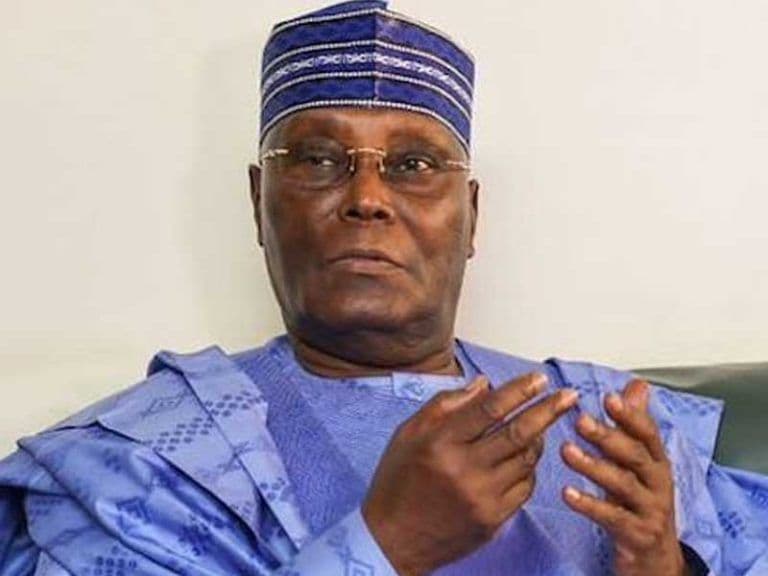
Former Vice President Atiku Abubakar accused the administration of President Bola Tinubu and governors elected on the platform of the All Progressives Congress of diverting public funds into accounts allegedly tied to the 2027 presidential election campaign.
The allegation landed without documentary proof attached to the public statements. Yet it immediately widened an already visible crack between Nigeria’s rising state allocations and deteriorating public confidence in how those funds are spent.
The number at the center is N800 billion.
Atiku’s allegation, issued through his media aide Paul Ibe, followed reports claiming deductions from Federation Account Allocation Committee (FAAC) disbursements were being pooled for political mobilisation ahead of 2027. The APC Governors’ Forum publicly denied reports of internal disputes linked to the handling of FAAC allocations. No anti-corruption agency, including the Economic and Financial Crimes Commission or the Independent Corrupt Practices Commission, has announced a formal investigation.
That absence matters.
FAAC allocations to states increased sharply after fuel subsidy removal and naira devaluation expanded nominal government revenues. Data published by the National Bureau of Statistics and monthly FAAC communiqués show states received record inflows through 2024 and into 2025. But public sector outcomes have not improved at the same pace. Several states still owe contractors. Capital projects remain stalled across transport, healthcare and water infrastructure.
That gap fuels suspicion.
ADC and ActionAid Push Allegations Beyond Campaign Rhetoric
Related News
African Democratic Congress escalated the accusation by describing the alleged diversion as “criminal” and “wickedness on an industrial scale.” The party’s spokesman, Bolaji Abdullahi, claimed the alleged diversion explained why governors receiving historically high allocations had struggled to improve living conditions.
The statement was political. It was also measurable.
Nigeria’s inflation rate remained above 30 per cent for much of 2024 before rebasing adjustments lowered the official figure in 2026. Food inflation and transport costs still consumed disproportionate portions of household income, according to NBS expenditure surveys and World Bank poverty assessments.
Yet state revenues climbed.
Our analysis of FAAC records published between July 2023 and March 2026 shows cumulative monthly allocations consistently exceeded pre-subsidy-removal levels, largely because higher fuel prices inflated federally collected revenues denominated in naira. Lagos, Delta and Rivers states remained among the highest recipients during that period.
But capital expenditure transparency weakened in several states.
Budgets released publicly by some APC-controlled states showed widening gaps between projected infrastructure spending and verifiable procurement disclosures. In multiple cases, state audit reports were delayed or unavailable online beyond statutory timelines.
That raises another question.
If N800 billion was truly diverted, the movement of funds would require banking channels, authorising officials and accounting entries within state treasury systems. No documentary trail supporting those claims has been produced publicly by opposition parties or civil society organisations.
That weakens the accusation legally.
Still, anti-corruption groups argue the burden cannot rest solely on whistleblowers. ActionAid Nigeria called for the impeachment of any governor proven to have used public funds for campaign activities.
Its country director, Andrew Mamedu, framed the allegations as a test of institutional credibility. He cited deteriorating healthcare infrastructure, unemployment and unpaid public sector obligations as evidence that state resources were not translating into visible development outcomes.
The political timing is obvious.
Tinubu’s Economic Reforms Increased State Revenues While Deepening Hardship
President Tinubu’s administration removed petrol subsidies in May 2023 and liberalised parts of the foreign exchange market shortly afterward. Those decisions increased federal and state revenues in nominal terms because oil receipts and tax inflows expanded when converted at weaker exchange rates.
The social cost was immediate.
Transport fares surged nationwide. Electricity tariffs increased for Band A consumers. Food inflation accelerated as logistics costs climbed. The World Bank estimated in multiple Nigeria development updates that inflation and currency depreciation pushed millions deeper into poverty between 2023 and 2025.
Yet governors defended the reforms.
Several APC governors publicly backed subsidy removal while simultaneously requesting federal intervention funds to cushion state economies. Budget support loans and infrastructure financing requests also increased during the period, according to Debt Management Office disclosures.
The contradiction became harder to ignore.
Opposition parties are now linking those economic hardships directly to allegations of political fundraising through public revenue channels. No evidence presented so far proves the existence of “dedicated accounts” for Tinubu’s 2027 campaign. But the accusation resonates because citizens experienced visible hardship while government revenues expanded sharply.
Perception filled the vacuum.
Atiku’s Security Criticism Carries Political Weight Before 2027
Atiku connected the alleged financial diversion to worsening insecurity after the reported death of former House of Representatives member Abba Adamu, who was abducted along the Kaduna-Abuja corridor and reportedly died in captivity after nine days.
The incident intensified scrutiny of federal security spending.
Nigeria’s security and defence budgets have risen steadily for years, running into trillions of naira across military procurement, intelligence operations and police funding. Yet kidnappings along major highways continue. The Abuja-Kaduna route remains one of the country’s most persistent security flashpoints despite repeated military operations and surveillance announcements.
Citizens noticed the repetition.
Atiku described the former lawmaker’s death as evidence of institutional failure. His criticism targeted the federal government’s inability to secure strategic transport corridors despite expanded security budgets.
The government has responded similarly before.
Presidential aides and security agencies routinely cite ongoing operations against bandit groups and insurgents. But measurable outcomes remain inconsistent. The Armed Conflict Location and Event Data Project (ACLED) and Nigerian civil society trackers continue recording abductions and attacks across the North West and North Central regions.
That data complicates official claims.
Atiku Abubakar alleged that APC governors diverted up to N800 billion from FAAC allocations for 2027 campaign planning, but no documentary evidence has been released publicly.
State allocations increased sharply after subsidy removal and naira devaluation, yet infrastructure and public welfare indicators remain weak in several states.
ActionAid Nigeria and the ADC used the allegation to demand investigations, impeachment proceedings and forensic scrutiny of state treasury flows.
The death of former lawmaker Abba Adamu intensified criticism of the Tinubu administration’s security record along the Abuja-Kaduna corridor.
Has any agency confirmed the N800 billion diversion claim?
No. Neither the EFCC nor ICPC has announced a formal investigation or released findings supporting the allegation. Right now, the accusation remains political and unproven.
Why are FAAC allocations higher now?
Fuel subsidy removal and exchange rate changes increased government revenue in naira terms. States are receiving more money nominally, even though inflation reduced purchasing power.
Could governors legally fund campaigns with state money?
No. Nigerian law prohibits misuse of public funds for partisan political activity. The problem is proving intent, tracing transactions and securing documentary evidence strong enough for prosecution.
The unresolved issue now sits between politics and forensic accounting. If opposition parties or civil society groups submit petitions, agencies such as the EFCC or ICPC could seek bank records tied to FAAC disbursements before the 2027 campaign season formally opens. Until then, the central dispute remains unanswered: whether any portion of the alleged N800 billion can be traced from state allocations into identifiable political accounts.
Add a Comment