


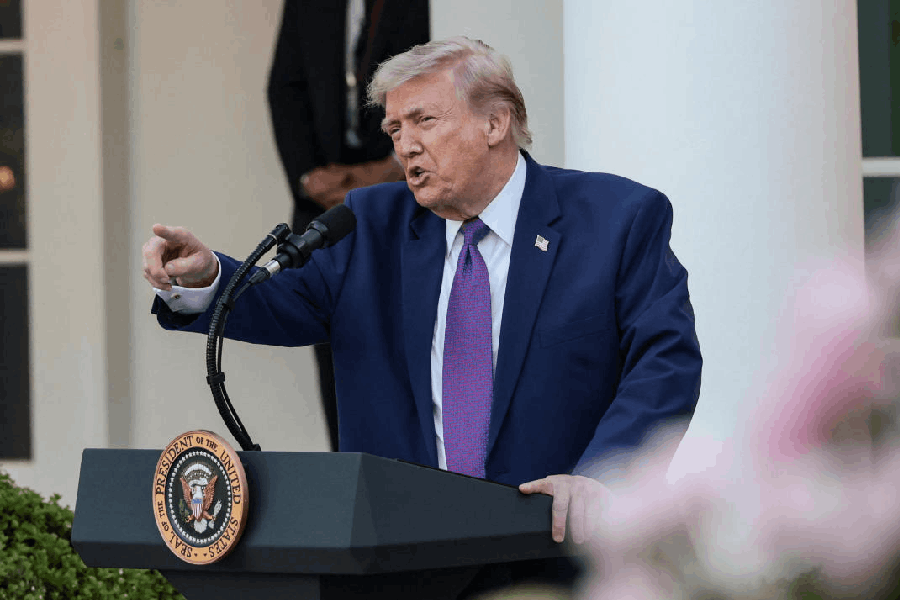
Brent crude crossed $104.50 per barrel Tuesday after President Donald Trump declared the Iran ceasefire “on life support” and publicly dismissed Tehran’s latest negotiating response as “garbage.”
The comment came less than five weeks after fighting began on February 28 between Iran and Israel, a conflict that rapidly expanded into attacks on shipping routes, energy infrastructure and regional proxy networks stretching from Lebanon to the Persian Gulf.
Markets reacted immediately.
Oil traders focused less on diplomatic language than on the practical effect inside the Strait of Hormuz, the narrow maritime corridor that normally carries roughly one-fifth of global oil and liquefied natural gas shipments. Shipping data from Kpler and LSEG showed tanker traffic through the strait slowed sharply over the past week, with several vessels reportedly disabling public tracking systems while attempting transit.
According to shipping analysts cited in maritime security briefings, tankers generally switch off Automatic Identification System transponders only when operators believe broadcasting routes increases attack risks. Three crude tankers reportedly exited the waterway last week with trackers disabled. A second Qatari liquefied natural gas shipment was also attempting passage under a reported arrangement involving Iran and Pakistan.
The ceasefire itself now appears conditional.
Iran rejected a United States proposal that would have paused military operations while broader negotiations continued over Tehran’s nuclear programme and regional military posture. Iranian officials instead demanded an end to fighting across multiple fronts, including Lebanon, recognition of Tehran’s authority over the Strait of Hormuz, compensation for wartime damage and the lifting of what Iranian state media described as an American naval blockade.
Trump responded bluntly.
Related News
“I would call it the weakest right now, after reading that piece of garbage they sent us. I didn’t even finish reading it,” Mr Trump told reporters on Monday.
The administration’s position has hardened simultaneously on diplomacy and sanctions.
The United States Treasury Department announced fresh sanctions Monday targeting companies and individuals accused of helping Iran move oil shipments to China. Treasury officials said the measures aimed to reduce funding streams tied to Iran’s military operations and nuclear programme. American banking regulators also circulated warnings to financial institutions regarding attempts to evade existing sanctions mechanisms through intermediaries in Asia and the Gulf.
China remains central.
Before the war, Chinese refiners accounted for the overwhelming majority of Iranian crude purchases despite sanctions restrictions. Energy market analysts at Rapidan Energy Group and S&P Global Commodity Insights have repeatedly estimated that Chinese independent refiners absorb most discounted Iranian exports through indirect trading channels and ship-to-ship transfers.
The conflict is now disrupting supply itself.
A Reuters survey published Monday found OPEC oil production fell again in April to the lowest level in more than two decades. The decline reflected reduced exports moving through the Gulf and production disruptions linked to maritime insecurity. Saudi Arabia, the United Arab Emirates and Kuwait retain spare production capacity on paper, according to International Energy Agency estimates, but actual exports remain constrained by shipping bottlenecks near Hormuz.
Insurance costs surged too.
Marine insurance premiums for Gulf transit routes climbed sharply after attacks on commercial vessels intensified in March, according to Lloyd’s market data and shipping broker assessments. Some operators rerouted cargoes around the Cape of Good Hope despite the significantly longer transit times and higher fuel consumption.
The economic pressure is spreading into domestic politics inside the United States.
A Reuters/Ipsos poll completed Monday found two-thirds of Americans believe the Trump administration has not clearly explained the rationale for the war. The survey also found skepticism extending into Republican voters, with roughly one-third of respondents from the president’s own party expressing dissatisfaction with the administration’s explanation of the conflict.
Fuel prices are part of that calculation.
The national average gasoline price in the United States has risen steadily since March as crude benchmarks climbed above $100 per barrel. Energy economists at ClearView Energy Partners warned in recent investor notes that sustained disruption in Hormuz could push American retail fuel prices substantially higher during the summer travel season, particularly if strategic petroleum reserve releases remain limited.
Congressional elections are approaching.
Nationwide midterm contests are now less than six months away, and Republican lawmakers in energy-sensitive states are already facing pressure from voters over inflation and transportation costs. Democratic lawmakers have simultaneously questioned the administration’s legal basis for military escalation without a formal congressional authorization vote.
Washington has struggled diplomatically as well.
Several NATO governments have reportedly resisted United States requests for a coordinated naval mission to reopen Hormuz absent a broader internationally backed settlement. European officials involved in alliance discussions privately expressed concern that a military escort operation without a negotiated framework could draw additional countries into direct confrontation with Iran-backed forces.
That hesitation carries consequences.
The longer shipping traffic remains constrained, the more leverage Iran gains through geography alone. The Strait of Hormuz narrows to roughly 21 miles at its tightest point, making commercial navigation highly vulnerable to mines, missile attacks or harassment by fast patrol craft operated by Iran’s Islamic Revolutionary Guard Corps Navy.
Our analysis of Lloyd’s List shipping records shows outbound Gulf tanker departures in the first full week of April fell well below average seasonal volumes recorded during the same period in 2025. Several major operators also suspended public scheduling updates for Gulf transits after March attacks on commercial shipping lanes.
Energy traders are adjusting accordingly.
Brent futures extended gains in Asian trading Tuesday while natural gas benchmarks in Europe also rose amid fears that prolonged disruptions could tighten liquefied natural gas supplies ahead of winter procurement cycles. Qatar remains one of the world’s largest LNG exporters, and most of its cargoes transit directly through Hormuz.
The market sees no quick resolution.
Trump is expected in Beijing on Wednesday for talks with Xi Jinping, where Iran and Gulf shipping security are expected to dominate discussions. China has avoided direct military involvement while quietly protecting its energy access through diplomatic engagement with both Tehran and Gulf producers.
Donald Trump publicly declared the Iran ceasefire “on life support” after rejecting Tehran’s response to a US proposal.
Oil prices climbed above $104 per barrel because tanker traffic through the Strait of Hormuz has slowed dramatically since March.
A Reuters/Ipsos poll found two-thirds of Americans think the administration has not adequately explained the war.
NATO allies are resisting pressure to join a naval mission in Hormuz without a broader peace agreement and international mandate.
Why is the Strait of Hormuz so important?
Because roughly 20 per cent of global oil and LNG shipments move through it. When traffic slows there, energy markets react almost immediately.
Did Iran formally reject the ceasefire?
Not exactly. Tehran attached conditions that included compensation, an end to military operations across multiple fronts and changes to US naval activity. Trump treated those demands as unacceptable.
Why are US voters reacting negatively now?
Fuel prices are rising, and many voters still do not understand the administration’s long-term objective. The Reuters/Ipsos polling reflects that confusion pretty clearly.
The next unresolved question may emerge in Congress before it does on the battlefield. Lawmakers from both parties are already discussing whether the White House exceeded existing war powers authorities after military operations expanded beyond maritime protection into direct regional engagement. No formal vote has yet been scheduled, but legal challenges tied to presidential authorization powers could reach the United States Supreme Court if the conflict continues without a new congressional mandate.
Add a Comment