


The directive was issued on March 30, 2026.
Nigeria’s telecom regulator, the Nigerian Communications Commission, has instructed mobile network operators to compensate subscribers when network quality falls below regulatory standards within defined locations. The order was communicated in a public statement released on Sunday and signed by Nnenna Ukoha, Head of Public Affairs at the Commission.
The directive targets measurable service failures.
Subscribers affected by poor service quality will receive compensation directly from telecom operators in the form of airtime credits. The value of those credits will be calculated using average subscriber spending patterns and verified presence within specific Local Government Areas where quality failures occur.
That changes the enforcement model.
The NCC Directive and the Nigerian Communications Act 2003 Enforcement Framework
The order issued by the Nigerian Communications Commission draws authority from the Nigerian Communications Act 2003, the statute governing telecommunications regulation in Nigeria. Section 104 of that law empowers the Commission to establish Quality of Service standards and enforce compliance through regulatory actions affecting licensed operators.
Mobile network operators licensed under the Act include companies such as MTN Nigeria, Airtel Nigeria, Globacom, and 9mobile. These operators collectively serve more than 200 million active mobile subscriptions according to the industry subscriber statistics published by the Commission in its Monthly Subscriber Data Report for December 2025.
Related News
Network performance is measured through technical indicators.
The NCC’s Quality of Service Key Performance Indicators include call setup success rate, call drop rate, network accessibility, and data session success rates. Each indicator carries threshold targets operators must meet across specific geographic areas within the national network infrastructure.
Failure to meet those thresholds triggers regulatory attention.
The March 30 Statement by Nnenna Ukoha and Consumer Compensation Design
The public explanation of the directive came from Nnenna Ukoha in the Commission’s March 30, 2026 statement released through the Public Affairs Department of the Nigerian Communications Commission. The statement declared that subscribers should not carry the entire burden of service disruptions caused by network operators failing to meet prescribed standards.
That position alters how penalties operate.
Historically, regulatory enforcement relied heavily on financial fines imposed on telecom companies for service failures. Under the new approach, the Commission intends to link enforcement directly to consumer compensation. Operators whose networks fall below the defined Key Performance Indicator thresholds must credit subscribers located within affected Local Government Areas.
The credit will be airtime.
The Commission indicated that compensation amounts would be calculated using each subscriber’s historical usage pattern and the duration of service disruption experienced in the affected area.
H3: Tower Companies and Infrastructure Investment Requirements After NCC Fines
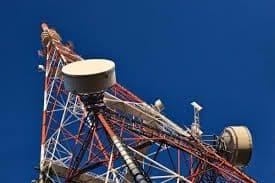
The directive extends beyond telecom operators. The Nigerian Communications Commission also addressed companies responsible for telecommunications infrastructure such as base station towers and masts.
These companies play a central role in network performance.
Tower firms own and maintain the physical infrastructure on which operators mount radio transmitters and other equipment. Failures in power supply, structural maintenance, or transmission systems can degrade network service across multiple operators simultaneously.
The Commission stated that funds collected from regulatory fines imposed on tower companies must now be reinvested into infrastructure upgrades.
The goal is measurable improvement.
Such investments include strengthening mast stability, upgrading transmission links, and improving backup power capacity. Nigeria’s telecommunications networks rely heavily on diesel powered backup generators due to irregular grid electricity supply. Infrastructure investment therefore directly influences service reliability.
H3: The Scale of Nigeria’s Telecommunications Network and Service Expectations
Nigeria operates one of the largest telecommunications markets in Africa. According to the Subscriber Data Report published by the Nigerian Communications Commission for December 2025, the country recorded more than 220 million connected mobile lines across all network providers.
But subscriber volume alone does not define service quality.
Network congestion, infrastructure gaps, and power reliability continue to affect call completion rates and mobile data speeds across several states. These performance issues frequently trigger consumer complaints filed through the Commission’s complaint management system.
The regulatory response has evolved over time.
In earlier enforcement actions, the Commission imposed monetary fines on operators for failing to meet Quality of Service benchmarks. Those penalties sometimes reached billions of naira depending on the scale of violations recorded during technical monitoring periods.
The new compensation directive introduces a direct link between enforcement and consumer relief.
Regulatory Philosophy and the Economic Role of Telecommunications
The Commission’s statement frames telecommunications as a foundational economic service. Mobile connectivity supports banking transactions, online commerce, and government digital services across Nigeria.
Service disruption therefore carries economic consequences.
Small businesses rely on mobile payment systems, including USSD transactions and mobile banking applications, to process customer payments. Poor network performance can interrupt those transactions and delay commercial activity.
The Commission’s approach attempts to address that gap.
By requiring operators to compensate subscribers directly, regulators are shifting part of the financial consequence of poor performance from government enforcement to customer relief mechanisms.
The Nigerian Communications Commission issued a directive on March 30, 2026 requiring telecom operators to compensate subscribers for poor network quality.
The order is rooted in the Nigerian Communications Act 2003, which authorizes the Commission to enforce Quality of Service standards.
Compensation will be provided through airtime credits calculated from subscriber spending patterns in affected Local Government Areas.
Tower companies must reinvest funds collected from regulatory fines into infrastructure upgrades that improve network reliability.
Who will receive compensation under the directive?
Subscribers located in Local Government Areas where telecom networks fail to meet NCC Quality of Service targets. The compensation comes as airtime credit.
How will the NCC determine service failure?
Through its technical monitoring system measuring indicators such as call drop rates, call connection success rates, and data session completion.
Will subscribers need to apply for compensation?
The directive suggests operators will credit affected users automatically once service failures are confirmed.
The next legal test may arise if telecom operators challenge the directive’s enforcement mechanism. Any dispute over regulatory authority would likely appear before the Federal High Court of Nigeria under judicial review provisions tied to the Nigerian Communications Act 2003. No suit has yet been filed. The financial scale of compensation obligations across more than 220 million subscriber lines remains undefined. The regulator has not disclosed the potential total value of airtime credits operators may be required to issue.
Add a Comment