


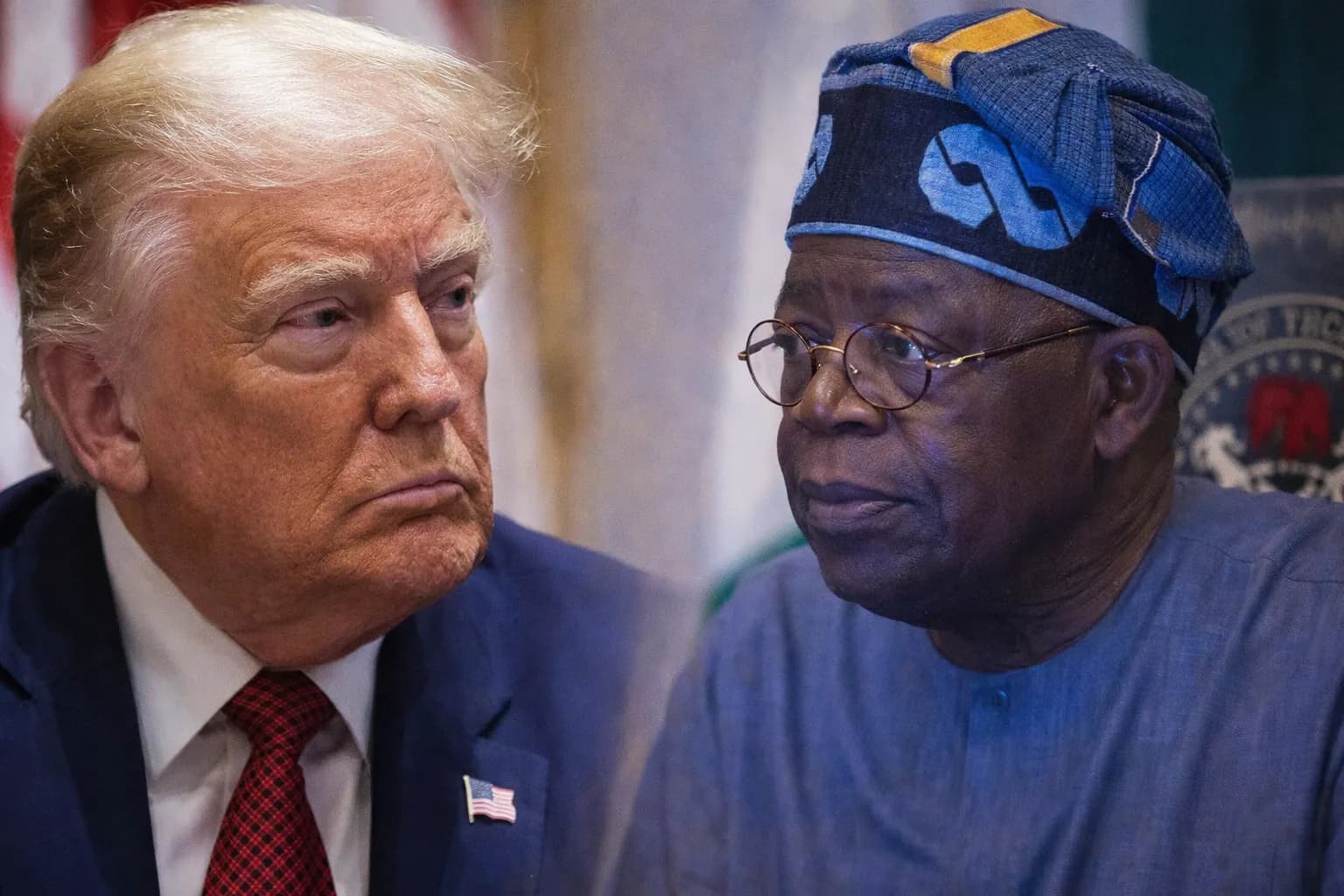
A formal Section 301 investigation launched March 12 puts Lagos and 59 other economies on notice, with public hearings scheduled for April 28 and potential tariffs or import bans on the table.
On March 12, 2026, the Office of the United States Trade Representative formally initiated a Section 301 investigation under the Trade Act of 1974, naming Nigeria alongside 59 other economies, including China, India, Brazil, South Africa, the United Kingdom, Canada, and the European Union. The notice, signed by USTR General Counsel Jennifer Thornton, states that the investigation will determine whether these economies have failed to "impose and effectively enforce a prohibition on the importation of goods produced with forced labour." The consequences, if the probe finds against them, range from additional import duties to outright restrictions on goods entering the American market.
Nigeria is one of 60 named economies. Not a footnote.
What the Investigation Actually Says
The USTR notice is precise in its legal basis. Section 301 of the Trade Act of 1974 grants the U.S. Trade Representative authority to investigate and respond to foreign trade practices deemed "unreasonable or discriminatory" that burden American commerce. The investigation announced in Annex A of the March 12 notice is not a warning letter. It is a formal legal proceeding with a structured timeline.
The USTR's core argument is economic and structural. Forced labour, the notice states, allows companies to produce goods "at artificially low costs," giving those producers an unfair competitive advantage over businesses operating under enforceable labour standards. American exporters, the agency argues, are required to compete in markets where goods produced with forced labour face no import barrier. That is the trade distortion the investigation aims to document.
The numbers cited in the notice are drawn from the International Labour Organization. As of 2021, the ILO estimated that approximately 28 million people were in forced labour globally, a figure representing roughly 3.5 out of every 1,000 people. Between 2016 and 2021, that number increased by 2.7 million, with private sector exploitation accounting for the bulk of the growth. In 2024, the ILO estimated annual profits generated from forced labour in the global private economy at $63.9 billion.
Those are not marginal figures. They describe an industrial-scale problem.
Nigeria's Position, and Why the Timing Is Uncomfortable
Nigeria enters this investigation in a weakened trade posture. Data released by the National Bureau of Statistics in its Foreign Trade in Goods Statistics report shows that Nigeria's merchandise trade surplus fell to N1.71 trillion in the fourth quarter of 2025, down from N3.42 trillion in the same quarter of 2024. That is a 50 percent contraction in one year. The NBS attributed the decline primarily to falling crude oil exports.
Related News
Total exports for Q4 2025 stood at N18.96 trillion, a 5.25 percent drop year-on-year and a 16.88 percent decline against the previous quarter. Crude oil, which contributed N9.70 trillion, or 51.17 percent of total exports, remains the dominant earner. The United States was Nigeria's second-largest import partner in the same period, accounting for a share of Nigeria's N17.25 trillion import bill.
That relationship is now under formal legal scrutiny.
The commodities the USTR specifically identifies as commonly linked to forced labour include agricultural products, textiles, minerals, fish products, and palm oil derivatives used in food and biofuel production. Nigeria is a significant producer of several items in that list. The investigation does not allege that Nigeria is currently exporting forced-labour goods to the U.S. What it does allege is that Nigeria has failed to maintain and enforce legal prohibitions sufficient to prevent such goods from entering the global supply chain.
That distinction matters, but it may not matter enough.
The Hearing Timeline and What Comes Next
The USTR has set April 15, 2026, as the deadline for written submissions through its electronic portal from businesses, labour organisations, and other stakeholders. Public hearings before the U.S. International Trade Commission in Washington are scheduled to begin April 28 and may run through May 1. The USTR has also stated it will consult directly with the governments of affected economies as part of its evidentiary process.
Nigeria has weeks, not months, to prepare a formal response.
What that response looks like will depend partly on whether the Nigerian government treats this as a diplomatic routine or as a legal process with measurable trade exposure. The U.S. government has had a domestic forced labour import prohibition in place for nearly 100 years, the USTR notice states, and the current investigation reflects the U.S. position that other economies have not matched that standard.
Key Takeaways
- The USTR opened a formal Section 301 investigation on March 12, 2026, naming Nigeria among 60 economies for allegedly failing to enforce bans on goods made with forced labour.
- Public hearings begin April 28, 2026, at the U.S. International Trade Commission; written submissions are due April 15, leaving Nigeria a narrow window to mount a formal response.
- Nigeria's merchandise trade surplus fell by 50 percent in Q4 2025, from N3.42 trillion to N1.71 trillion, according to the NBS, with the U.S. remaining among its top import partners during the same period.
- If the investigation finds against Nigeria, the U.S. may impose additional tariffs or import restrictions on Nigerian goods, affecting sectors beyond crude oil, including agriculture and textiles.
FAQ
Is Nigeria being accused of using forced labour itself? Not directly. The investigation targets Nigeria's failure to enforce a legal ban on importing goods produced with forced labour anywhere in the supply chain. The USTR is saying the enforcement framework is inadequate, not necessarily that Nigerian companies are running forced labour operations. That said, the legal exposure is the same if the probe finds against Nigeria.
What products from Nigeria are actually at risk? The USTR specifically flags agricultural goods, textiles, minerals, fish products, and palm oil derivatives as sectors commonly linked to forced labour globally. Nigeria exports several of these. Crude oil is not mentioned directly, but the investigation covers trade broadly.
How serious is a Section 301 investigation? Hasn't the U.S. used this before? Very serious. Section 301 is the same legal authority the U.S. used to impose tariffs on hundreds of billions of dollars in Chinese goods starting in 2018. It is a formal legal tool, not a press release.
The April 15 submission deadline is the first hard test of how the Nigerian government intends to respond. What remains unresolved is whether Nigeria will file a substantive legal and policy defence with the USTR, and what trade exposure a negative finding would attach to in dollar terms. No figure has been named yet. The hearings scheduled for April 28 through May 1 at the U.S. International Trade Commission will begin to answer that. Whether Nigeria has legal representation in that room is a question that has not been publicly answered.
Add a Comment