


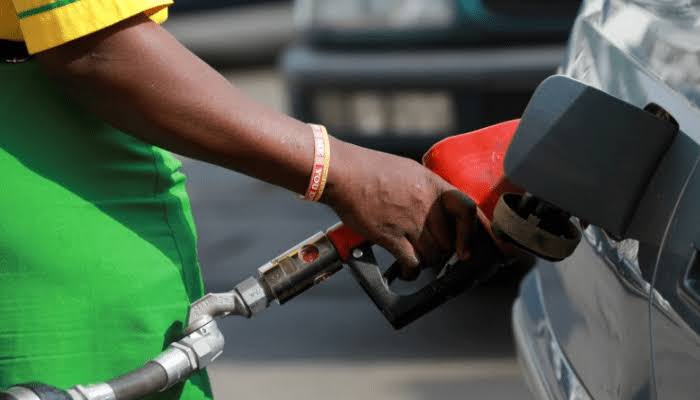
That conclusion comes from an economic analysis released on March 29, 2026 by Banji Oyelaran-Oyeyinka, former Senior Special Adviser on Industrialisation to the African Development Bank. In the statement, the economist argued that global comparisons portraying Nigerian petrol as cheap rely on a flawed method he called the “fallacy of one price petrol comparison.”
The argument centers on a basic question.
Is petrol actually cheap if workers must spend far more time earning the money to buy it?
The price tag alone does not answer that.
Banji Oyelaran-Oyeyinka’s March 29 Analysis and the ₦1,300 Petrol Benchmark
The March 29, 2026 statement from Banji Oyelaran-Oyeyinka used Nigeria’s current pump price of about ₦1,300 per litre as the baseline for comparison. The figure reflects retail prices observed across major urban filling stations in the first quarter of 2026 following the fuel subsidy removal announced by Bola Ahmed Tinubu during his May 29, 2023 inauguration speech at Eagle Square in Abuja.
That policy decision ended decades of regulated petrol pricing.
Prices now fluctuate with exchange rates, shipping costs, and refinery output.
Related News
Yet the economist argues that currency comparisons distort the picture. In the March 29 statement, he cited petrol prices across French West Africa ranging between $1.40 and $1.80 per litre. Those figures correspond to retail data from cities such as Abidjan and Dakar, where fuel markets operate under regional price frameworks monitored by the West African Economic and Monetary Union.
Those numbers appear higher than Nigeria’s in dollar terms.
But the analysis rejects the comparison.
S&P 500 Losses of $5 Trillion During the War Shock
The global context matters to the argument presented by Oyelaran-Oyeyinka. In the March 29 analysis, he referenced financial market losses measured through the S&P 500 index, stating that approximately $5 trillion in market value had been erased within two weeks during the current international conflict affecting commodity markets.
Equity declines signal wider economic stress.
Oil markets, shipping insurance, and currency markets tend to react simultaneously.
The economist describes the situation as a macroeconomic shock affecting energy importers and exporters alike. Nigeria occupies a complicated position within that equation. The country exports crude oil but imports a large share of refined petroleum products.
That dual role creates vulnerability.
Labour Time and the Minimum Wage Equation Under the National Minimum Wage Act 2019
The affordability argument depends on labour time rather than price tags. In Nigeria, the legal wage floor originates from the National Minimum Wage Act 2019 signed by Muhammadu Buhari on April 18, 2019. Section 3 of that law established ₦30,000 as the national monthly minimum wage for workers in federal and state institutions employing at least 25 people.
Converted into daily earnings, the wage equates to roughly ₦1,000 per day under a 30 day calculation.
That arithmetic drives the economist’s comparison.
Oyelaran-Oyeyinka’s statement estimates that a Nigerian minimum wage worker needs approximately 460 minutes of labour to earn the equivalent of $2. In the United States, he estimates the same $2 requires about 16.5 minutes of labour. In the United Kingdom, roughly seven minutes of work produces the same amount of income.
Those differences alter the meaning of price.
A litre of petrol priced near ₦1,300 therefore consumes a large share of daily income for low wage earners.
Structural Constraints Inside Nigeria’s Non Manufacturing Economy
The analysis also points to the structure of Nigeria’s workforce. According to data released in the 2023 Labour Force Report by the National Bureau of Statistics, about 70 percent of Nigeria’s working population is engaged in informal or subsistence agricultural activity.
Productivity levels remain low in that segment.
Agricultural households typically operate outside formal wage systems.
Oyelaran-Oyeyinka argues that such economic structure magnifies the impact of external shocks. Commodity price increases translate rapidly into higher transportation costs, food inflation, and household energy expenses.
Electricity shortages compound the problem.
Nigeria’s power generation averaged roughly 4,500 megawatts in 2024 according to operational data from the Nigerian Electricity Regulatory Commission. The figure remains significantly below the estimated national demand of over 20,000 megawatts cited in the commission’s 2024 Market Performance Report.
Businesses compensate with diesel generators.
Fuel prices then feed directly into production costs.
The Purchasing Power Parity Debate and OECD Comparisons
The economist also rejected comparisons between Nigeria and industrial economies belonging to the Organisation for Economic Co-operation and Development. His argument follows the logic of purchasing power parity, an economic concept widely used by the World Bank and the International Monetary Fund to compare living standards between countries.
Direct currency conversion obscures income differences.
Labour productivity becomes the key variable.
Under purchasing power analysis, the effective cost of petrol depends on how long a worker must labour to purchase a litre. By that metric, countries with higher wages but higher petrol prices may still experience lower effective fuel costs relative to income.
Nigeria falls on the opposite side of that calculation.
The economist described the result as a structural development problem tied to productivity and industrial output rather than nominal fuel prices.
Banji Oyelaran-Oyeyinka argues that Nigeria’s ₦1,300 petrol price cannot be judged solely through currency comparison.
The National Minimum Wage Act 2019 means a Nigerian minimum wage worker may spend most of a day’s income on a single litre of fuel.
His analysis links fuel affordability to labour productivity and purchasing power rather than nominal pump prices.
Structural factors identified by the National Bureau of Statistics include a workforce where roughly 70 percent operate in subsistence agriculture.
Is petrol actually cheap in Nigeria?
Only if you compare the pump price alone. When measured against income levels, the effective cost becomes much higher for Nigerian workers.
Why use labour time instead of currency comparison?
Because wages differ dramatically between countries. A litre priced at $1.50 means different things depending on how quickly workers can earn that money.
Does this analysis mean petrol subsidies should return?
No. The statement focuses on purchasing power and productivity, not subsidy policy. It argues that structural economic change matters more than price controls.
The unresolved question now sits with fiscal policy planners inside Nigeria’s federal government. The ₦1,300 retail price reflects market conditions after subsidy removal announced on May 29, 2023. Yet household affordability continues to shape political debate ahead of the 2027 election cycle. If the issue evolves into litigation or regulatory action, the next venue would likely be the Federal High Court of Nigeria, where past fuel pricing disputes have been filed under suits challenging the interpretation of the Petroleum Industry Act 2021. The law does not fix a maximum petrol price. That absence leaves the economic argument unresolved.
Add a Comment